All Roads Lead To The Avondale Heights Cannoli Bar

Because it is in a more remote pocket of Avondale Heights, about 500 metres on the other side of Military Road, where the streets are all named after places in France, I rarely get along to the Cannoli Bar in Riviera Road. It opened about 2 years ago, in a former milk bar and is always very busy.

This morning, having a craving for some quality cannoli, I made the trek there, aided by the 406 bus taking me north a few stops.

As I was arriving, my neighbour and her boyfriend were leaving. I took the opportunity to check with her as to when the fencing contractor is coming to replace our shared fence. Next week. Fantastic!

Even though it is in a rather obscure location, and I previously only knew Riviera Road as the access street when visiting my godparents, it does seem that everyone comes there from all over the inner north western suburbs.

And although the cannoli are very lavish and different from what you see elsewhere (they are very unique), they are doing a roaring trade. Everyone knows about them, and goes there.

It has a very 1960s Italian vibe to it as well, with old Italian vinyls either playing or on display, and the furnishings looking very 1960s. I especially applaud the two empty demijohns placed out the front of the shop front.

This all goes to remind me that Avondale Heights remains one of the most Italian suburbs of Melbourne, which might be why I, despite my major Anglomorphism, feel so much at home here.

In Which Coles Online Inadvertently Helps Me To Observe Dry July….

I like a glass of decent red wine or seven. The older I get, the more I realise that this is not a good way of managing my health, regardless of what wine writers say about the various natural chemicals in wine preventing or curing all sorts of illnesses.

I do know, given that we are in a Pandemic and my area, whilst not in a formal lockdown right now, is adjacent to several suburbs which have been locked down again, that this might not be the best time to decide to impose limitations on myself in terms of drinking. However, there are some good reasons why it would be a suitable time. After all, it is not like I can drink in a restaurant, or in a bar, or in any company outside my home. And the only friends I have within close proximity who might want to come over and share a bottle of wine with me are in lockdown suburbs.

So I decided after some wine on Sunday night that I would unofficially observe Dry July, starting two days early.

This is not without its difficulties, which come mostly in the shape of my various friends and colleagues.

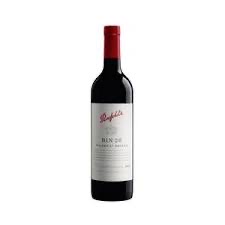
Take Tuesday night, the eve of Dry July, when one of my friends called me excitedly to tell me that Coles Online were selling Penfolds Bin 28 Kalimna Shiraz for $15 per bottle. (Recommended retail price is about $50.)

Whilst I have never ordered from an online grocery website before, I thought this offer might be too good to be true, but that it was worth checking out.

And lo and behold!  It was true, according to the Coles Online website.  So I ordered 5 bottles (the maximum) and committed to being home between 8am and 2pm Friday so that those could be delivered.

Yesterday, to his dismay, my friend got an email from Coles saying that they were out of stock.  Soon after that however, I got an email saying that my order was being prepared and that it would be delivered between 11.35am and 12.35pm on Friday.

Being gracious about it, I told my friend that he could have two or three of my bottles at cost if they in fact did not get cancelled too.

Not long later, I got an email similar to that which my friend got, blandly (and insincerely) apologising for it being out of stock and that the wine would not be forthcoming.

This morning, regardless, I got two texts advising me that the order was on its way. I checked with their call centre, which checked and admitted that oops, their automated systems were wrong about the upcoming delivery.

My friend has vowed not to shop at Coles again, he is so angry and disappointed.

As for me?  I wasted the time spent to register for Coles Online and to place the order, and I am not intending to waste my time ever placing any more orders with Coles Online, as yes, it was too good to be true which meant that Coles Online published something very untrue on their website.

Bland apologies like that do not really cut it. If Coles really wanted to make me feel less aggrieved, they could offer some remedy. They can afford it. However, they cannot be bothered.

On the other hand, I do not have those five very tempting bottles of Bin 28 in my home. And I am so angry at Coles, which runs one of only two bottle shops within walking distance of my home, that I am not inclined to walk there and buy any wine for quite a while.

So thank you Coles, for making it easier for me to observe Dry July.

The Demise of the Clown-Prince of Moomba

As a small child, I have very fond memories of quality time spent with my father (I was the first born child and therefore had lots of privileged access). Visits to the zoo, or to the Royal Melbourne Show, or to see the Moomba Parade.

Moomba was always a constant. You had the parade each March (I was 12 before I knew that the public holiday was Labour Day and not Moomba Day), with the King of Moomba and the regular appearance of the clowns Zig and Zag.

In 1999, when I was in Canberra for many months, I went to some festival one Saturday night at a similar time of the year with some female colleagues and their kids, where the husband of one of colleagues (the only other adult male) sought refuge and suggested the two of us sneak off for a few beers at some bar in the Sydney Building in Civic.

During those six hours of beer drinking (‘few’ is an interesting concept when you are drinking with like minded people), he did break to me the news that whilst Zig and Zag had been crowned co-kings of Moomba that year, they had been forced to abdicate before the parade due to sexual allegations about one of them.

OK… I think Moomba was mostly on the way out by then – I think when they experimented with holding it on different days or with trams instead of floats, and generally burying Moomba under political correctness instead of joy, it had been terminal for most of a decade by that stage.

But as a child, I saw Moomba as a happy festival of clowns and humour and fun.

The King of Moomba was mostly a clown prince. Who can treat Bert Newton or Graham Kennedy or Mickey Mouse or Johnny Farnham seriously? Lou Richards was a clown prince before it rained on his parade!

But I guess that the real King of Moomba was always the king behind the Moomba throne, ie the Lord Mayor of Melbourne. Moomba was and still is a festival run by the City of Melbourne, and first established in the 1950s when the Lord Mayor of Melbourne was still a person who enjoyed great power and authority and prestige.

Such power has been eaten away since then by the jealousy of state governments and the very ridiculousness of some of the incumbents of the office of Lord Mayor, who have reduced it to a level of major derision, to match the statutory impotence of the role.

[An exception of course is John So. He is so beloved and respected that we all still think that he is our Bro!]

Probably the most visible and high profile of these buffoonish Lord Mayors is Robert Doyle, who spent some 12 years as Lord Mayor before being forced to resign from the role due to allegations of sexual harassment of female councillors.

Today, an announcement was made by the Victoria Police that their two year investigation into his alleged improprieties will not result in criminal charges.

I will admit here, as many of my friends already know, that I vehemently dislike Robert Doyle. Looking back wryly on the reasons why I happen to dislike him, most of the most personally compelling ones are puerile and probably petty. As for some of the more legitimate ones now, such as my belief that he is not a man who has any decently held principles but whom is willing to sell his soul to feather his own nest (such as the perception I hold that he ‘threw’ the 2002 election and was then rewarded with a sinecure by the Bracks Labor government for his incompetence as state opposition leader), well, I guess I can put those aside too.

What is more important is whether or not he has gotten away with not only serious sexual harassment, which caused him to resign from the buffoonish role of Lord Mayor, but actual criminal sexual assault or related conduct?

Given my stated vehement dislike of this buffoon, I find it hard to be a ‘big man’ about this sort of thing. But do I really want to celebrate the possible misery and utter ruin of someone, even though I dislike them so much on a petty scale? I think not. I will say that I vehemently hope that he has been able to escape prosecution because he is innocent, and not because of lack of evidence. That is not only because I do not want to wish ill on him, but because the alternative is that he has done some seriously horrible things to some people with total impunity. I would not wish that on those people.

But these are the sorts of moral dilemmas I face as I become a more mature adult and move away from petty spitefulness and hatefulness.

But whether he has done anything bad or not, I still consider him a rather swinish buffoon, an apt clown-prince of Moomba.

Observations on the madness of men and markets…

At the time of the South Sea Bubble in the 18th Century, Dr Brian May lookalike Sir Isaac Newton is quoted as saying:

“I can calculate the movement of the stars, but not the madness of men”.

Sir Isaac was also a shareholder in the South Sea company, but I am not sure whether he was wise enough to get out before it crashed.

For a while, I have had my eye on a particular share (let us call it Share X – I am not sure whether being too honest with the truth is a legally safe thing to do, not having any licences to even provide free advice to people and not being a financial journalist). There are several times when I wish I had bought into them. And others when I wish I had sold them.

They are the kind of stock which a trader used to casino games would love. For all my faults, I am not prone to gambling (aside from the occasional lottery ticket shared with friends).

A year ago today, Share X was under $1.90. Just before Christmas 2019, this share was at 3.70. It then peaked around mid January 2020 at about 5.50, before dropping in late March below 2.10.

Where would you say this share is today? It closed at about 8.70, having peaked last week above $9.00.

It offers a dividend yield of under 0.7% (less than I get from the bank!).

Another thing (testifying to the hysterical nature of supply and demand) is interesting to note. A year ago, just over 300,000 shares were changing hands per week. Last week, over 6 million shares changed hands, and in the weeks before that, just under 2 million shares per week.

Without trying to do the sort of technical analysis which goes beyond my mathematical capacity, the only way I can really explain this sort of share price behaviour is sociological. A lot of mug punter first time investors are trying to churn this share, in the hope of making money before the price drops on them, as some sort of monetary version of musical chairs. Because it is a low profile investment fund, rather than a large high profile company, some people have hooked onto it and the result is major volatility.

It is not just this share which is behaving like this. In the USA, Hertz has gone into bankruptcy, and that has not stopped a lot of green horn investors pumping their money into it (ie into worthless shares) causing the share price to triple (?!?). This even encouraged Hertz to try and do a $1 Billion capital raising – money which would have gone to creditors rather than to investors. They almost got it through, too, except that apparently someone either thought about the downstream legal recriminations, or that it was the moral equivalent of taking candy from a baby.

So there are a lot of people out there thinking suddenly that the share market is a big and exciting casino game, where nerve and bluff are going to enable you to make a lot of money, without actually losing any (or at least not too much). Or is it that the share market is like bungee jumping – you can get a big thrill without going splat!

I am not too sure when the market is going to go splat, but there are a lot of things going wrong in the world at the moment, and I am worried about both deflation and inflation, and aside from 1000 Treasury Wine Estate shares recently purchased (as a big drinker of wine, of course I want to own shares in TWE no matter what), my position is almost entirely in cash. This is not a time for optimism.

Ready Player One Million: The Ultimate First World Problem?

When I was browsing Wikipedia just before, I saw a featured article on the title page which was just too bizarre for me to pass up:

https://en.wikipedia.org/wiki/Battle_of_Asakai

Yes, if you have clicked on that link and read it, this is an account of a virtual battle in cyberspace, not about alleged Communist Chinese hackers trying to bring down our economy, but where over 3000 players of some online multi-player space warfare game accidentally joined together in battle.

I enjoy watching the Apple TV sitcom Mythic Quest as much as another, but the idea of spending many hours playing some sort of online video game is very unappealing. Life itself has a lot of its own challenges to face, hopefully more profitably than hours spent escaping from it into some space opera fantasy.

In many ways, this sort of video game battle is the ultimate first world problem, especially compared to the real naval battles which were fought in the First and Second World Wars, where real Dreadnoughts and Carriers and other capital ships fought savagely to the death, and where drowning, burning, or being eaten to death by sharks awaited hapless sailors.

With only an ounce of smug arrogance, I will say to those people spending so much time on such games: Get a life!

As a footnote – where do I buy shares in the video game company which is able to hook so many customers?

Unselfconscious Songs about the Australian Way of Life

A few months ago (and where has the year gone?) I wrote something about how countries like the USA are able to inspire their musicians to write songs about their cities and homes which are clearly linked to their geography, but which are un-self-conscious about it, New York City being a prime example.

Australia is not so good at that, as I noted. Like everyone else, I love Men At Work, and vaguely remember seeing Colin Hay do a gig at Monash in the late 1980s, where I think he was better solo than in a band. But ‘Down Under’ is probably best considered as a cringe worthy self-conscious song celebrating the joys of being Australian.

I am never too sure what we mean when we talk about cultural cringe, but either we feel it, or we consciously react against it. I think ‘Down Under’, which briefly became the unofficial national anthem in 1983 (just like ‘Slice of Heaven’ is probably New Zealand’s national anthem, or at least I like to say so), is an example of the latter rather than the former.

But we sometimes do have songs which are better at transmitting our love of country, and of our home, without any self-consciousness about them.

I am a late adopter of new technology. During the week I finally bought an entry level blue tooth speaker and synced it to my iPhone. Now I am able to listen to selections from my Apple Music account loud whilst I am working from my dining table on my laptop or chilling in the lounge after works. Much better audio than what my iPhone or iMac offers means I have more incentive to play music more often, and to search out both old favourites and new nuggets.

Old favourites include bands from my teen-age years, like Cold Chisel and Australian Crawl. Getting older and having constant internet access at my fingertips means that I can study their lyrics more closely than on mere radio play in the early 1980s.

(‘Hopes are up, for trousers down, with the hostess on the business flight…’ are the sort of lyrics which probably fluked their way onto the airwaves back then, but in the less innocent Me Too era of now, sound, even to someone like me who is not exactly politically correct, a bit too misogynistic for the present.)

Take Reckless, one of Oz Crawl’s last songs. It’s opening, with the mellow bass line, is only about Australia:

Meet me down by the jetty landing

Where the pontoons bump and sway

I see the others reading, standing

As the Manly Ferry cuts its way to Circular Quay.

Not bad for a handful of posh private schoolboys from the Mornington Peninsula, playing at being cashed up bogans before the word bogan became common.

Or one of my other favourites of their songs, ‘Hoochie Gucci Fiorucci Mama’, which addresses the empty materialism and spiritual bankruptcy of their peers from that upper middle class society they sprang from:

Antiques flown in from Venice

Fill your house upon the hill

While your money sold the soul of rock and roll

For some cheap disco thrill

I’ve seen your peers pouting over beers

The loneliness it showed

Mistaking tacky sex for sensuality

They bought in Toorak Road

What the exact significance of Toorak Road there is not clear to me. It’s a street that has, for as long I have known it, been filled with relatively upmarket houses and flats, and some luxury apartments. It’s not beyond the realms of possibility that it also had a lot of upmarket call girls in those apartments.

Cold Chisel also were good at celebrating being Australian. I remember being in the Clyde Hotel in the mid 1990s on a Saturday night, filled with a uni crowd, and that when their pub anthem ‘Khe Sanh’ played on the jukebox, everyone sang along. (Note – the lyrics are ‘last plane out of Sydney’, NOT ‘last train’; AND Khe Sanh was NOT an Australian battle in Vietnam – it was the US Marine Corps who were besieged there.)

Then there is their power ballad ‘Breakfast at Sweethearts’, about a now long gone cafe in Kings Cross. Don Walker, the Chisel’s keyboard player and main songwriter, has been called a beat poet for Sydney.

And whilst it does not really mention any place in Australia by name (it is about the town Graftan), do yourself a favour and listen to one of the Chisel’s last songs, ‘Flame Trees’.

A friend of mine, who was born just before the Chisel broke up, once said when I played her their Greatest Hits CD, that she had heard that Jimmy Barnes ‘used to be in a band’. Yes, he used to be in a band, and if he had never done any music after 1984, he still would be remembered for that band. Used to be in a band indeed!

Last words, perhaps, are for ‘Leaps and Bounds’, a Paul Kelly song which really does pass for an anthem to Melbourne:

I’m high on the hill

Looking over the bridge

To the MCG

And way up on high

The clock on the silo

Says eleven degrees

Yes, I guess we do have some singers and song writers who are able to write and sing about Australia and celebrate our lives here without self-consciousness.

AFL Season Resumes: I am not a footy tragic, or am I?

This weekend marks the resumption of the Australian Football League’s 2020 Premiership season.

The AFL Club I support is the Footscray Football Club, which has, for the past 23 years, played as the Western Bulldogs. This is not exactly surprising, given I am one of those people who, born and raised in Footscray, see themselves as being from Footscray, rather than being from Melbourne.

I do not think Australian rules football is a big part of my life, and I do not really consider myself a footy tragic. I usually go to a match once or twice a year, but that will not be the case this year. But I do usually find it too stressful to watch my team play on TV – I even switched off the AFLW grand final a few years ago as our girls were losing (thankfully they turned it around).

I saw a mad keen Bulldogs supporter I vaguely know at Highpoint this evening, someone who goes to every local game and watches the rest on TV. He said that he asked for and got a refund on his membership ticket this year.

I will not be doing that. The club can keep my money. Supporting my club is about more than winning or watching a game. Being a Footscray supporter means that this is engrained in me.

I am a reasonably fluent Italian speaker. But I did not learn the word tiffoso (plural tiffosi) until 2006, when Italy won the Soccer World Cup. This is a word for a sports fan, probably to be more precise, a soccer fan. My father never used that word, probably because he held soccer in disdain.

My father liked three sports: Boxing, Cycling, and Australian rules football. My brother loves boxing, I loathe cycling, but we both love Australian rules. (FYI, our home town in Italy, Treviso, is a Rugby Union powerhouse, but not so good at soccer.)

My father migrated to Australia in 1959, at the age of 28, after spending 11 years working in such places as Turin, Belgium and Switzerland. After living for a short while in Sunshine North with his sister’s family, he rented a shack in the backyard of someone’s home in Empire Street Footscray. In 1964, around the time he met my mother, he bought a house just around the corner from there, in Gordon Street Footscray, less than 10 minutes’ walk from the Footscray home ground, then called the Western Oval.

The origin story (as he told me once) for his support of the Footscray Football Club was that whilst he went to a few games with his workmates, he only got really interested in it when they came last in 1967 and won only 3 games, one of which being against Richmond, who were premiers that year. He decided that it was an exciting and unpredictable sport which deserved his attention.

After that, until we moved a kilometre north in 1976 to what was then called Maidstone North, he went to every game he could, or caught the last quarter on his way home from overtime (they used to open the gates at three quarter time and anyone could catch the last quarter – which was perfect for workers who had just gotten off the train at West Footscray), or listened to it on the radio. On days we won, he would grab the Saturday evening edition of the Sporting Globe, so that he could read about the thrilling victory.

My mother, who has no interest in sport, was very bemused when the radio commentators were calling the games when my father was listening in at home. It took her a while and the acquisition of a bit more fluency in English to realise that “And Footscray yet to score” meant that perhaps her husband should have chosen a team with greater prospects of winning….

But I do not see Football as about winning. Being from Footscray is an inherent and integral part of who and what I am. It is my home town and supporting the home town team is important to me.

As it turned out, the origin story that my father told me was not entirely true. He did not start supporting the Bulldogs in 1967. He was mad about them in 1964 when he first met my mother. I only found that out in Grand Final Week 2016 when she paid for our Grand Final tickets, saying that if my father was alive, he would have wanted nothing more than to go with his boys to see our team play in the Grand Final at long bloody last.

I am not a tragic for this game, but it seems that I have been to a lot of memorable games (for both good and bad reasons). When they stopped playing games at the Western / Whitten Oval at the end of 1997, there was an article about great games which had been played there – mostly in the previous decade. I had been to most of them.

The last AFL game at the Whitten Oval was a great one. We beat West Coast. “We are the true west!” someone shouted as we kicked another goal.

The Semi Final in 2016 was quite an event. After losing the preliminary final in 1997 by two points (Libba kicked that goal dammit! – I was sitting behind the goals and saw it), I had vowed not to go to a final again until we went one better. But a colleague had a spare ticket, and I went at the last minute. If I had known, I would have brought a scarf, and marched en masse with the other supporters from Federation Square to the game. But at the eleven minute mark of the final quarter, when we had goaled again and the Hawthorn supporters started walking out and we all started singing ‘Good Night Hawthorn, Good Night!’ it occurred to me that this was a historic moment. In my lifetime, we had never won two finals in a row, or two finals in the one year, or a final against Hawthorn. To smash three diamond hard barriers in the one game was cause for optimism.

Grand Final Week 2016 was an extremely memorable time. Two days before the Grand Final, I walked through Footscray for the first time since I had returned from my trip to Italy. I walked down Leeds Street, then Barkly Street til the Whitten Oval, and then up Gordon Street til my mother’s home. Parking poles were wrapped in red, white and blue, and shops were decorated in streamers, balloons, and ‘WOOF WOOF’ signs. The home town was coming alive, showing that under the usual studied indifference to the footy results, there was a beating heart that loved its own football club dearly. There had occasionally been hints of this, when we made finals before, but this was the first time we had made the big one in 55 years.

I wore my member’s scarf all that week. Everyone gave me thumbs up or other encouraging signs. After all, due to its underdog status and its general good sportsmanship, the Bulldogs are everyone’s second favourite team, especially if representing Victoria against an interstate club.

At our work grand final afternoon tea, myself and the other Bulldogs stood together proudly wearing our scarves. Someone who was originally from Sydney and who did not know me (or my team) well asked if I was a bandwagon supporter. Bandwagon? Bulldogs are for life, it is where we are from and what we are (not like those a-holes in school who were Hawthorn supporters – from Footscray WTF???).

The Grand Final itself was hard to watch. It is very stressful to watch your team play at the best of times, let alone when so much is at stake. Even before the siren went, when the outcome was beyond doubt, my phone started to be flooded with congratulatory texts from friends and colleagues.

After the game, my brother and I went back to Footscray and celebrated at Hart’s Hotel, one of the pubs closest to the Whitten Oval. When we entered, there were two Sudanese blokes wearing Bulldogs jumpers standing on a table singing ‘Who Let The Dogs Out’ over and over again. A hipster dude kept standing on his chair and singing ‘Sons of the West’.

And the pub almost ran out of beer. (Along the way, my brother and I got on Channel 7 news – a screen shot of that is at the front of this post.)

As I was walking to the tram stop much later on, four young blokes in Bulldogs fan gear stopped me and asked me directions to pubs. They were not from the home town per se, but they knew they needed to come to the home town on this one night in history to celebrate with their fellow supporters.

I could go on and on. About the disappointments during the premiership hangover, and the sudden surge of optimism as we stormed into the finals last year with the press saying that we were back and no-one knew quite how far we could go, given what had happened in 2016.

I am not a tragic for Australian rules football, or for my particular team. But it is still more than a game to me, much more than a game. It is an important part of my identity, that has been there since my earliest memories, and whilst I do not go to as many games as I might, or enjoy watching my team on the TV, I care what happens.

So I will not be asking for a refund for my 2020 membership. My home town team is welcome to the money I have paid them, and I will be willing to pay much more to ensure that radio commentators might say, for many more years to come ‘yet to score’ when we have a bad start to a game.

All your favourite Bears have come out to play again: Teddy, Paddington, Rupert, Humphrey… even the Ewoks!

I liked Return of the Jedi when it came out. I suppose I still do, although I have not bothered seeing it again for many years. But I suppose it was when George Lucas jumped the shark as far as balancing the cutesy merchandising and kiddie gimmickry. R2D2 and his sidekick C3P0 work well together, Jar Jar Binks does not. And Episode VI is where it all really started to tip over towards the eventual birth of Jar Jar.

Because that is where we first meet those loveable little Ewoks, little teddy bear like creatures who worship C3P0 as a god and want to cook his companions in a feast in his honour.

The scene where the Ewoks suddenly spring out and ambush the storm troopers, fighting and winning a savage battle so that Han Solo and Princess Leia can sabotage the shield generators is pure science fiction. Did any well drilled and armed modern colonial army encounter such resistance to the point where they were defeated by bows and arrows? (Well, the Zulus did it once, but they were well armed and well drilled and in huge numbers, and did it at huge cost.). But I digress.

We all know lots of bears. In our safe urban lives where we have long been at top of the food chain, bears are reduced to loveable critters like Paddington, or my childhood favourite Humphrey B Bear (I had a huge crush as a four year old on his sidekick Patsy Biscoe, who then crossed over to Fat Cat on another channel – and eventually shacked up in real life with the bloke in the Fat Cat suit). And most of us have at least one soft toy teddy bear to play with as a baby.

And we Australians love to joke about a carnivorous mutant species of Koala, the Drop Bear, who likes to drink the blood of American tourists. Who would think that a cuddly little Koala is a scary monster?

But in even in our soft safe urban lives, where our bears are only toys or cartoons or zoo exhibits, there is still one bear who can strike fear into the hearts of the boldest amongst us.

There is a statue of a charging bull set up on Wall Street. In our recent politically correct times, there was some contention when a statue of a fearless girl was placed in front of this fierce auroch. Standing in front of any charging bull is a foolish thing to do, rather than fearless. The only creature who can face the sharemarket’s Bull is the sharemarket’s Bear, and he is not exactly the cuddly variety.

They do not set up statues to him. He is not someone investors worship, like a minotaur, or sacrifice their fearless daughters to, in emulation of Iphigenia, to raise winds for their becalmed equities. Investors like to believe that he is at worst caged, and hopefully extinct.

Last night, as I have firmly expected, the recent insane exuberance on the share markets came to a halt. The Dow Jones plunged 6.9%. The ASX had a 3% drop in sympathy this morning.

The Bear has burst his cage open, and is out amongst our financial markets.

Are any of you surprised? Look at the world.

We have over seven million people suffering from the Wuhan sourced pandemic, 400,000 dead, and it is running rampant through most of the world, doubling currently at a rate of every 36 days. The recriminations against the tyranny that is Communist China have finally caused most political and business leaders to start realising that this tyranny is not our friend, but a robber who comes in the day, as well as a thief in the night. The economic damage caused by the three months (so far) of economic closure and money printing is starting to show in the economic indicators. And America is burning.

To expect the Bull to continue his unimpeded charge down Wall Street in these times is not naive, it is insane.

The Bear is out, and he is very hungry. He wants to eat beef. That and your investments.

Be afraid, be very afraid.

American Psycho – 30 Years On

I was born in 1969, which makes me part of the elder third of Generation X, which demographers assert as starting in 1965. That makes Bret Easton Ellis and his most famous character, the anti-heroic Patrick Bateman, Baby Boomers. Somehow I am glad about that.

I have been listening to Huey Lewis and the News a lot lately, partly because they have released a new studio album for the first time in a decade, and partly because I am in the sort of mood where I want to connect a bit more with the foolish youngster on the south side of twenty I used to be, compared to the grey bearded fellow on the north side of fifty I am now.

One of my friends, who is a musician and has much more developed tastes in music, has ridiculed my insistence on the merits of Huey Lewis, and sent me a you-tube clip of Christian Bale, as the protagonist (anti-hero) Patrick Bateman, in the film American Psycho, where he extolls the merits of Huey Lewis to a coworker whilst Hip to be Square plays in the background. Then he butchers him with an axe. It is very blackly funny, the way that film can sometimes make brutal murder to be, rather than the tragic and sad reality.

This has not changed my opinion of Huey Lewis and the News, but it did cause me to have another look at American Psycho. I don’t mean the movie, which I saw whenever it was out (2000? 2010?) and promptly mostly forgot. I mean the novel by Bret Easton Ellis, which came out in 1990, and which was the subject of great outrage.

A highly conservative (and rather personally hypocritical) academic I knew, the thesis supervisor for a close friend, smugly suggested in his influence peddling way (a lot of people were listening to him around then, although to my credit, I quickly decided that outside of his lectures, he had nothing of value to say) that conservatives and radical feminists should form an alliance to have the book banned.

I am pretty conservative, but banning books is something I find pretty abhorrent, and I promptly bought and read a copy of the offending novel. It was sold in shrink wrap (a bit the way Battlefield Earth was in the mid 1980s, although for a different reason) and had a warning label on the front indicating that the book was rated R.

Absurdly, if you are going to buy a copy in Australia today (it is still in print), you still can only buy it in shrink wrap with the R rating sticker, the only mainstream book sold like that. Such was the level of outrage levelled at that book.

I have not read any of his other books, although I have seen the movie versions of his debut novel Less Than Zero and the later Laws of Attraction. There is a savage nihilism running throughout both movies, although the plot summary I recently read about Less Than Zero makes the movie adaption sound a bit like Mary Poppins in comparison, which really gave me something to think about.

I have no plans to reread American Psycho, but the reminder about Huey Lewis in the film caused me to dig out my copy and to flip through it, looking for the bits that are particularly relevant. There, on pages 352 to 360 is the chapter which reads like a very favourable music review. Earlier on in the book, there are similar chapters about Genesis and Whitney Houston.

On page 71, in case you are interested, Tom Cruise (ironic that I mentioned Battlefield Earth a few paragraphs back), the supposed occupant of the penthouse in Bateman’s apartment building, makes an appearance, sharing a lift with Bateman. There is a very awkward (but to the reader hilarious) exchange between the two, which I still find memorable, but which is even more revealing about the mindset of Patrick Bateman:

“I thought you were very fine in Bartender. I thought it was quite a good movie, and Top Gun too. I really thought that was good.”

He looks away from the numbers and then straight at me. “It was called Cocktail,” he says softly.

This does go to show what Bateman, 26 year old yuppie stockbroker, obsessed with his hedonistic lifestyle and luxury material possessions, is all about. In his insulated cocoon of wealth and privilege, he can only see the world as objects, and strangers only in their context of possible service to him. Such as nameless bartenders.

There are many great passages of prose, and of wit, in American Psycho. Unlike the movie, which presents Bateman as being on an uncontrollable serial killer rampage through New York, the novel gives us sufficient clues as the first person present tense narrative progresses, that the rampage is all simply going on in Bateman’s head, a grim fantasy world, or rather, a psychotic delusion being revealed to us as if it is reality. He is falling apart at the seams, increasingly unable to relate to the world around him.

Which leads us to wonder what sort of commentary Ellis is offering us in this, his greatest, and still unsurpassed, work?

The crisp opening paragraph gives us a clue:

ABANDON ALL HOPE YE WHO ENTER HERE is scrawled in blood red lettering on the side of the Chemical Bank near the corner of Eleventh and First and is in print large enough to be seen from the backseat of the cab as it lurches forward in the traffic leaving Wall Street and just as Timothy Price notices the words a bus pulls up, the advertisement for Les Miserables on its side blocking its view, but Price who is with Pierce & Pierce and twenty-six doesn’t seem to care because he tells the driver he will give him five dollars to turn up the radio, ‘Be My Baby’ on WYNN, and the driver, black, not American, does so.

I have long thought, even before I read Dante, that this novel was an attempt at a journey into an American Hell, with the grotesque torments and the hubris and the obsession with worldly plenty.

But perhaps there is another take. Plato gave us the metaphor of the cave, an epistemology based on reason rather than on one’s senses, rationalism rather than empiricism. Reality is not what you see, that is just an illusion. Reality is really what you are able to establish through the use of your powers of reason.

What does that tell us when the narrator is someone who has clearly lost his powers of reason?

I am not sure, and I am not a postgrad student undertaking a thesis on American literature, so I will not be too rigorous in my speculations. What I do wonder is what was the purpose of Ellis’ literary project in this novel. Is his commentary a celebration (unlikely but not out of the question) of late 1980s material hedonistic excess? Is he merely describing and documenting it? Or is he deploring it? Or, perhaps, it could be that he is ridiculing it, and his social contemporaries who lived those lives and dreamed those nightmares.

And by extension perhaps, he is ridiculing those people, like that smug hypocritical academic and all the others, who feigned or felt such great outrage at his words. I do like to think so, but then, I am inherently an optimist.

Zadie Smith – An Essayist on the Hitchens/Orwell Plain?

I first was introduced to George Orwell at age 13. There was that favourite older cousin the English teacher who kept recommending things (although I think that Orwell is on a different level to John Wyndham really…) who encouraged me to read 1984 and Animal Farm.

I fear 13 year olds are still too young to see the nuance and irony of such works. It did (sorry Sandra) scare me off reading any more Orwell until my early 30s.

When I did, it was his journalism and his esoteric intellect that drew me back in. Firstly his semi-fictional autobiographical work Down and Out in Paris and London, and then The Road to Wigan Pier, and then Homage to Catalonia. The latter, I must admit, has so many Marxist and Anarchist factions in it that you need, at this removed point in time, PhDs in both history and Marxist philosophy to properly comprehend.

And then I read an anthology of his essays, Shooting An Elephant, in which we get to see not the evangelical Marxist wannabe rebel from the colonist gentry, but rather, the real Orwell, the clever, decent and relatively well educated man, trying to make his way out of a social class where he did not feel at home with what he felt was his obligation to join in oppression.

Instead, a bit like the protagonists in Keep the Aspidistra Flying and Coming Up For Air (and even perhaps, when you come to think about it, Winston Smith in 1984), he is a bourgeois with a voluntarily tenuous hold on that place, seeking to use his intellect to find a way to make a living through that intellect, rather than through unskilled manual labour, not possessing a trade (having just paid an electrician AND a plumber to sort out minor problems in my home today, I can understand that very well).

In his essays and book reviews, well before we get to his two last, great, world shaking, novels, we see Orwell at his most clever. The sharpness, and broad curiosity, of his intellect, is plain to see, and is jaw droppingly awesome. We can read the thoughts of a decent and principled man who happens to be both very well read and very clever.

My introduction to Christopher Hitchens gave me that very same impression. A colleague who was a recent acquaintance who had not yet become a friend (now a few years later a very close friend) showed me, for some reason or other, the contents page to Hitchens’ essay anthology Arguably. It was a seminal moment, as I immediately saw something in the way Hitchens’ mind worked and his pen moved to what Orwell did, half a century later.

Since then I have read many of Hitchens’ essays, and he is a great essayist, just as Orwell was. Sadly, he is only an essayist, although I do think that you could forget the first four of Orwell’s six novels and not miss a thing.

Which leads me to current English (or is it Jamacian-English) novelist and essayist Zadie Smith. I first heard of her about 15 years ago, but contemporary novels rarely make a stir in my attention. Last year, on what might be my last trip to Italy for several years, I had finished all the books I had brought along for my trip (I do spend much time resting in my hotel room or on trains during my overseas trips, rather than out raging after dark) and jettisoned them, and found I was a few days short. I bought two books in English at the bookshop at Treviso Railway Station a couple of days before I flew home, but found I did not have the energy to read them.

One of those was Feel Free, a book of published essays by Zadie Smith. She is several years younger than me, and somewhat better read (which is hard to admit given that I am extremely well read by most standards), and I can see that from reading the essays, and feeling the inevitable jealousy that comes of being middle aged and mundane and mediocre and settling for a risk free life with a few rooms full of books rather than a life writing books where the world is one’s room.

Ms Smith, like Orwell and Hitchens, is of the Left. Unlike them, she has not had grounds to rebel against the left and its status quo and be subject to criticism from it. However, she is of a different generation. Orwell fought in the Spanish Civil War and then was in the Home Guard during the big one, and Hitchens had reason to choose to support the much vilified second Bush in his decision to remove the tyrant Saddam Hussein from power in Iraq. Ms Smith just has Boris and Donald to criticise, and none of the pocket tyrants like Kim present a real threat to the world.

But that is not to say that she is not a decent person, nor well read, nor an amazingly good writer, as she tries to make her way in the world on the basis of her own cleverness and education, the way that people like Orwell or Hitchens did before her. Nor, like those predecessors, can I say that she is not trying to persuade people to agree with her about views which she definitely believes are better for the world (and which, as I get older, I am less likely to dismiss entirely out of hand).

But I am not going to go into great details on her writings. I urge you to read just one essay of hers, Meet Justin Bieber!, a very caustic and ironic piece of great wit and cleverness, in which she compares the behaviour of Justin Bieber to the writings of his near namesake Martin Buber, a long dead philosopher. It is a very clever and funny piece, where the tweets of Bieber on his breakup with Selena Gomez (‘Can’t hear you over my cash, babe!) are compared with Buber’s writings, and where the infamous and ultra-narcissistic ‘Hopefully she would have been a Beliber’ comment in the guest book at the Anne Frank museum is taken into wicked account.

If there is any loss, it is that Zadie Smith lives in what, compared to generations before her (she shares a place in my generation, Gen X), is a safe and mundane generation, more so than the last (and hopefully less so than the next), where we have grown up to “find all Gods dead, all wars fought, all faiths in man shaken…” Let’s hope that these are smugger times, where she can preserve her moderate faith in English welfare state social democracy more than Orwell could his in robust 1930s Socialism or Hitchens in the rebellious leftism of the 1970s and 1980s.