Has Perth Become Barcelona (minus the Culture of course!)?

Let me start by saying that some of my best friends are Sandgropers. There is Michael who lives in Williamstown, and Jeff who lives in Niddrie, and Bill who lives in Hong Kong.

What do they all have in common? They were mostly born and raised in Western Australia, but decided to make their lives elsewhere in the Commonwealth.

Indeed, most of my friends from WA have spent a large part of their lives outside WA.

This does say something about Australia as a Federation. People from each state, especially from the peripheral states, gain greatly from the existence of the Commonwealth of Australia, It broadens their horizons, whether they like it or not, and gives them greater opportunities.

My friend Jeff even still supports Carlton, the VFL team he adopted before the AFL (and West Coast) came into existence. Supporting your team is a seriously emotionally intense matter, and it does transcend state boundaries. [Happily two of his kids support the Bulldogs – even though he warned them in the 1990s that they would not see any success – haha!]

So the issue of the extension of the hard border closure between WA and the rest of Australia by the expatriate Queenslander who is now WA premier, McGowan, is something which we do need to look at more closely.

Does this create a crisis in Federation? Why are the rest of us forcibly separated from our Sandgroper (and all Western Australians are Sandgropers, if you look back a couple of generations, even the truly rich ones) friends?

I like to think that whilst Sandgropers (as we like to call Western Australians, and it is a shorter term) like to express a chip on their shoulder about their separateness, it is mostly rhetoric. They gain much from being united with the eastern part of the continent, which has, for many years, subsidised them whilst their mineral wealth was unrealised.

There have been many tax subsidies, as well as the benefit to them from the unified defence of the entire continent.

The existence of a unified nation has also enabled them to both benefit from and contribute to greater leadership in Australia.

John Curtin, who was originally a Victorian, is revered (probably excessively) as a great wartime prime minister, and who lived in and represented WA in the federal parliament for many years.

Bob Hawke, who definitely was one of the three best peacetime prime ministers of Australia, was born in South Australia, grew up in Western Australia, spent most of his working life in Canberra, and represented (without actually living there) a Victorian seat, before retiring to a happy dotage in Sydney. Whilst he belongs, across his entire life, to most of Australia, he has more claim to being a Sandgroper than most do.

We have a hard border with WA now – a COVID proof fence if you will – but the reality is that over the long term for the past 121 years of Federation, both Western Australia and the eastern states in general have benefited greatly from the unity of the nation which has existed over most of that period, both in terms of the movement of people, and the shared values. That benefit is much greater than would have occurred, to the detriment of both sides of the continent, if there had been a permanent hard border.

Having said that, I am not going to drink any Western Australian wines (even the ones I love like Peel Estate) until the border is open again. McGowan makes Dictator Dan look like a democrat.
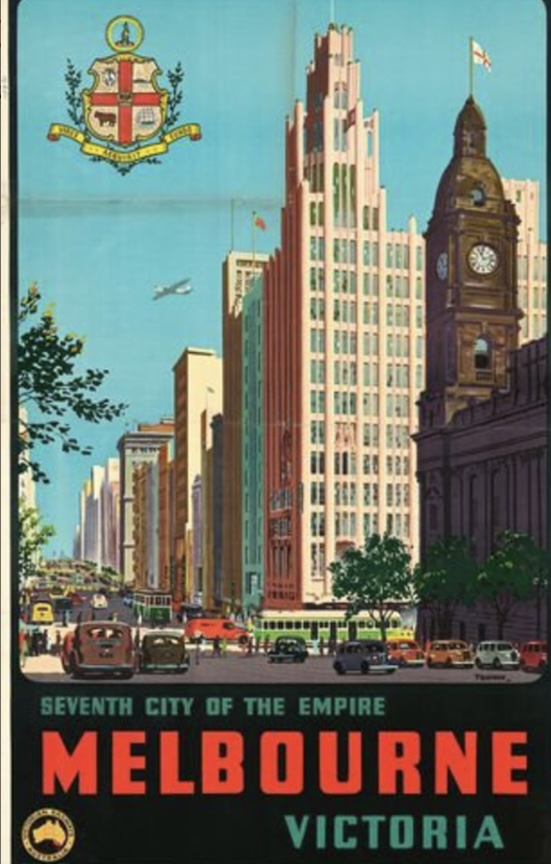

What point is there in Melbourne hosting the 2026 Commonwealth Games?

Oh for the good old days when we were part of the Empire, not the Commonwealth

Let me start by reminding you, Gentle Reader, that I dislike the current name for what originated as the British Empire Games. I do not think there was any good reason to change the name to Commonwealth Games, and I would be much more enthused about the whole show if it were still called the Empire Games.

British Imperialist (and yes, you can think it strange that an Italo-Australian is so anglomorphic as to be so enthused about the British Empire, but that’s me) tirade aside, let’s move on to the current issue.

Yesterday news broke that the Commonwealth Games Federation has approached Melbourne to bid for the right to host the 2026 Commonwealth Games. Apparently no cities elsewhere in the Commonwealth have indicated any interest in hosting it.

Melbourne is the obvious choice to host the Commonwealth Games, and in fact any other major sporting event, including the Soccer World Cup (God Forbid!) and the Olympic Games.

After all, we are the sporting capital of the world, hosting major events like one of those F1 GPs, one of the four tennis Grand Slams, the AFL Grand Final (except in Covid, and it still is the largest crowd for any domestic sporting final in the world), the Boxing Day Test, the 1956 Olympics, and the 2006 Commonwealth Games (yawn!).

No other city in the world loves its sport as much as Melbourne, and has as many world class venues already built to host major sporting events.

And therein lies the problem. The main excuse to host a major event like the Commonwealth Games is to have sufficient lead time to knock down some tired older venues and to replace them with shiny new venues with larger capacity, like what Brisbane is going to do to the Gabba for the 2032 Olympics.

The MCG (hallowed birthplace of Test Cricket and cradle of Australian Rules Football) is not sufficiently tired and old as to warrant a demolition and rebuild just yet. The Northern Stand (ie my name for the stand which replaced the Members, Ponsford and Olympic Stands and which wraps around half the ground) was only built in time for the 2006 Commonwealth Games. The Great Southern Stand, opened in 1991, replaced another stand which was built in the 1930s. Neither stand is particularly old.

I would dearly love to see a uniform wrap around stadium at the MCG in my lifetime. And I would like to see it much bigger, with a 120,000 seat capacity so that more members of AFL clubs could get tickets to see their teams when they play in the AFL Grand Final, or so that we can host a big enough crowd to greet Dictator Kim if he ever visits Australia (North Korea has some huge stadia for that sole purpose).

But I am realistic. Building such a stadium would be really expensive, and for the time being, having two large stands which each cover half the ground is almost as good. I do not see that we could justify bulldozing the current MCG until at least 2036, when the newest of the grand stands is 30 years old and the Great Southern Stand is 45.

The only real building project that would need to be done for the Commonwealth Games is to build an Athletes’ Village. We have done this twice in Melbourne’s history – for the 1956 Olympics and for the 2006 Commonwealth Games. Olympic Village is now a very feral suburb in Heidelberg West – one of the worst places in Melbourne to live (and remember that I am a Footscray boy!). I am not sure about the 2006 village on the southern edge of Travancore, except that I hope that we learned our mistakes from 1956.

But the whole risk of creating a village for several thousand athletes and then having that village become a festering social problem of a suburb for generations to come is a serious one.

For that reason, and in the absence of any legitimate excuse to rebuild the MCG, I am inclined to oppose the Commonwealth Games coming to Melbourne. The only solution I can see is for our Dictator Dan to sequester or confiscate several Docklands apartment towers under eminent domain and make those into the Athletes Village. No one will complain as no one lives there anyway.

Eat The Rich? The Politics of Envy

We all are familiar with the stereotype of the angry leftist would-be revolutionary who wants to line the bourgeoisie and capitalists against the wall and shoot them. Or who, in a cuter and more harmless form, simply indulges their immature views by wearing t-shirts with slogans like ‘Eat The Rich’.

A lot of those are just angry or envious of others, whilst the rest probably just feel guilty about their own white privilege. Few actually have read Karl Marx to understand where these ideas actually come from. On the other hand, I have read Marx.

Whilst I am a regular supporter of worthy causes, I have tended to be a bit skeptical of Oxfam. They have tended away from helping the poor and into the realm of pursuing political agendas, including those with some serious ideologically driven themes.

That is clearly shown in their new report, Inequality Kills, which has just been released. It does rightly point out that the richest people in the world have doubled their wealth during the pandemic, and that they own far more than two thirds of humanity.

Where it becomes problematic is in the prescriptions Oxfam have for dealing with this situation.

I believe in ‘free market’ capitalism, which possibly is an ideal rather than an easily realisable reality. I fear that what we really see in much of the world is crony capitalism and kleptocracy. These are matters which do need to be addressed, by such policy measures perhaps as limiting the amount of benefit which private individuals and companies can derive from exclusive licenses (eg in relation to mining rights) or exploitation of public resources or government subsidies; or by measured and carefully considered structural changes to taxation laws so as to prevent the growth of further wealth inequality.

Oxfam however, believe in a more direct and ideological approach, similar perhaps to the Russian revolutionaries of 1917 or other similar zealots. They call for a 99 per cent one off windfall tax on recent wealth gains, which strikes me as both rather drastic and an oversimplification of the issues behind the acquisition of all this wealth.

Moreover, to justify this, they describe this inequality as a form of ‘economic violence’.

This is where Oxfam loses all credibility. No violence has occurred – there has simply been, through the legitimate marketplace as framed by governments around the world, a lawful flow of wealth to certain people. No force nor fraud has occurred. When lawful activities have occurred and get described as ‘economic violence’, it is an ideologically polemic attack on the existing system, and the first step in describing law abiding (albeit rich) people as criminals or worse.

This is where they, whether they have read Marx or not, start to show an abandonment of the values which underpin democratic capitalism and liberal democracy, the economic and political systems which have made our world more civilised, prosperous and law abiding than throughout most of history, and start to flirt with the radical ideological ideas of Marx, which have been for the most part quite discredited.

I think that people should donate to charity. I personally donate on a monthly basis to four different charities. Oxfam is not one of them. I suggest that you should do likewise, and that if you choose to donate to a foreign aid charity, choose some other one (eg Fred Hollows Foundation) rather than Oxfam.

Wouldn’t Star Peace be better than Star Wars? (Reflections on Space Opera and perhaps on Human Nature)

Luke, I will not pay child support!

On Thursday I was discussing over text with a colleague the latest episode of the new Book of Boba Fett series on Disney+, when he said he could not wait for the Obi Wan series and season 3 of the Mandalorian.

He then said: “So many Star Warses.”

I had a lightbulb moment of mischievousness and replied: “But would it not have been better if the Sith did not exist so we would just have Star Peace in that galaxy far far away.

The reply to that was a face palm emoticon. Haha.

But this does get me thinking. After all, we are not going to pay for movie tickets or Disney subscriptions to watch Uncle Owen and Aunt Beru happily petitioning the Emperor for child support payments from Darth Vader so that Luke can drive around in his land speeder and stay another couple of harvests whilst they talk him out of going to Space Academy off world. Star Wars sells tickets and Star Peace is, well, boring.

Ever since the mythically blind poet Homer composed The Illiad 2800 years ago, our culture has been hardwired to appreciate what we now call ‘Space Opera’.

That consists of what existentially is epic theatre, with spectacular grand scale battle scenes and an agonistic (to borrow from Nietzsche – you can tell from a lot that I am writing here that I have read a lot of him) struggle between two opposing sides.

Homer and the later Athenian tragedians did not really think of good versus evil in those struggles – it was a struggle between opposing heroes fighting in circumstances that had been decreed by the Gods. The Greeks could appreciate that just because someone was their enemy, that did not diminish their Arete (warrior excellence) and worthiness to be considered a hero.

Most early kingdoms and city states saw matters in terms of a primeval struggle for success against their neighbours and rivals – a struggle for land, slaves, resources. Their enemies in war were not particularly different from them, Greek city states being frequently fratricidal for example, but they were not evil.

I believe that the idea of good versus evil is one which comes to us from Judeo-Christianity, and which itself was significantly influenced by the moral dualism of Zoroastrianism, that Judaism was significantly exposed to when the Persians defeated the Babylonians and ended the Jewish captivity in Babylon.

When you read the Old Testament, much of it is interpreted through a Zoroastrian lens of good versus evil (ie the people chosen by God versus the enemies of God). When you take away that lens, such as when you read Josepheus’s Jewish Antiquities, it reverts back to a historical record of the struggle of a particular people with no special claim to righteousness successfully defeating their local rivals.

The destruction of Carthage by Rome at the end of the third Punic War was not seen by the Romans as a particularly just cause, and their general, Scipio Amelianus, wept as the city burned.

Compare that to the Biblical account of the destruction of Jericho. We get the same total annihilation (except for the city’s traitors who are rewarded for seeing the justness of the Israelite cause), but Joshua does not seem to have any moral reservations. He is, after all, when we see him through this Zoroastrian lens, on a mission from God.

So when the Emperor Constantine adopted Christianity and the later Emperor Theodosius made it mandatory throughout the Roman Empire, we all became Christians and our hard wiring changed somewhat. We not only wanted our stories to be epic and heroic, but we wanted them to feature great eschatological conflicts between good and evil.

We have had some great epic predecessors to Space Opera since then. Le Mort D’Arthur springs to mind, and The Song Of Roland. In more recent times, the masterpiece by Tolkien. Or even perhaps Tolstoy’s nationalistic interpretation of the Napoleonic Wars, War and Peace?

What they have in common is that there are epic grand scale battles, and there is a clash between good and evil, which mostly ends with good triumphant.

Living in this modern age of rocket ships and nuclear power, the sky is no longer the limit for our imaginations. We want our epic stories to involve space battles on a huger scale than those terrestrial ones our ancestors enjoyed. Hence Space Opera.

Star Wars is the best example of Space Opera. Another great example is Battlestar Galactica, which (particularly in its 1970s version) could be considered a retelling of Xenophon’s memoir Anabasis.

We enjoy these stories, because we are hard wired to try and make sense of conflict, which has been part of the human condition since we came down from the trees (or left Eden – you decide), in terms of good versus evil.

The gaping problem with this is that history, and warfare, is rarely in reality a case of good versus evil.

In early times it was a case of the struggle for dominance and control of resources between neighbouring peoples and political units.

In recent history, it is usually a case of ambitious and greedy men with the levers of power trying to either line their pockets at the expense of others, such as in the colonisation of large parts of the world, or to extend their own dominion for the sake of power. The whole idea of good versus evil is frequently used to justify such aggressiveness, whether it is to spread their religion to non-believers to ‘save’ them, or because of the more modern religion – political ideology.

[As a side note, remember poor Finland in WW2 – lumped in with the Axis Powers even though all it wanted to do was to mostly successfully defend itself against an aggressive totalitarian state led by a murderous tyrant who had used the cover of war to occupy and conquer several of its own near neighbours. Finland was not a country of evil aggressors, and Stalin was not one of the good guys, despite eventually being forced to oppose Hitler.]

I will enjoy all the various new Star Wars series that are about to be on offer. But the whole idea behind our enjoyment of Space Opera relates to a part of our human nature that is not exactly reassuring, that we are somehow morally better than some of our fellow humans for some reason, and that our aggression against them is justified.

The Djokovic Debacle and the Clapham (or is it Footscray?) Omnibus

Ready for a reasonable ride?

A strange thing happened to me this morning. I accompanied my elderly mother to Footscray so she could get her hair cut and buy a few things from the Greek Deli in the Footscray Market.

Afterwards, whilst we were waiting at Footscray station for the 406 bus, discussing when the next bus was due and whether it was better to walk to the tram stop, an elderly lady asked me if I was Italian (fairly easy to surmise given what language I was speaking in with my mother). Then she started asking me what I thought of Djokovic.

I said that I was not really interested in the matter. My mother, who had not really heard what she had said and who probably assumed this lady was a Jehovah’s Witness (my mother has often been accosted by elderly JWs when waiting for a bus) said something like ‘We have our own religion’ which is her default position for dealing with strangers accosting her like that.

The elderly lady then wandered off to accost someone else about the Djokovic business, reminding me somewhat of a cranky Italian man who used to grumble and swear a lot on my local bus (haven’t seen him for a while, so I presume either he is dead or his long suffering wife has committed him for a nursing home for the insane).

This got me thinking, when an eighty-something year old Serbian lady with limited English gets so worked up about something that she starts to approach strangers waiting for the same bus to try and engage them in conversation.

English common law has long held a principle of reasonability called ‘The Man on the Clapham omnibus’. This was first recorded in 1903 in McQuire vs Western Morning News, although the judge attributed it to a counsel in the infamous Tichburn claimant case of 1871, and it could be based on a phrase coined by the famous Victorian era journalist Walter Bagehot.

The test, which has been elaborated on many times (including in 1991 in Australia at the AAT as ‘the man on the Bourke Street tram’) is essentially that of what would a reasonably educated, intelligent but nondescript person think would be reasonable conduct.

I for one, am probably a tad too quirky and eccentric (which means I am definitely not ‘nondescript’) to fit the definition of the man on the Clapham (or more specifically in this case, Footscray) omnibus. Nor do I think that the elderly lady waiting for the same bus as myself would fit the definition – she probably has had more limited educational opportunities and would have less opportunity to become well informed on the issues.

Now that’s more like it! A Footscray Omnibus

But when looking at the Djokovic case (which I have intentionally avoided doing so in any great detail), I am fascinated by the unenviable conundrum faced by both the courts in hearing the new appeal and the Minister who has finally decided that it is appropriate to cancel Djokovic’s visa.

It is not a simple matter just of the facts, where there are apparent ambiguities between state and federal policies, and where it does appear that Tennis Australia has intentionally sought to get Djokovic into the country regardless of the rules. The matter is far too inflamed and high profile for that.

Commentators around the world, including politicians and journalists, have weighed in with many different opinions. It was one of the seven daily items in my roundup email from The Washington Post overnight. One analysis I read this morning suggested that this was the one matter which would, given its symbolism, cause the defeat of the federal government at the upcoming election.

On an existentialist level, I see the whole business as rather absurd. Someone with some highly eccentric views about medicine and who has a talent for hitting a green rubber ball over a net has been denied entry into Australia, and has exercised his rights to have that decision reviewed by the courts. That such a matter becomes a worldwide headline seems quite bizarre to me – after all, don’t we have other bigger matters to worry about (eg Putin’s Russia, ISIS, Communist China, the Taliban, North Korea’s ongoing nuclear armament program, and of course the Covid plague)? And since when is being a high profile anti-vaxxer grounds for messianic analogies?

However we are not existentialists. News cycles demand news, particularly stories which suggest that someone, or some people, have made some all too human mistakes.

The weary public does not always understand the nuances of our legal system and such important principles as due process. Often inflamed by populist politicians and journalists, parts of the public sometimes feel great outrage and want action.

Happily, in a system like ours, based on principles which were being built long before the codification offered in the Magna Carta, there is due process. We do have judges who are learned and fair minded and it is up to them, rather than the court of public opinion, to decide whether a decision is fair and reasonable and lawful.

And those judges will be asking themselves what would the man on the Clapham (or Footscray) omnibus think is reasonable in this case? It will be harder than usual to arrive at a just conclusion, given how inflamed and divided opinion is on the matter, including informed opinion.

Has Contemporary Cinema Lost It’s Creativity?

As I am at the tail end of a 3 month staycation, in which I have become rather bored with the remaining offerings on Amazon Prime and Netflix, I have started going to the cinema again.

Summer is a good time to go to the cinema. Many years ago, I chose to watch the 4 hour epic Titanic one 40 degree celsius scorcher of a day. Four hours of watching ice bergs in a dark air conditioned theatre was a good way to wait for the cool change that evening.

So what movies have I seen this summer? Off the top of my head:

Dune Part 1

No Time To Die

Kingsman

Aside from those, the following other films are currently showing at Hoyts Highpoint:

Spider-Man – No Way Home

Ghostbusters: Afterlife

Sing 2

Matrix: Resurrections

West Side Story

Clifford The Big Red Dog

House Of Gucci

Aside from House of Gucci and possibly Clifford, all the other films I have listed are either remakes or sequels of some sort. [Clifford reminds me of other giant dog movies like Digby or Beethoven.]

So what is it with Hollywood now? Has it lost all originality, or is it just that it has grown so stale and risk averse that it wants to rely on some sort of tried and true formula to make movies? Steven Spielberg used to be known for his blockbusters like Jaws and ET, and later on for some more nuanced films like Munich. Why is he now remaking West Side Story, a classic film from 60 years ago which needed retelling about as much as one of his own blockbusters?

And don’t get me started on Ghostbusters. The first film, from 38 years ago, was a lot of very silly fun (although I object to the ripping off of Huey Lewis’ I want a new drug for the theme song). The sequel, from 1989, did not need to be made at all – it was totally lacking in any originality. Why, after a failed woke feminist reboot, do we need to get a Ghostbusters 3?

Australia Hits 1 Million Covid Cases

I was wrong, and not in a good way. Last week I estimated that at the then current rate of increase of covid cases, Australia was going to reach 1 million cases by Tuesday.

Well, it’s Monday and we are already at a million.

Happily, there is no need for any further lockdowns. Everyone is now so used to this mess that they are just staying home anyway to try and avoid catching it. When at Highpoint West this morning, the shopping centre was practically deserted, as was my bus.

Should Tennis Australia Get Defunded?

In a land where sport is sacred

Where the labourer is God

You must pander to the people

Make a hero of a clod

– Henry Lawson

I like to quote Sir Frank Lowy’s justification for his sponsoring of Australian soccer rather than just giving money to charity. He once dismissed his critics with the succinct comment that ‘Sport brings joy’ or something along those lines.

Much as I am not a very sporty type, I love my AFL team (Western Bulldogs, for those new to my blog) and I have been known to occasionally watch a rugby game on the TV or at the pub, or to stare at the Test Cricket on the TV whilst downing a few cans of cold beer on a warm day.

I am however, as I observed in great detail during the Olympics last year, very skeptical about federal government funding for sports in Australia. This is for several reasons.

One is that sport is mostly the preserve of civil society, and that when government funds something, they control it – he who pays the piper calls the tunes.

Another is that if sport is going to get government funding, then the construction of giant stadia is more the preserve of state governments (in partnership with the relevant sporting leagues and organisations), whilst community playing fields and sporting facilities really are the business of local government.

A more concerning one perhaps is that federal government funding for sport does push a nationalistic agenda, and often one where the main goal is winning at all costs rather than good sportsmanship. Other less benevolent regimes than our own, such as the Eastern Bloc, the PRC, and of course Germany in 1936, have frequently pursued sporting success as a propaganda tool.

The whole Djokovic debacle unfolding this past few days has had me wondering about the behaviour of one of our publicly funded sporting bodies, Tennis Australia.

From what I have been able to ascertain from the mainstream media, Tennis Australia made some discreet general enquiries in November about vaccination requirements for persons wishing to enter Australia. They then selectively interpreted the replies they received from the health minister and a senior official, and extrapolated a conclusion diametrically opposite to the established position, and then unilaterally announced to the world in general that Djokovic had a vaccine or travel exemption of some sort and was going to come to The Australian Open.

The sheer arrogance of the attitude of Tennis Australia is breathtaking in its scale. Australia, being a sporting nation, values its sporting heroes and major sporting events highly. The Australian Open is probably our premier ongoing international sporting tournament (sorry petrol heads – the Grand Prix is not even close).

Obviously Tennis Australia believes that it is too big to fail, and that a few rules that the rest of us mere mortals have to abide by can be disregarded or brushed aside.

It turns out that this is not the case, even through Djokovic’s father is currently comparing Djokovic to Jesus (does this make Djokovic pere God?).

The contempt that Tennis Australia has shown for the rules that the rest of us are forced to live by shows that it and it’s overpaid sporting administrators clearly indicates that they think that they are better than the Australian public.

Which does beg the urgent question: Why are Australian taxpayers funding Tennis Australia to the tune of about $5 million per year?

I want my twenty cents back!

How Seriously Should We Take The Xi Variant?

The Xi variant, more commonly known as Omicron (there being no such adverb as ‘cowardlyLY’ in the English language yet to describe the relevant verb in this context, ‘cowardly’ itself being an adjective, and I have already sought to make ‘Roxy’ my contribution to the English language this month) seems to be going forward at a rapid pace.

As I observed yesterday, it looks like reaching a million cases by next Tuesday and will probably infect everyone in Australia by the end of February. For the first time during this pandemic, people that I know personally are infected with this plague, both colleagues and family friends.

What does this mean for us going forward in the coming weeks?

Aside from restrictions starting to get reimposed in Victoria and NSW (and hopefully those stay minor), there are a few subtle and unwelcome changes to the society we had before the pandemic started.

Let us count the ways.

First, people seem a lot more apprehensive than they did even as recently as eight months ago. The recent infection numbers are definitely causing the numbers of people frequenting shopping centres and other public places to visibly drop, even though the main restriction currently in place to deter people is the constant QR code scanning (something which does turn me off from going into a shop to browse).

Second, interest in travelling interstate or overseas has dropped. Nor are people that keen on intrastate travel, given the current pandemic infection rates. After all the border closures, lockdowns and ‘rings of steel’, there is no trust that anyone will be able to take a holiday away from home and be able to either reach their destination safely or return according to plan.

Third, shortages, shortages, shortages. This time, infections and isolations amongst logistics staff (ie truck drivers) mean that goods are not getting delivered. On top of this, infections and isolations amongst supermarket staff mean that there is no one there to stock the shelves or to serve you at the check out. And staff shortages mean that restaurants and bars and cafes, even if they want to reopen, are going to find it hard. There were shortages of bread and meat in the supermarket this morning. I did not bother looking for toilet paper because I do not need to stock up – I have a 2 year supply.

For the first time, the number of people who are infected in Australia has reached significant numbers, despite the number of people fully vaccinated. This is going to bite, and we know too little about the Xi variant so far to trust that it is going to be mild.

Large numbers of people are going to isolate and stay away from their jobs and out of society in the coming weeks, and running the essential parts of the economy like grocery retail and health services is going to be very challenging without people at their places of business.

The Xi Variant Takes A Stranglehold

The COVID variant commonly known as Omicron was originally meant to be called the Xi variant, as that was the letter of the Greek alphabet next in line to be used to name it. However, the World Health Organisation showed its usual backbone and named it Omicron so as not to offend the communist dictator Xi Jinping, whose regime has been most instrumental in the inadvertent (?) spread of this plague.

Yesterday, total covid numbers in Australia rose by just under 65000 to about 612,000 cases since the plague began 2 years ago. That is a one day increase of 11%. At this rate, we will hit 1 million cases by next Tuesday and everyone in Australia could catch the plague by the end of February.

Globally, yesterday there were 2.3 million new cases – the most daily cases reported ever – during one of the earlier waves the daily case numbers approached 900,000 at their peak.

Maybe the Xi variant is just nuisance value, although just like it’s namesake, I am not prepared to take the risk on that.

And today we have the debacle of tennis superstar and famous anti-vaxxer Djokovic being refused entry to Australia, although several days ago Tennis Australia and the Victorian government had announced that he was going to be allowed to come and play in The Australian Open. I am not so interested in the details as to how and why he was originally told he could come (it all seems quite Byzantine to me), only to be stopped at the airport on arrival, as to what the hell was going through the minds of the people who announced his exemption in the first place?

It strikes me as something particularly tone deaf. Here, we have been going through two years of lockdowns and draconian suppression of rights such as those of expression and protest. People have been significantly economically disadvantaged by extended closures of their businesses. Some 2000 Australians have died, and many others seriously ill. Vaccinations, whilst not technically mandatory, are required to enter most shops, and indeed to work in most occupations. Queues for Covid tests take many hours, and now people have taken to queuing outside pharmacies to buy the home tests this week. We have a new wave of shortages of groceries due to the latest wave causing many supermarket and logistics staff to have to isolate. We have to wear masks and incessantly scan QR codes thanks to this plague.

And Tennis Australia thinks someone who is rich and famous can just waltz in despite not being vaccinated?

It does make me suspect, as many people already believe, that in Australia, we have one rule for the rich, and one rule for everyone else.

In the meantime, we have this Xi variant ripping its way through the population. Whilst I write, just the totals announced for Victoria, NSW and QLD are over 60,000 this morning. I really think we will get to a million cases by Tuesday. The damage that this plague is doing to small businesses, grassroots sporting and community groups, and civil society generally is going to take years to repair. Disruption to the The Australian Open, whilst this tournament is a source of prestige to Australians generally and to Melbourne, is minor collateral damage – although Tennis Australia appears to be headed by people who have the ear of politicians, people who are tone deaf.