What I Miss Most During Lockdown….

On Saturday, whilst binge watching some TV, I discovered a new show on Apple TV+, a gentle sporting comedy called ‘Ted Lasso’, about an American gridiron coach who is hired to coach an English Premier League soccer team.

The new owner’s motives for doing so are somewhat Machiavellian – she got the team as part of her divorce settlement from a philandering husband and wants to get her revenge on him by slowly destroying the team, and what better way to do so than by hiring an American who knows nothing about soccer.

Towards the end of episode three, Ted is sitting at lunch with a sports reporter from The Independent, who is writing a detailed piece on him. The restaurant owner keeps bringing out hot dish after hot dish for them.

This did really remind me of what I miss most right now. Eating in restaurants, preferably with a friend for company, and with red wine. I really miss eating in at my local Thai restaurant Bangkok House, where I have been going since it opened 9 years ago (a real family affair with the owner’s aunt in the kitchen and her husband or eldest son helping out with waiting tables), or even the other Thai restaurant in the area, Avondale Thai (another family affair where the owner’s wife is the cook).

I miss Indian food. A friend of mine recently moved to Maribyrnong and lives about 5 minutes’ walk over the bridge from Indian Star, one of the longest established Indian restaurants in the western suburbs (I remember going there 20 years ago – take that Aangan and the others in West Footscray village!). Going to Indian Star in late June is probably close to the last time I have been able to eat seated in a restaurant.

Being in full lockdown means I am now working from home every day, not even venturing once a week into the city. This means I have not even passed through Footscray on the bus or tram in weeks, let alone set foot there. And it must now be about seven months (before the pandemic hit) since I last walked down Barkly Street (a pub crawl with one of my friends in early January to check out all the recently opened bars in Footscray). I think it is almost two years since I last ate at an Ethiopian restaurant in Footscray (fyi, there are about 15 of them at any one given time, and at one point, I had eaten in all of them). When this is over, I must go and eat in all of them again.

Sadly, Jim Wong’s closed down late last year, but Poon’s Chinese Restaurant, which has been there almost as long, is still open in Footscray – or at least it was before this lockdown.

I remember walking through Footscray in Grand Final week four years ago, for the first time after I had returned from a month in Italy. Now, it has been so long, thanks to this lockdown, since I have last been there that when I next walk down Barkly Street, it will seem a totally alien world.

Here’s hoping that all those restaurants and bars survive to see me again.

Silk Roads and all that

Ok… firstly a shout out to my readers in the Peoples Republic of China. It seems that I have more readers there right now than where I would like them or where I feel my words might make more of a difference (ie in the Commonwealth of Australia).

I like having readers, regardless of their motives.

The great narrative historian, Sir Martin Gilbert, in his history of the 20th century, made an error once, in that he claimed in an early volume that Judge Learned Hand was American Indian. With a name like Learned Hand, perhaps someone grown up on Hollywood Westerns might think that (I have read enough history to see some stranger names amongst American puritans such that I will not fall prey so easy now). He had to publish a retraction or clarification of his error in a later edition of that history.

On page 436 of his awesome (I am not going to be banal and predictable like rote writing book critics who like to say ‘magisterial’) book ‘The Silk Roads’, Professor Peter Frankopan made what appears to be a mistake which even a less clever person like I can pick up. He talks about Egyptian dictator Nasser launching an attack on Israel in 1967. The pattern of the history narrated over the next six years of the twentieth century is based on what his assumption is there.

The problem I have is that in 1967, Nasser did not attack Israel. Israel mounted a pre-emptive first strike on Egypt where it destroyed Egypt’s Air Force on the ground. Israel does mount many pre-emptive first strikes, but few are so serious as to be counted as wars.

But I am probably being pedantic. I am very impressed with the intellect and cleverness of Professor Frankopan. I can excuse small errors in a history which takes in three thousand years.

‘The Silk Roads’ is an extremely thought provoking history of the world, from a different perspective from that which westerners usually see.

Essentially, the world can be understood, in terms of how things move – goods, people, ideas, power. The dynamics which Professor Frankopan discusses are not new, but they are something which he is discussing in a way different to the accepted pattern.

Diplomatic Immunity

https://www.theguardian.com/australia-news/2020/aug/10/queensland-court-dismisses-student-activist-drew-pavlous-case-against-chinese-diplomat?CMP=Share_iOSApp_Other

Drew Pavlou, the UQ student who has become a high profile human rights activist (at great personal cost) has lost a court case where he accused the PRC consul of inciting violence against him. The case was lost on the issue of diplomatic immunity.

Like most people of my generation, the term diplomatic immunity raises the spectre of the villains in Lethal Weapon 2.

More seriously however, if the PRC consul in Queensland has been inciting violence against human rights protesters, then the issue is one as to whether another aspect of the 1963 Vienna Convention on Consular Relations has been violated.

This convention not only provides for diplomatic immunity for consuls, but also places an obligation on such diplomatic missions not to interfere with the internal affairs of the host state. Article 55.1 of that convention requires such people not only to respect the laws of the host nation, but places ‘a duty not to interfere in the internal affairs of the State’.

I wonder whether the issue as to whether the alleged abuse of diplomatic immunity in this way is going to be explored further. The Trump administration has been closing PRC consulates in the USA. Perhaps our national security will require us to start doing likewise.

In Which I Am Visited By A Kookaburra….

When I was walking to the supermarket this morning, I happened to hear a rather uncommon but strangely familiar bird call.

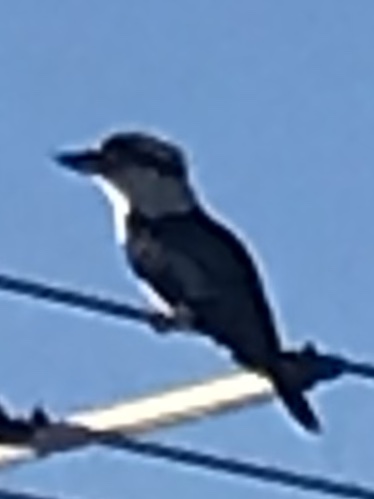
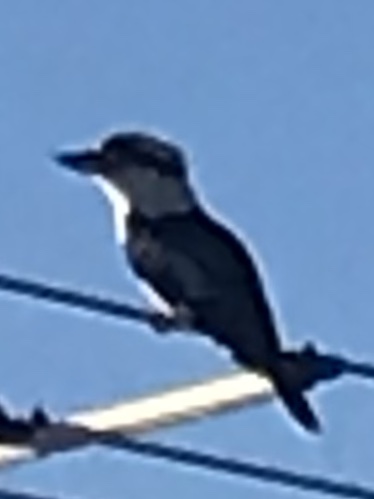
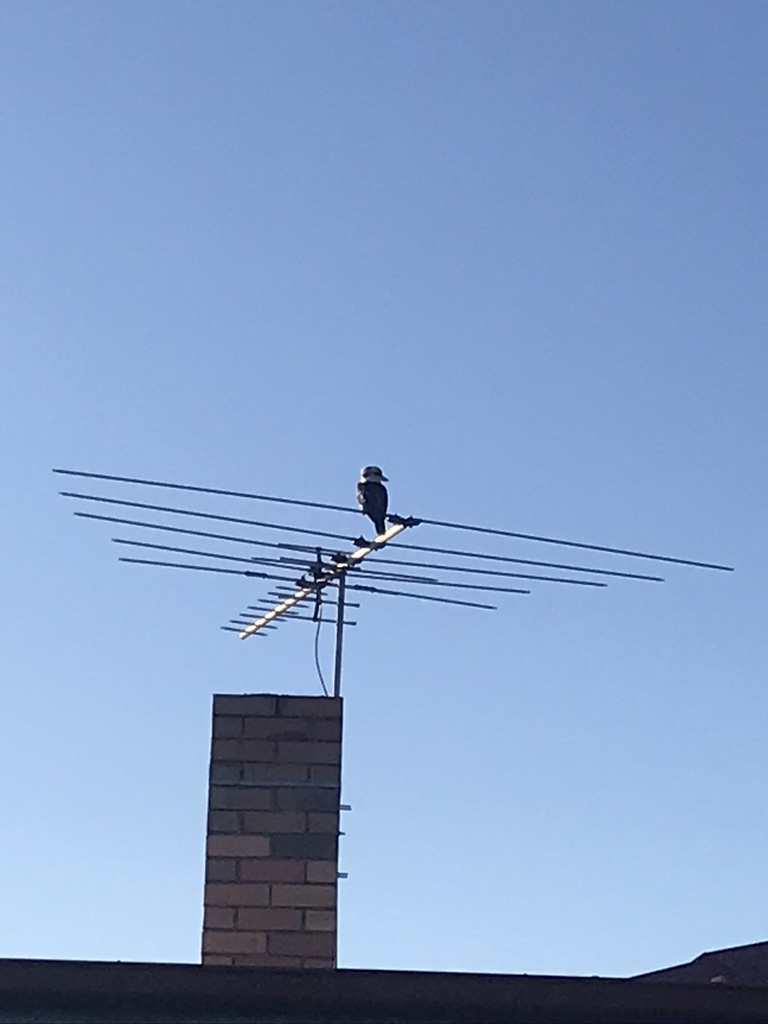
I looked in the direction of the sound, and lo! it was a kookaburra on the antenna of the house opposite mine.

This is pretty rare. Whilst I have read that kookaburras are occasionally seen along the Maribyrnong valley, this is the first time I have ever sighted one in my suburb – or indeed in greater Melbourne (with the one exception of the golf course at Fairfield about 12 years ago).

And here is the proof.

Falling Towers and Modern Ghost Towns: What does the future hold for inner cities post COVID?

What is the city over the mountains

Cracks and reforms and bursts in the violet air

Falling towers

Jerusalem Athens Alexandria

Vienna London

Unreal

Friends and foes (alas) alike who have known me long enough will know that I have this tendency to quote T.S. Eliot, an intellectual pretension which I have yet to outgrow (FYI, I am familiar with the TISM song from the mid 1980s which ridicules Eliot, in case you are wondering).

Sitting in my study on a rather cold Sunday afternoon peeping out at the grove of orange trees in my back yard, I cannot help but wonder about the future of many things which are likely to change when we are finally able to venture out of our homes again after this pandemic.

One is the nature of the inner city, to which many thousands of us commute to work in office blocks, and where thousands of people live.

Speculating on this is not highly original. After 9/11, when people in the USA were talking about rebuilding the World Trade Center taller than it had been (I think they actually did), some urban planners were saying that the day of the skyscraper had passed, and that people were more likely to telecommute in future rather than to need to work in large office blocks.

Perhaps the stars were not fully aligned for such a paradigm shift just then. My employer had only rolled out desk top internet access to staff the previous year, and I don’t think the Motorola phone I carried then offered internet (I was only then mastering SMS).

Now however, I am working three days a week at home (I so glad I upgraded to NBN and unlimited data in February), which is less than most of my colleagues, who are only coming into the office to do systems updates. The world of work has not ended – people seem more productive in the current arrangements than they did before.

Which does beg the question as to whether, going forward after the COVID is over, we will still need people to work in office buildings, or whether telecommuting (as the Americans call it) will become the new normal. More broadly, what is this going to mean for inner cities across the first world?

I will talk in terms of Melbourne, which I know well, but what I say probably could be true of most other western world cities, with large white collar workforces commuting to a central business district.

Almost invariably, my familiarity with the Melbourne CBD started in 1991 when I started working in an office there (with few short interludes elsewhere, either in the suburbs or interstate, I have continued to be based in an office in the CBD since then). Before then, my visits to the ‘city’ were more sporadic, and whilst I knew my way around, it does occur to me now that my memories of it pre-1991 are fairly few and far between. I did not have my favourite pubs, bars, or restaurants, or bookshops for that matter.

But I do know well that the city has constantly changed. The most visible and constant change is that of the skyline, where there are many gigantic apartment towers now rising amongst the office blocks and the expansion of the CBD into Docklands and Southbank (I remember when the Allens Lolly Factory with its neon sign still stood on the south bank of the Yarra, a familiar sight whilst I was taking the train home from uni after dark in 1987). When I look at the skyline from around the corner from my home, I marvel at the sheer volume of tall buildings that I cannot name.

Approximately 200,000 people still worked, pre-COVID, in the CBD. You can probably add a few more in the Docklands and Southbank expansion. According to the 2016 census, 37,321 lived in the CBD at that time (by now, you could probably add quite a few more thousand to that tally).

That the number of people living in the CBD is around 40,000 and climbing is itself a major change. I remember in 1984 reading an article in the newspaper which discussed the small community of 500 people then living in the CBD, in loft apartments in laneways. Until recently, the streets at the heart of the financial sector and legal professions, William and Queen Streets, would be deserted after 5pm on a weeknight until Monday morning, as indeed would be the intersecting streets at that end of town.

I remember in the 1990s as convenience stores gradually started appearing in the CBD, and then more recently getting replaced by actual (mostly scaled down) supermarkets.

The city has changed quite a lot, but a lot of this change is tenuous. 57.3% of the city’s denizens are tertiary students, most of whom are international students. Geopolitical fractures accelerated by the COVID crisis could impact on the durability of that demographic.

A large number of apartment blocks have sprung up on fallow land in the northwest corner of the Hoddle Grid. Pundits suggest that when those are completed and full, that corner, taking up some 8 hectares, will have a greater population than several major country towns.

But are people actually going to live in a lot of those apartments? The biggest problem faced by Docklands since it started to develop over 20 years ago is that whilst there have been few problems with selling apartments, it appears that overseas investors have bought a lot of those as a way to park money in a safe jurisdiction, and those apartments have remained empty – adding up to an incredible vacancy rate of about 25% in Docklands. This may have contributed to the low viability rates of restaurants and bars (and retail businesses) in the Docklands precinct. Whenever I walk through, the vacancy rate in shops is highly noticeable.

And there is the problem of cowboy developers, who have built apartment blocks with flammable cladding or other structural issues. This problem, which is not unique to Melbourne, is one which must be preying on the minds of many apartment owners.

As an aside, if you are going to be confined to your home during a pandemic, doing so in a stand alone house in the suburbs is much better for your sanity than a one bedroom apartment in the CBD – after all, the benefits of the latter evaporate if you cannot go outside to bars and cafes and restaurants.

What is going to happen to the CBD if a large number of those 200,000 office workers stop commuting in each weekday and work from home instead post-COVID? What if, at the same time, the boom in international students finally comes to an end? The viability of retail in the CBD will be diminished, as will that of the various restaurant precincts. We could be looking at Melbourne CBD (as indeed any other similar inner city area) turning into a modern ghost town.

The West Melbourne Swamp and other reflections on local history

At the risk of sounding paternalistic, and possibly imperialistic, where I live in Avondale Heights was, for a brief moment in time, the very edge of the known world.

In early February 1803, the naval officer James Fleming and the surveyor Charlies Grimes left their ship in the bay, and rowed up the Yarra mouth. They mistook the left hand fork for the main river and led their small party up the Maribyrnong until what is now known as Solomon’s Ford, where they were unable to get their boat over. They explored on foot for a few miles, and then when a storm came camped for the night.

Solomon’s Ford is at the west end of Canning Street, little more than five minutes walk around the corner from where I sit right now, typing these words. As Joseph Conrad wrote: ‘the darkness was here yesterday’.

I have always had an interest in local history, and can tell you who many of the main roads in the Maribyrnong area were named after (mostly early pastoralists who bought the land, either in the 1840s or sometime not too long after, or after suburban subdivision, later local community figures). From an early age, it intrigued me greatly that an imposing bluestone structure with tower, known locally as Raleigh’s Castle, stood on top of the main low hill in Maribyrnong, somewhere close to where Highpoint Shopping Centre is now located. (Sadly it has been gone a long time, and the only traces of Joseph Raleigh now are the main road in Maribyrnong, the oldest of the bluestone factory buildings in Pipemakers Park, and the fact that the suburb of Maribyrnong is still visibly divided between the urbanised eastern half he once owned, and the western half which still partly is owned by the Defence Department.)

Just like Conrad’s character Marlow, I have always been intrigued by maps – in my case older maps of Melbourne. In the 1970s, some maps still recorded the original course of the Yarra River, before Coode Canal was dug in the 1880s, even though it had been filled in during the 1930s. The 1956 canvas map of Melbourne which hangs on my wall still features the West Melbourne Swamp, sandwiched between Dynon Road (formerly known as Swamp Road) to the north, and Footscray Road (then recently rebuilt to run through the swamp rather than to the south of it) to the south.

The existence of that swamp and the now long gone northern bend of the Yarra, to the west of the marshland around Moonee Ponds Creek, created a one mile thick barrier between Melbourne and the village of Footscray, which was starting up in the 1850s on the west bank of the Maribyrnong, just north of the original fork of the two rivers.

On Friday night, I finished reading David Sornig’s book, Blue Lake, which is about this long forgotten swamp, and the itinerant community of Dudley Flat, a humpy town which sprouted up in the Great Depression near the junction of the Yarra with Moonee Ponds Creek.

David Sornig is originally from Sunshine, and much of an age with me (probably a little bit older). He writes of those of us who can remember milk deliveries by horse cart in the early 70s (I never saw it, I only ever heard it, and my mother recently found a horse shoe in her street, just opposite where the diary used to be), and horses kept on outer suburb blocks.

He also through a great deal of meticulous research and humanity brings to life three of the denizens of Dudley Flats from the 1930s, and the misadventures and occasional tragedies which brought them to live in that humpy town on the edge of a city tip.

No book, when you buy it and choose to read it, is ever quite what you expected it to be, and that is probably what makes reading so fun. I was expecting an account of how the swamp vanished and Coode Island first came into being and then ceased to be (as a literal island). Instead, this is just the frame inside which Dudley Flats and its inhabitants are portrayed for us.

Of course, I was intrigued by his attempt, with two friends, to retrace the original course of the Yarra and the outline of the West Melbourne Swamp late in the book. It is very much the kind of thing that I once would have wanted to do, except that aside from the drainage canal parallel to Dynon Road, there is little greenery to see, and much industrial wasteland to discourage one.

Oh, and as a personal footnote. When I look west along Canning Street these days, there is a housing development going up on the valley wall on the other side of the river, just across from Solomon’s Ford. So much for preservation of some semblance of wilderness at what once was the very edge of the known world.

Uber Eats and Netflix: Bread and Circuses, 21st Century Style

iam pridem, ex quo suffragia nulli / uendimus, effudit curas; nam qui dabat olim / imperium, fasces, legiones, omnia, nunc se / continet atque duas tantum res anxius optat, / panem et circenses. 

Writing at the time the Roman Empire was reaching its greatest extent, in his Satire X, the Roman poet Juvenal denounced the apathy of the people of Imperial Rome. Instead of the civic virtues of the Republic where the people handed out high office and military command, they were now contented to hope for bread and circuses.

At this point in our own society, where we have abundant wealth and material prosperity, we are also, compared to our immediate forebears, passive and apathetic. Few people, as a proportion of the whole, see any need for civic involvement, whether it is in a political party or in a community group or sporting club. And some, like that recently disgraced state ALP MP, seem to be doing not out of civic duty, but for power and profit, a pathetic form of rent seeking.

We protest less, and we accept what our elected officials say much more. We are becoming like sheep, with our shepherds, as Nietzsche might have warned.

Are we really content, and are we really happy, or have we really reached the point where we do not care? Previous generations cared, but that is because they had skin in the game. World Wars, depressions, conscription, the threat of nuclear annihilation, those were things which threatened previous generations in a very real way. Hence they would get involved in their communities and show civic duty, including getting involved at the grassroots in political parties, community groups, and sporting clubs – the building blocks of civil society.

We rest on what previous generations have created, and we are currently at risk of losing much of that.

Take the political parties. The pandemic means that meetings are no longer possible, and political parties have not yet created rules that permit annual general meetings and internal elections to be held virtually. This plays into the hands of those who control the party machines, who are as interested in actual grassroots involvement as the people in Tammany Hall over a century ago.

The Victorian ALP is an extreme example. Its leaders have acquiesced over many years in practices similar to the Tammany tactics, known as branch stacking. This means that at least a quarter of the current 16,000 members are probably not there for bona fide intentions. The result is that the entire state branch has been placed in administration and the remaining members have been disenfranchised entirely for the next 3 years. Those who have a sense of civic duty are reduced, from active citizens, to passive agents of the party machine.

The Victorian Liberal Party is not much better. It has had some apparent episodes of branch stacking as well in recent years, mostly involving members of various Christian fundamentalist or post-Christian (as I call some American sourced religions from the mid 19th century) congregations. I do not think that the motives of those engineering such membership drives were out of civic duty, but rather out of a desire to wrest control of the party machine, perhaps involving people who might not be most accurately described as ‘liberal’ in their ideas. Nor has the party machine done a very good job of engaging with its current 11,000 members.

These parties were created at the grassroots by people who cared about issues facing the nation. To have them turned into soulless machines controlled by apparatchiks is not a healthy development for our society or democracy – especially at a time where both of these parties have welcomed into their fold with open arms and without scrutiny persons with apparent links to the Chinese Communist Party.

Lockdown also, especially as it stretches on further, threatens the existence of other civic groups, such as sporting clubs and cultural associations. A friend of mine plays hockey each winter. Her hockey competition was suspended a few months ago. When will it resume? I belong to a small Italian cultural group, which tries to hold a couple of activities each year. Right now, even our annual gala dinner at the end of the year is threatened by the lockdown, creating a threat to member engagement.

Creating and building community groups and clubs takes years. Closing them down can take minutes. Just look at the decline of Lawn Bowls clubs around the suburbs in the past thirty years.

The public has for the most part uncritically accepted the need for a lockdown, and placed a lot of trust in their governments. This is the type of society we are now, passive and obedient and uncritical. The debate is not whether lockdown is necessary and whether or not the authority of the state is being misused or not, but whether the lockdown has been handled effectively.

Like the people of Ancient Rome, we have become clients of the state, with Jobkeeper and related ultimately inflationary measures, to keep discontent and disquiet to a minimum. Those aspects of Civil Society which are usually most independent of the state, such as churches and small businesses, have been forced – with barely a whimper – to close down.

Hardly anyone is talking about what all this means for our society going forward.

Some people, mostly economists (and a few amateurs like me), are concerned that the Uber-Keynesian measures being pursued by western governments all over the world, running up titanic and unprecedented deficits and effectively printing money, are going to have major consequences for the financial system and the world economy, to say nothing of our own national economy.

But no one seems to be talking about what the consequences are for the health of Civil Society, at a time when sporting clubs are not competing and the only community groups operating are those who are mostly funded through the largesse of the state apparatus.

Instead, we sit at home, watching our Netflix, and getting our junk food deliveries from Uber Eats, content that the NBN gives us the reliable connections to keep us entertained and fed. This is very similar to various dystopian futures which have been written about or filmed, mostly recently in I, Robot. Is this the kind of future we want for our society?

Bread and Circuses indeed, 21st century style.

Hibernating during Pandemonium….

It is now mid-winter and I am in a state of semi-hibernation, which is strange because winter is usually one of the most academically and professionally active times of the year. I do my job on my laptop, and go into the office twice a week, but I see no point in taking holidays, and I am not exactly doing much else right now.

The 8th of July marked 3 months since I started growing my isolation beard. My friends say (mostly when they see me on Zoom or Skype or What’s App video calls) I look like a rabbi or an ayatollah now, with lots of streaks of grey and white in it. (It has been almost a decade since I last grew a beard, and never for this long, so I do get a bit of a shock when I get these reminders of ageing.)

Officially, I think I started working from home on my laptop on 31 March, so we are now about three and a half months into this surreal self-isolation.

April was the cruellest month, as T.S. Eliot would say (I have a life long propensity to quote him which I still can’t outgrow!), with the hard lockdown keeping most shops shut and Melbourne almost On-The-Beach empty.

May started to see shops reopen, mostly because landlords are rather ruthless about rent relief unless they are dealing with someone more ruthless than they are (like a certain rag trade billionaire), and businesses could not stay shut without trying do something to get some cash flow happening.

June saw the first signs of normality, with rules relaxing a little and restaurants and pubs starting to try to reopen. And then WHAM!

It looks like Victoria has got a major health catastrophe developing around our ears right now. Not only have we suddenly gone from single digit daily cases to high single digit cases, but we are now well into the triple digits every day. 288 yesterday, 216 today, and we are in lockdown til August 19th. I expect it will be much longer than that.

Hotel quarantine, where the problems seems to have emerged, is now subject to an official enquiry, which will report in several months. Hopefully this enquiry is conducted properly, and reported on openly, rather than with the secrecy and lack of transparency which is becoming systemic (if not pandemoniac) in the Andrews regime.

Chairman Dan is now asking people to wear masks in public, and with growing anger and resentment towards him and the need to hold him accountable for what has gone wrong (just as he was taking the credit for things going right), it looks like he will need to wear a mask in public to avoid rotten tomatoes being thrown at him.

He is good at finding scapegoats (as we now see from how he acted decisively when the long standing branch stacking problems inside his party finally became front page news), and he enjoys a healthy majority in the legislative assembly, so he probably is considering whom he should throw to the wolves to protect his own job. [Hopefully he flushes out his ill-considered belt and road agreement which is another step towards selling our state to Communist China.]

Of course, the alternative premier is the colourless Michael O’Brien, who is unknown to most voters, publicly described by the press gallery as somewhat abrasive (I know this to be an understatement), and only got the job by default when the chap with the numbers lost his seat at the last election. The idea of O’Brien as premier fills me with dismay. Indeed, his very colourlessness means that the only lively member of the state opposition, Tim Smith is being touted as a possible challenger.

Tim Smith, however, is not exactly a big picture thinker. He has most recently gotten publicity for demanding that the golf courses are reopened and that the flying foxes in Yarra Bend Park in his electorate be driven out of his area. I suppose he wants to be in relation to fruit bats in Kew what St Patrick was to snakes in Ireland. But that does not make him a credible challenger to the one shade of grey that is Mr O’Brien.

There are two years and four months until the next state election. That is a long time. They say that Oppositions do not win elections, Governments lose them. Indeed, the only effective state opposition leader in my lifetime was the loud and sometimes gaff prone Jeff Kennett, who took three elections to finally win, and then proved to be a very effective premier. He was always out there, for about a decade (aside from two years of exile), loudly leading with his chin, but always making an effort and always being noticed. Compare that to the mumbling insipidity of Mr O’Brien, who is more invisible than a Baggins when wearing a magic ring.

Hmm… perhaps I have underestimated the talents of Tim Smith. Maybe he will be a more credible Opposition Leader.

Grumbling about and making unkind comments about political leaders of either colour is quite fun, although not as fun as throwing tomatoes at them (I knew a bloke at uni who suddenly turned a few years later into a serial pie thrower at politicians – it got him into a fair bit of trouble). But I think there are lots of other aspects about self-isolation I can reflect upon.

I once said to one of my friends that I would love to own a larger house, so that I could have one room as a dedicated man-cave. He observed that my entire home is a man-cave, and indeed it is, although I do not have a dedicated bar, pool table, jukebox, pinball or 80s arcade game machine, or framed sports memorabilia on the walls.

So you might surmise that living alone in a three bedroom brick veneer home adapted to my own unique wants and needs in what is now an intermediate suburb of Melbourne is not exactly an uncomfortable way to hibernate during this pandemonium which is the local resurgence of the pandemic.

I reached ‘peak library’ several years ago, and I am not intending to add to the 2000 books on my shelves. I tend to give most books I read now away. But I do have about 80 unread books in piles in my lounge room. I do chip away at that pile.

Just before the pandemic started, I got my NBN installed, and upgraded my internet plan to unlimited data (I had binge watched a few too many shows between Christmas and New Year). Since then, as the days have gotten shorter, the nights longer, and the outlook darker, I have added Amazon Prime and Disney+ to the Apple TV+ subscription I was watching at the start of the year.

Last month, I finally bought a blue tooth speaker, so I can get halfway decent sound quality when streaming my Apple Music, and now I have music playing in the background almost constantly.

I have since 2013 kept a large supply of toilet paper for emergencies, and I have tripled it since the pandemic started. I also have more tinned food and dry pasta stored than I am likely to use. And if we run out of fresh fruit and vegetables at the supermarket (as was the case briefly a few nights ago), the orange trees I planted 17 years ago fruit in sequence (Navel, Mediterranean Sweet, Blood Orange, Valencia) between June and October, giving me a supply of fruit unlikely to run out before December (so I am not worried about scurvy).

In recent weeks, I have noticed that compared to around this time two years ago, or even six months ago, all the food delivery apps I use from time to time, Uber Eats, Deliveroo, and Menu Log, have lifted their game and are more reliable and faster than ever in getting my orders to my door.

As for keeping up with friends? I have What’s App, Zoom, Skype, and even Web X loaded onto either my phone or my desktop.

I do have an abundant cache of fine red wine at home, although I have run out of table wine lately. But as restaurants are shut and I cannot socialise in person with friends, I have decided to observe Dry July as a preventative health measure, and have not had a drink in almost two weeks. I don’t exactly miss it.

So staying at home most of the time, in my extremely comfortable home, is not a hardship. Worrying about the possibility of my family or friends getting sick from the Covid is my main concern. But staying inside a warm home rather than going out is a first world problem, the kind that I bet my grandfathers, both veterans of the First World War, would have wished they had had.

Why the musical Hamilton single handedly affirms American Exceptionalism and disproves the decline of America….

How does a bastard, orphan, son of a whore 
And a Scotsman, dropped in the middle of a forgotten spot
In the Caribbean by providence impoverished
In squalor, grow up to be a hero and a scholar?

The ten-dollar founding father without a father
Got a lot farther by working a lot harder
By being a lot smarter By being a self-starter
By fourteen, they placed him in charge of a trading charter

So starts the opening number of the musical Hamilton, just released as a film by Disney on 3rd July. It is a contemporary tribute to Alexander Hamilton, perhaps (as you can probably surmise from those lyrics) the most unlikely of the founding fathers of the United States of America, and possibly the most gifted, although that is debatable when you place him in the company of such men as Franklin, Adams and Jefferson.

I triggered my two week free Disney + trial yesterday, at the start of the weekend, and spent my Saturday binge watching The Mandalorian, and then caught up on a few recent Simpsons episodes (since the advent of digital TV, I have lost track of when new episodes show and rarely watch it anymore). Today I decided to give in to the hype and watch Hamilton, which was released two days ago on that streaming service.

I must say that Alexander Hamilton has never captured my imagination. His rival and eventual killer, the more colourful adventurer Aaron Burr, pricked my interest from an early stage, and I have read both Gore Vidal’s wicked novel Burr, and Nancy Isenburg’s biography of the fallen founder. But this musical has triggered my curiosity, and I want to know more about this talented and flawed statesman.

At the moment, America is in a crisis. There is significant economic and social malaise, which has been eating away at the foundations of the nation far before the Pandemic came along to capture attention. There is a president who seems, at best, rather erratic, and at worst extremely petulant and irresponsible. The alternative, Biden, appears to be on the edge of dementia, or at least noticeable cognitive decline. There are riots tearing their way across the major cities of the nation. Outside its borders, allies are suffering economic disarray and social lockdown due to the Pandemic, whilst the source of the Pandemic, China, appears to be flexing its muscles to replace the USA as global hegemon.

Things do look dire for America. But America has always had one thing going for it which other nations tend to lack, even others which enjoy Anglophonic political values and a Magna Carta based Rule of Law, a national Will To Power which has constantly propelled it from a few starving villages of Puritan ‘pilgrims’ on the Atlantic seaboard into the most powerful nation in history.

Going back to the Puritans, as Frances Fitzgerald observed over 30 years ago in her book Cities On A Hill was: ‘a tradition of radical dissent, separation, and heroic struggle to build a new world on hostile ground’. Dissent, separatism and struggle are not concepts which are alien to the American mindset today, and nor is the Calvinism which has driven Americans over the past four hundred years in the building of their unique and different society, so disturbingly similar and yet so alien from that which I, an Italian-Australian committed to the ideas of the Scottish enlightenment, dwell within.

Whether Americans believe in God or not (and most do), that Calvinism that drove the Puritans has hardwired most of their society to strive in a similar way, a protestant work ethic which drives their capitalist spirit long after the spirituality (as Max Weber suggested in Germany over a century ago) has been forgotten.

Which takes us back to those introductory lyrics above, which were first heard on Boardway five years ago. A bastard son of a whore and a Scotsman, got a lot farther by working a lot harder, by being a lot smarter, by being a self-starter. Hard work, individual merit, initiative. These are the virtues which, in rap style, the Hispanic American composer (and star) of the musical puts into the words he places in the mouth of the black American playing Aaron Burr.

These are American values, the austere yet optimistic self-belief which has served as the dynamism of that nation for so long.

And the world is gonna know your name
What’s your name, man?

Alexander Hamilton
My name is Alexander Hamilton
And there’s a million things I haven’t done
But just you wait, just you wait

Composed and first performed in 2015 by a multi-racial American cast, released by Disney as a movie two days ago, do these values appear dead to you now? I would say not. When people in a nation, regardless of their race or ethnicity or class origins, still believe in and express those values, and indeed celebrate them, I consider that those values remain alive and well in that nation.

Just consider the lyrics:

When America sings for you
Will they know what you overcame?
Will they know you rewrote your game?
The world will never be the same, oh

The ship is in the harbor now
See if you can spot him

Another immigrant comin’ up from the bottom

One of the things which has been a strength in Western Civilisation, and in America, has been its sense of questioning and self-doubt. This comes from the Ancient Greeks, particularly Socrates. You learn to ask the question ‘What if I am wrong?’ The answer is another question ‘In case I am wrong, who can I learn from to become right?’

This self-doubt is a cultural strength, because it promotes learning from societal mistakes, inclusion of and generosity to outsiders, and adoption of new beliefs or practices from other cultures and civilisations. A culture which is totally self-assured has a misplaced arrogance which makes it weaker than those that self-doubt.

There are riots and protests in America. These are signs that America is doubting itself and starting to realise some mistakes in how its society is run. These are the first steps to recognising and rectifying those mistakes. America is not about to lay down and die. There is still a lot of strength and vitality to it.

Just you wait.