The Scarlet Pimpernel is quite an enjoyable novel. It’s hero is mischievous, idealistic, and uncatchable. He spends the whole novel tormenting the villainous Jacobin zealots and saving their victims from the Guillotine.
I see some parallels between The Scarlet Pimpernel and Real Freedom News, an insider website revealing a lot of the factional machinations of the Victorian Liberals to plain sight.
I was rather dismayed recently when it appeared that this site had been taken down. However, it is now back, to my great delight, and I will enjoy reading its wicked narrative yet again:
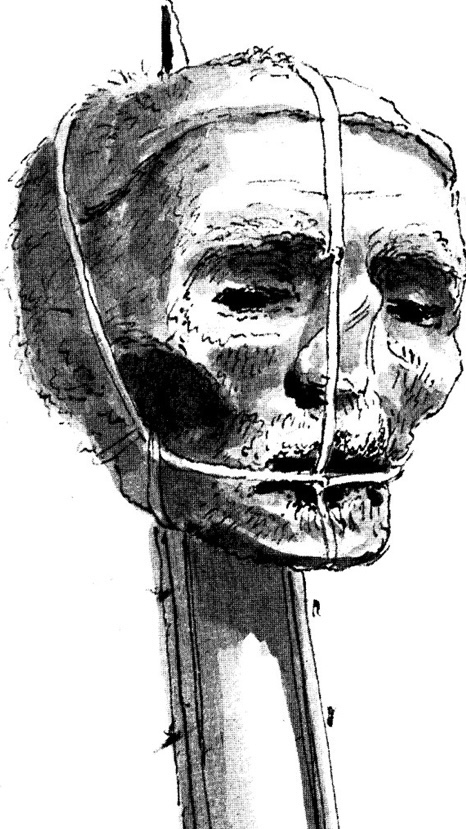
Oliver Cromwell’s head on a spike – an example of a tyrant’s end
I am sure that the puritanical prig Oliver Cromwell meant well when he organised the regicide of Charles I. Many tyrants do when they start on their path to untrammelled power.
In 1648, the Long Parliament stood in the way. Many of its members, more than a majority, were reluctant to put Charles I on trial for treason.
This was easily solved. Colonel Pride took two regiments and purged the parliament of 55% of its members, leaving what became known as the Rump Parliament, a group of barely accountable zealots who were quite happy to do as Cromwell and his henchmen suggested.
It did not end well, although Cromwell himself did not end up with his head on a pike until after he was dead.
Another regime which did not end well was that of Benito Mussolini who, after being given the premiership of Italy by a weak king, held fresh elections in 1924 under laws which were loaded in a way which gave his party a majority of seats. No more multiparty elections were held until 1946.
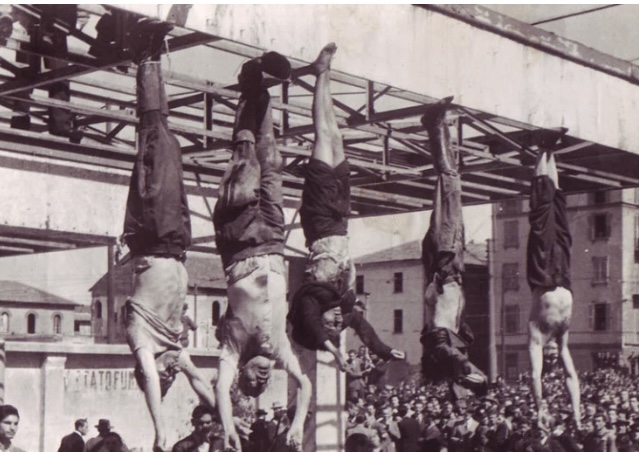
Benito himself ended up hanging from his ankles in Milan, although he too was dead by then.
Benito and friends greet the citizens of Milan in a rather grisly way
Premier Andrews has today sought to ban from the Victorian parliament any members who refuse to reveal their health status – supposedly a public health measure to prevent the spread of covid.
Given our MPs are all elected in fair and free elections, I consider this to be a serious affront to the nature of our democracy in this state, a way of purging those who will dare to dissent from the views held by Andrews, and who feel so strongly about it that they will make a strong statement about it.
Members of Parliament hold their seats through their mandate from their constituents. Purging them for their beliefs is antithetical to both the spirit and the word of democracy, and is a disgraceful proposal on the part of the Premier.
To harken back to our friend Oliver Cromwell, the Rump Parliament dragged on for five more years until he dismissed it in 1653. His words in dismissing it serve as a salient message to our appalling technocratic premier:
‘You have sat too long for any good you have been doinglately… Depart, I say; and let us have done with you. In the name of God, go!’
It is for good reason that I love Melbourne, formerly known as the World’s Most Liveable City. We have the world’s largest tram network (who does not love trams?), clean air and water, a reliable power grid and sewerage network, lots of parks and gardens, respected universities, a cosmopolitan atmosphere, and of course 9 of the 18 AFL teams.
The biggest problem that we usually have is that real estate prices are increasingly locking younger people out of the housing market – which is one of the prices people must pay for living in one of the best places on Earth.
Right now, things are not so rosy. This week, our technocratic Premier Dan Andrews gained us the dubious title of the most days in lockdown of any city in the world.
The problem I have with the repressive orders which the technocratic Andrews Government has been inflicting on the public have to do with mostly with the lack of both proportionality and accountability.
With the aid of such civic minded minds of the Legislative Council cross bench last year, such as the Greens and the misnamed Reason Party, legislation was passed enabling the emergency powers relied upon by various of the government ministers and unelected technocrats to issue highly authoritarian edicts were extended for twelve months in the one go. [And you thought that Fiona Patton of the Reason Party was mostly interested in abolishing prayers at the opening of Parliament, when actually she is more interested in not having Parliament sit very often at all.]
This legislation is now up for renewal, and you would hope that those hard working members of the Legislative Council cross bench wake from their slumber long enough to actually consider whether it is a good thing to give a government such powers for an extended period without oversight.
I believe, as was espoused 90 years ago by Dale Carnegie, that you can get further by what is called ‘soft power’, that is, saying ‘please’ and ‘thank you’. Instead, the public have been hectored and lectured and subject to threats and dictates which are better suited to communist China or fascist Italy (eg the night curfew which is all about social control rather than disease control).
Trying to avoid getting really angry about all this is difficult. We have lost a lot of freedoms, and the government has gotten very used to using the police in an unprecedentedly repressive manner to suppress dissent, including equipping them with weaponry which is highly inappropriate for use in Australia.
Hopefully, the newly announced corruption investigation by the state’s IBAC will result in the exposure of sufficient issues of concern as to cause Andrews to resign in disgrace. Because let’s face it, the state opposition is currently not very credible as an alternative government and the only way to get rid of Danny boy is for some or other of his back room deals to blow up in his face.
The authoritarian abuses of the past 18 months, along with the blame shifting and the lack of accountability for whoever is actually exercising these emergency powers, have not gone down well with the public. People increasing see the state government and its agents as illegitimate.
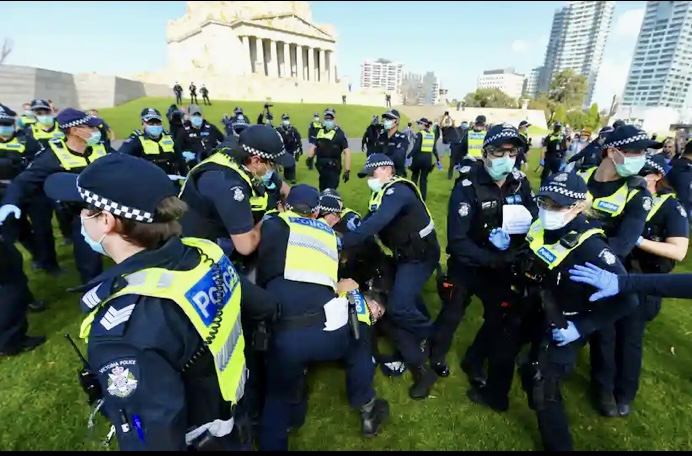
It does not help when the police do dawn raids on pregnant bogans for suggesting on Facebook that people should go out and protest. Nor does it come across as reasonable use of force when an acting sergeant of police effectively ‘coward punches’ (it was not a punch but the victim was knocked unconscious) a protestor from behind when he is already being spoken to by other police (that policeman who committed this assault should face dismissal and gaol time.). Nor does the litany of other abuses of force, such as the pepper spraying of elderly women already on the ground, or the shooting of what are apparently rubber bullets at protestors, endear this technocratic government to freedom loving people.
And it sickens me when this power drunk Premier boasts of a ‘ring of steel’, as if his speeches were being written by the Maoist lobbyists who had persuaded him to sign up to the Belt and Road initiative – the kind of language which relates more to running protestors over with tanks than to protecting the public.
My name is Karen and I want to speak to the manager!
In his 1927 essay La Trahison Des Clercs, French writer Julien Benda deplored the dogmatism of public intellectuals, who had lost the ability to reason dispassionately about politics.
Almost a century on, what would he have to say about current so-called public intellectuals, whose utterances are mostly reduced to smug and condescending tweets, intended to draw attention to their own self-claimed superiority?
I am referring today to that doyen of the Australian literati, Jane Caro, who ruffled feathers when she tweeted, in reply to the outcome of the AFL Grand Final:
“Dear most Aussies, who are the Dees? What is the thing you all care so much about? Actually, no, please (PLEASE), don’t explain. This tweet is just for all those kids like I once was who could not give a toss & felt weird and had to pretend. It’s OK. One day you can just ignore it.”
Given the third and fourth sentences dismiss the questions in the first two sentences, this does beg the query as to why she addressed this question to ‘most Aussies’ in the first place, except to needle and to publicly demonstrate her personal smugness and disdain for the hoi polloi.
I was personally disappointed with the outcome of the Grand Final, and not only because I lost a very good bottle of wine in a side wager (you would know by now that I am a proud Western Bulldogs supporter), but I am quite happy for all those people who are Melbourne Football Club supporters and who broke their 57 year drought.
Several years ago, when asked why he pumped so much money into funding soccer in Australia, Sir Frank Lowy replied along the lines that Sport brings joy. And it does, as a distraction from the usual struggles in life and in an opportunity to connect with a like minded community.
Jane Caro appears, with her joyless tweet, to miss this. When someone replied that she did not know what she was missing, her haughty reply was:
“No. Lovely way to live, frankly. Have you read all of Dickens and Austen and Gaskell? If not, you don’t either. Such is life.”
Obviously to her high brow tastes, a community of ‘most Aussies’ who draw joy from following a sporting competition is inferior to a community of herself and her few friends, people whose exclusive interests are nineteenth century novelists.
Oh my, what condescension from Queen Karen.
Well, I was good at Maths at school, and set theory does not hold a love of sport and literature to be mutually exclusive. I have read all of Austen’s novels, the overwhelming majority of Dickens’ (most of which you can happily skip – and I can go on for pages as to why) and have greatly enjoyed the more popular of Gaskell’s works (North and South is great, not so keen on Mary Barton). And don’t get me started on why I much prefer the much maligned Anthony Trollope over Charles Dickens.
But arrogance and condescension is first nature for Queen Karen. On election night in May 2019, she expressed her horror at the outcome and her esteem for her fellow citizens and our free democracy in a bitter and angry post including a couple of naughty words which ended:
‘So I shall just dance & get pissed & stick two rude fingers up at all the truculent turds who voted to turn backwards.’
Off with their heads, I suppose.
I don’t just stick, unlike our mesmerising friend Jane the Joyless, to nineteenth century literature. I have long had a problematic fascination with American writer Kurt Vonnegut. In one of his novels (Bluebeard, if I recall), the narrator tells us that if we swear, we are inviting people to not listen to what we have to say.
And so it goes with our friend Jane, who seems to be a Karen. She aspires to be a provocateur, like the brilliant Germaine Greer, but she lacks the wit, the sense of irony, and the talent.
You could say that the Liberal-Conservative (ie non-collectivist / anti socialist) Right in Australia is a very broad church, one which has a lot in common with any cathedral in Naples. That is, it is big, rundown, lacking in the money to maintain it, has a very leaky roof, and lacks enthusiasm from its parishioners.
This has been apparent from the writings in the Real Freedom News blog, which I have been reading since May, and which provides some insiders views on matters occurring within the Victorian Liberal Party, along with some ad hominem attacks on persons active in said party whom the RFN disagrees with.
Real Freedom News has been, to some degree, a Scarlet Pimpernel tormenting machine politicians since early this year. I have been reading it avidly and with great amusement (some might say schadenfreude) since I stumbled across it during some google searches seeking insights into certain matters.
So imagine my disappointment this morning when I clicked on my bookmark to it and found that the account has been suspended. I hope that this is a temporary development, and that whilst I do not agree with everything they say, that Real Freedom News returns and continues to inform us on all the news that is not otherwise available on internal Liberal machine politics.
The 2021 AFL Grand Final is over. After texting various friends and acquaintances who barrack for Melbourne to offer my congratulations this morning, I have untied the Bulldogs scarf from the corner post of my front porch and put it and the other Bulldogs fan gear in the laundry basket.
Next year, hopefully, the AFL Grand Final is back in Melbourne again, although there is little cause for optimism with the way the plague is continuing to affect our day to day lives.
Three and a half weeks ago, I suggested in this blog that it is time for the AFL to consider holding the AFL Grand Final once every five years outside Victoria. Yesterday, my suggestion was echoed by the Chairman of the Gold Coast Suns, whose voice, unlike mine, was then reported in the mainstream media.
After the enthusiastic celebrations held in Perth on Friday in honour of the two competing clubs (I did give my membership number to a friend of a friend who is in Perth and a fellow Bulldog, to help him in his quest for tickets for the non-Bulldogs supporters in his family to the big game), you cannot deny that any grand final held in any part of Australia will attract a joyous welcome, regardless of whether a local team is playing or not.
Australian Rules has successfully taken root as the national football code since the inauguration of the AFL era in 1990. Eight of the eighteen clubs are located outside Victoria, and five of those non-Victorian clubs have won, between them, 12 premierships over the course of 32 seasons, including the purple patch between 1997 and 2006, where eight of those premierships were won, including (for Victorians) the horror period of 2004-2006 where no Victorian teams were in the grand final.
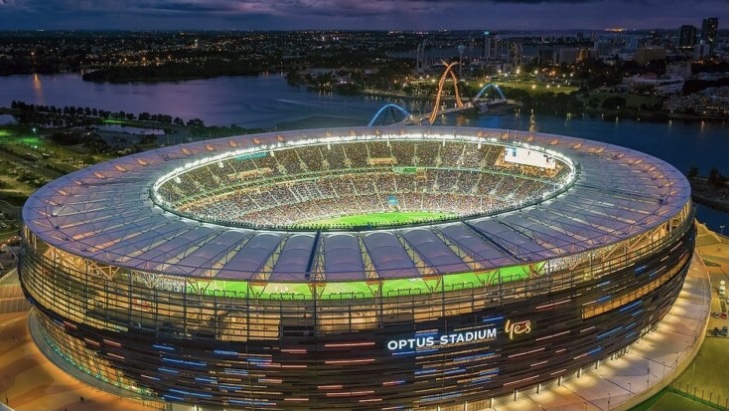
The MCG is indisputably the greatest stadium in Australia. It rightly deserves, as the birthplace of Australian Rules and Test Cricket, to host the AFL Grand Final regularly. But we do have other options. Perth Stadium is definitely a worthy stadium to host grand finals, and Adelaide Oval itself would merit hosting rights occasionally. After the Gabba is rebuilt for the Olympics (especially if they listen to me and build it to a 60,000 seat capacity rather than 50,000), it too will be a worthy venue.
Obviously, for a national sport, AFL Grand Finals should be occasionally held in the largest city in the nation, Sydney. My one hesitation there is that I have doubts currently about both the SCG and Stadium Australia’s abilities to host decent matches there.
It’s now 40 years since the decision was made to send South Melbourne Football Club north up the Hume Highway, starting the journey to a national competition. The necessity born of crisis in the past two seasons to host major games outside of Melbourne has created the opportunity to further grow the popularity of true football across the nation. This should involve expanding the competition to include teams from Tasmania and representing a composite of the NT and FNQ, and to 25 home and away matches per year.
And it definitely should involve slaying the sacred cow of perpetual Grand Finals at the MCG. Giving one out of every five to the rest of the nation is not only fair, but it is sensible marketing.
One of the things which fascinates me most about football is the anthropological aspect. That is, the culture of a football club. Being a lifelong supporter of a team which, until its current golden age, had a long history of underachievement, I am firmly of the belief that a club’s culture off-field will determine its success on-field.
A club needs to have a culture where winning is seen not only as possible, but as natural.
This can be quite hard to achieve, and sometimes to keep. Melbourne Football Club used to have it in spades, right up until they sacked reigning premiership coach Norm Smith in 1965, destroying their club’s mo-jo.
St Kilda did build a bit of such a culture in the mid 1960s, after decades of failure, but chose to waste it by choosing to become a club which partied and misbehaved after hours to excess – a party culture which it was indulging in as recently as at least 10 years ago.
Carlton lost it, and then regained it in the late 60s after it poached Ron Barassi from Melbourne, and hence enjoyed 8 premierships over 28 seasons before the salary cap scandal destroyed its winning culture.
Ron Barassi then went to VFL perennial cellar dwellers North Melbourne as his next challenge after Carlton, and passed on the spark which led to 5 consecutive seasons of grand final appearances and 2 flags.
Hawthorn, once it got started with its first flag in 1961, never stopped. It’s longest gap since then was the 17 years between 1991 and 2008.
A lot of this depends not only on the club’s history and the leadership of the club, but on the coach. An excellent coach, such as a Barassi or a Hafey or a Sheedy, can do wonders for turning around a club’s culture and making it believe that it can win.
Which leads me to Paul Roos. Roos has only coached one AFL Premiership, Sydney’s 2005 drought breaker. But his impact is far greater than that. Not only was he able to win a premiership with the Sydney Swans, but he was, because he was not really interested in making coaching his lifetime career, to develop a succession plan at Sydney which meant that his handpicked successor, John Longmire, coached Sydney to another flag in 2012 and to various other grand finals.
And then Paul Roos moved to Melbourne Football Club. He did this at the behest of the AFL, at a time when the oldest football club in Australia was a basket case. He made it clear that he was not there long term, that his goal was to rebuild the club and to select and mentor a successor who would build on his foundation.
As a result, his handpicked successor, Simon Goodwin, is today leading the Melbourne Football Club into their first grand final in 21 years, and with a chance of winning their first premiership in the AFL era, ending a 57 year drought.
Win or lose (and I hope they lose as I am a Bulldogs supporter!), the impact of Roos both on the Sydney Swans and on Melbourne as a transformer of the club culture is highly significant. This should never be underestimated.
The closest I ever came to meeting John Elliott was about ten years ago. At the time, I used to go to the footy at Docklands every now and then with someone who had some business dealings with John Elliott. He once suggested that I join him sometime when he was going to the footy with Elliott. He did warn me that John Elliot could be rather full on.
It never happened, probably because I got distracted by a health scare and a busy time at work, which leaves me without any opportunity to form a personal impression of John Elliott, who died overnight just short of 80 years old.
For Western Bulldogs supporters like myself, I suppose the former Carlton president is best remembered for his comment about the Western Bulldogs’ ‘tragic history’, which, in the context of Carlton’s salary cap dodging on his watch and a general sense of fair play, still comes across as rather crass and unsportsmanlike.
I expect, for a lot of people, John Elliott’s public persona would have come across as crass and overbearing, lacking in humility. I suppose that he never got around to reading Dale Carnegie’s ‘How To Win Friends And Influence People’.
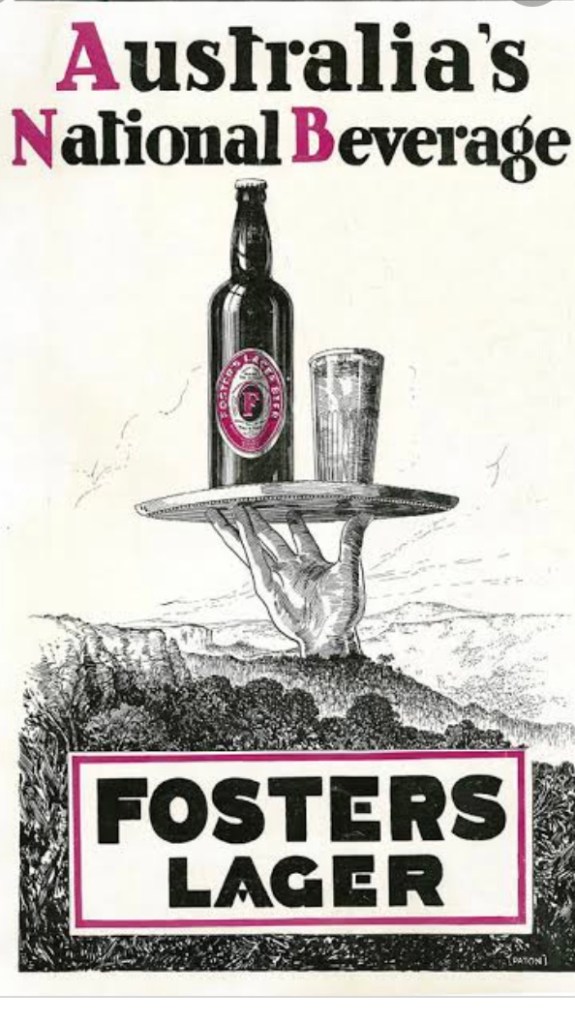
He did seem to be the archetypical cashed up bogan in the way he spoke and the things he said, except that I do not think cashed up bogans get their educations at Carey Grammar and Melbourne University, even if they do spend much of their business career running a brewery and plotting to ‘Fosterise’ the world.
But for many, this is the image which John Elliott presented, either intentionally or subconsciously, and I strongly suspect that there was a lot more to him than that.
My understanding is that he could be extremely generous to his close friends and to former business associates. The proof of this was when he was declared bankrupt several years ago. His friends ensured that he was looked after and continued to have a comfortable life. He had earned their loyalty, and their love, and that reflects someone who has more substance to them than mere material possessions.
But that boorish public persona did ensure that when fair weather ended, many others were prepared to bundle him out the door. When, after their maiden wooden spoon, Carlton Football Club’s supporters blamed him and ended his 19 year reign as club president, they went one step further and removed his name from the eponymous grand stand built during his presidency.
In the same vein, bankruptcy opened the opportunity for the Savage Club (the most quirky of the private clubs for the gentry in Melbourne) to end his membership. I do wonder why they would have done that, and how he might have behaved in the confines of their clubrooms.
Similarly, a lot of people who resent wealthy people could not help but gracelessly gloat at his bankruptcy. In the thinly veiled anger and class hatred that frequently litter the pages of street magazine The Big Issue, the editors of said magazine smugly suggested that he might get a job selling their rag on street corners.
Such reactions, perhaps, reflect more poorly on those people, than on the subject of their ire. But I suppose John Elliott did not think of sparing their feelings in advance, and nor did he probably care. Many supposed saints are second rate people, and many sinners are far more interesting.
But the irony of his passing, just on Grand Final Eve 2021, where the Western Bulldogs are about to square off against Melbourne Football Club, and Elliott’s beloved Carlton is in a 26 year premiership drought and about to start another reboot, is not lost on me. Tragic history indeed!
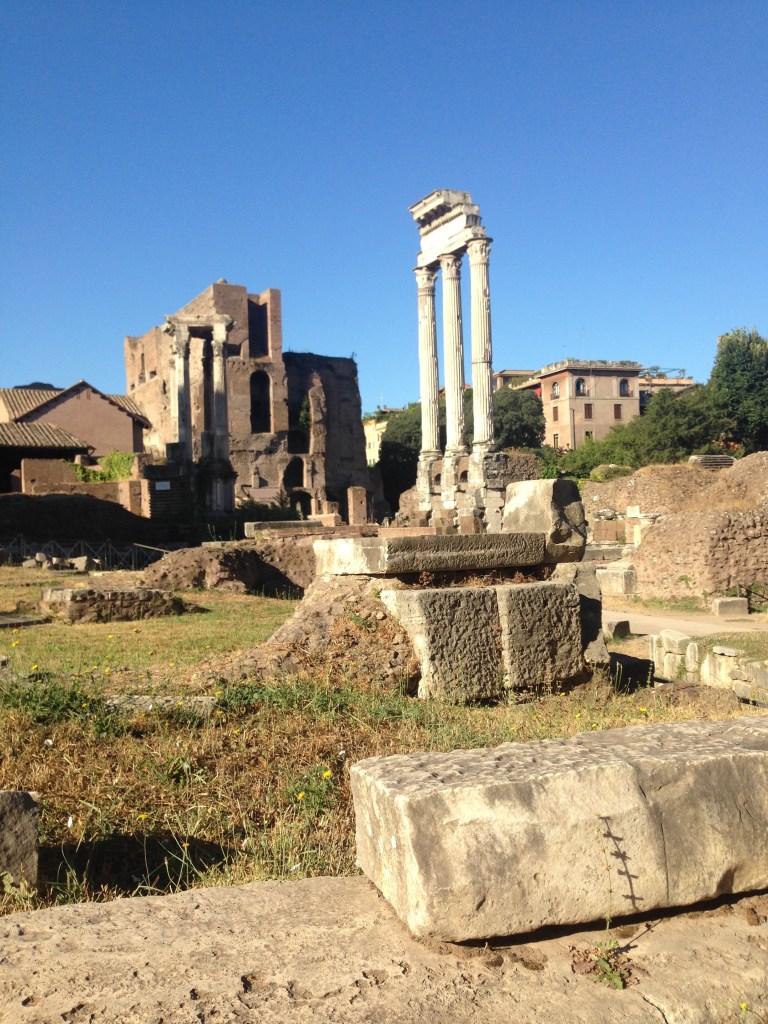
The last time I experienced an earthquake was August 2016. I had arrived in Rome from Florence and was about halfway through my first trip to Italy ever. At around 3am I was woken by some shaking. My first thoughts were that this was not a dream. My second were that one bottle of red (a dry dolcetto I believe) over dinner the previous night was not going to be enough to cause the world to spin of its own accord.
Hence I deduced that it was probably an earthquake, something which I had experienced twice before.
Noting that Rome had stood for 2000 years, I decided to go back to sleep. [Lucky that I was not on the other side of the mountains in Umbria – 299 people lost their lives that night..]
The next day, as I walked around the ancient heart of the city, I was amused by the American tourists, complaining bitterly about the damage the earthquake had just caused to all the Roman buildings.
I am joking about this bit. But it is almost the kind of thing you would expect American tourists to say – they seem almost that naive.
So when the earthquake hit Melbourne this morning, I would not say that I was nonplussed, but I knew exactly what it was, although it seemed that a tiger was dancing around on my roof.
We are rather lucky in Melbourne. Aside from having Disaster Dan as our Premier (although the look of the current opposition front bench is so unappealing as to be almost repulsive unless you like lobsters with your Grange), we have little to complain about. The last earthquake was in 1982 and it was even milder than this one. Aside from some power outages and the collapse of a wall in a South Yarra burger bar, this one turned out to be fairly mild too.
I used to think that the popular Chinese Communist phrase ‘running dogs’, manifest in Mao’s Little Red Book, had gone out of fashion. It was rather cute in its day:
‘People of the world, unite and defeat the US aggressors and all their running dogs! Peopleof the world, be courageous, dare to fight, defy difficulties, and advance wave upon wave. Then the whole world will belong to the people. Monsters of all kinds shall be destroyed.’
However, it seems that the current style guide of the Chinese Communist mouthpiece The Global Times still contains it, and instructions for it to be regularly used.
Look at the following quote:
However, no matter how Australia arms itself, it is still a running dog of the US. We advise Canberra not to think that it has the capability to intimidate China if it acquires nuclear-powered submarines and offensive missiles. If Australia dares to provoke China more blatantly because of that, or even find fault militarily, China will certainly punish it with no mercy.
You could indeed say that the editors of The Global Times are rabid dogs (politically at least), given the characteristically belligerent language expressed in that paragraph, and in the rest of that angry article, such as the following:
Once the Australian army fights the People’s Liberation Army in the Taiwan Straits or the South China Sea, military targets in Australia will inevitably become targets of Chinese missiles. Since Australia has become an anti-China spearhead, the country should prepare for the worst.
Mind you, the opening sentence of that paragraph prefaces this threat with the comment that it would be a good idea for Australia to get an anti-missile system.
And the intentions which keep getting revealed in the article, and in the rest of the quality objective journalism on show in The Global Times makes me glad that we have signed up to this new AUKUS defence treaty. It means not only that we have now got renewed and strengthened formal defence ties to two of our historically closest and strongest allies, but that we are likely to be formally elevated as a US ally to a status second only to that of the UK (which, despite my Italian origins, I consider Australia’s motherland).
This AUKUS defence pact is important as it sends a strong message to our potential enemies (and only the naive would think that a country who talks about targeting us with missiles is not a potential enemy) that Australia not only is going to contribute solidly to its defence and regional security, but is supported by the US and the UK, each separately an ally very worth having, let alone collectively.
The agreement to share nuclear submarine technology with Australia is, in the context of a bellicose Communist China, more a relief than a necessary evil. China is developing a powerful blue water navy. This will enable it to threaten and tyrannise its neighbours for thousand of miles around. The best defence against a blue water navy is to have one of your own, particularly in the form of attack submarines.
Nuclear attack submarines are not offensive weapons as such. They do not carry nuclear missiles to bombard cities with. They are there to sink blue navy vessels, such as those that China wants to use to impose its will on the Indo-Pacific region.
To borrow from Mao’s Little Red Book, except to substitute PRC for US, the following message is relevant for The Global Times to consider:
‘Riding roughshod everywhere, PRC imperialism has made itself the enemy of the people of the world and has increasingly isolated itself. Thee who refuse to be enslaved will never be cowed by the atom bombs and hydrogen bombs in the hands of the PRC imperialists. The raging tide of the people of the world against the PRC aggressors is irresistible. Their struggle against PRC imperialism and its lackeys will assuredly win still greater victories.’
We might be ‘running dogs’, but it is the rabid dogs who are truly a threat to the safety of any community.

 Lost For Words!