The We-Work Debacle as Drama

I finished reading the corporate expose ‘The Cult of We’ a couple of weeks ago. It is a fascinating account of how the office rental business WeWork rose from obscurity in New York City to become a ‘unicorn’, ie a start up worth over a billion dollars (at one stage it was valued by investors at $47 billion).

I had, by the time I had finished reading that book, a pretty good impression of the personality and character of Rebecca Paltrow Neumann, the wife of the co-founder Adam Neumann. Cousin of the much more famous Gwyneth, Rebecca comes across as both a typically spoiled Long Island Princess, and a cringe worthily bad would be actress.

And then I discovered that there is a mini-series on Apple TV+ newly released about the whole fascinating WeWork debacle, starring Jared Leto as Adam Neumann and Anne Hathaway as Rebecca.

Anne Hathaway’s riveting performance as Rebecca Paltrow Neumann alone is enough reason to watch this series (aside from the fact that Apple TV+ do not offer too many shows, so what they do offer needs to be very good for the premium I pay for my subscription). It is a master class in acting.

I have never really thought too much about what makes someone a good actor. You just see them and go ‘Wow’ sometimes, and just relax and enjoy it. Hathaway however has just made me think about how much hard work acting is.

In portraying a real person, the work done both by Hathaway as an actress, and the various writers who have sought to capture and keep alive the character who is Rebecca Paltrow Neumann, is amazing. Any real person is not two dimensional or wooden. They have frailties, vanities, strengths, flaws, compassion and resentments. To say nothing of other human characteristics.

Hathaway’s performance brings Rebecca to life for the audience – we see Rebecca the way that we (especially if you have read all about WeWork as I recently have) believe that she really is – we see her being selfish, sympathetic, and sinister, in varying degrees and sometimes simultaneously. It is still not the real person, but this is close as you can get to portraying the real person within the imperfect art form which is drama.

Do yourself a favour and watch this series. If for no other reason than to get to appreciate just what a brilliant and possibly underrated actress Anne Hathaway really is. [The WeWork corporate train wreck itself is itself a fascinating story to follow!]

BROO resolve their boardroom stoush

As the holder of a microscopic small share holding in the ASX listed craft brewer Broo Ltd, I have been quite interested in following the recent developments in the company, particularly the apparent falling out between the founder, Kent “Groges” Grogan and the recently appointed new board member.

In the past couple of days, a compromise has been reached and announced to the ASX. Namely, Groges and the other member of the board will step down and be replaced by new directors aligned with the chap who was challenging Groges for control of the company. Groges will remain an employee of the company with the same remuneration package that he previously enjoyed.

So all seems rosy and kiss & make up etc.

Whilst my 120 shares in Broo are now worth less than a total of a dollar, and do not really warrant me studying this company in any great detail, the 11 years in which I have been a share holder of it and the general fascination I have with investing in the alcohol producing sector means that I still feel a grossly distorted interest in studying the company.

So in the past week or so, I have been reading through the various company announcements and news articles (try reading BrewNews for such interesting stories) on Broo to get a better idea of the business than I had when I wrote my last post about it over a week ago.

It turns out that Groges has been selling down his shareholding over the past couple of years (good on him for cashing out some of the effort he has put into the business over the past 12-13 years), and doing off-market share issues to ‘sophisticated investors’ to raise funds to keep the business going. As a result, he is down to about 25% of the voting rights in the business (I estimate my voting rights at about 0.00001% of the total), which probably means that the investor block challenging his control does have the numbers to take over from him.

I feel increasingly glad, from what I have read over the past week, that I did not participate in the IPO at the ASX float 6 years ago. Lots of things have not gone all that well lately.

The proposed sale of the Ballarat site where Broo was proposing to set up a state of the art brewing facility (an idea that they abandoned in favour of getting CUB to brew the BROO) remains tied up in red tape. This site, which was probably paid for by capital raised in the IPO, is the largest asset owned by the company.

The brew-pub in Mildura, which now doubles as company HQ, and which probably also got paid for by the IPO, is also up for sale, and last year narrowly avoided being sold up to pay debts owed by the company to AGL (not something I discovered til this past week – because I have not been following announcements and news about the company too closely).

The current distribution deal in QLD, where most of Broo is currently consumed, appears not to be converting Queenslanders into Broo drinkers. A large amount of packaged beer is now being sold at deep discounts as it approaches its best before dates. That does not bode well for further sales in QLD. Nor have I seen Broo for sale in bottle shops around Melbourne in quite a long time (and believe me, I have looked).

A distribution deal to sell Broo in Communist China fell through over a year ago. This does not surprise me however – doing deals involving Communist China on anything except iron ore and coal are truly fraught with peril (I learned this the hard way almost a decade ago when a future former friend persuaded me to invest in a chancer’s business venture which was trying to get a deal for something in China).

So what do I see as the future for Broo?

The two main tangible assets are the Mildura brew-pub and the Ballarat land. Both are for sale and might fetch a total of up to about $9 million (although there are a lot of ‘ifs’ about the Ballarat sale, which could result in it selling for a whole lot less).

After those sales, the main other asset is the Broo brand, along with the various related beer recipes, which is currently being brewed on contract by CUB. The value of this brand is rather intangible – it does not seem to be widely available anymore, or to be very popular where it is available.

Without the other assets, I suppose Broo can continue to operate as a contract brewed beer brand, but it probably would make more sense for someone like CUB to buy the brand and then see if it could relaunch it within its own distribution networks. This would be an end to the raison d’être for Broo’s existence (ie an entirely Australian owned beer company), but I fear that the writing has been on the wall for quite some time.

And the last asset is the ASX listing of Broo Ltd (ASX code BEE). Left as a shell company on the ASX, it could be then repurposed for a ‘backdoor’ ASX listing by some other business, who would ‘sell’ their existing business to Broo in exchange for an issue of a very large number of shares, diluting the holdings of existing shareholders considerably more. Doing this is a much cheaper way of listing on the ASX than by floating a new company directly.

Indeed, if I were advising the new directors as to what to do with Broo Ltd, I think that the above four paragraphs summarise the course of action that I would recommend, and also what I think is most likely to happen to Broo Ltd as a company and Broo as a beer brand.

Of course, selling my $1 worth of shares would cost about $20 in brokerage fees, so I am going to hold onto them and see what happens next….

When is a sound thrashing warranted?

Whip it good!

Today at the Academy Awards ceremony we had the unscripted entertainment featuring soon to be Oscar winner Will Smith slapping presenter Chris Rock.

Apparently, the cause of offence was a feeble joke about Will Smith’s wife, Jada Pinkett-Smith, starring in a remake of GI Jane. Presumably her baldness, rather than her poor choice in movie scripts, was what caused the soon to be Oscar winner to take offence.

In the olden days, a sound thrashing, often delivered in the Wild West, or the Australian Goldfields, with a horsewhip, was a suitable way to remedy a public insult, particularly against one’s lady.

More recently, a PVC pipe rather than a horse whip was rumoured to be used when a certain technocratic political leader supposedly ‘fell down the stairs’ after causing offence to the family of some young lady.

We do live in boorish times, when the internet has multiplied the rudeness of contemporary television programming, such that the actions of frontier newspaper editors who earned horse whippings in the olden days seem perfectly polite in comparison.

But in this case, was the violence of Will Smith justified? The joke was a weak one, but that does not deserve sanction in itself. There are many worse and tasteless things that one could joke about, in relation to the Smith marriage. There has been significant coverage in the past year or so about mutual infidelities and the apparent openness of that marriage.

Yet Chris Rock did not attempt to make fun of those issues, the type of thing which the fictional Ari Gold of Entourage would have gloated about most crassly.

In this case, Chris Rock made what was a rather weak but good natured joke, which did not deserve to be taken as an ad hominem attack on the Smith family. Nor did he deserve to be assaulted in that way.

Of course, weak jokes and pathetic attempts at humour are par for the course at the Oscars – that the humour is so feeble and pathetic is what can be considered part of a far more sophisticated and witty mega-skit.

How does this all play out? Denzel Washington, in intervening, has shown himself to be all class and a gentleman. Chris Rock is just a barely funny has-been comedian. As for Will Smith, I think that he has just jumped the shark in terms of his career.

When The Beer Goes Sour: The BROO Boardroom Stoush

Did you happen to know that most of the well known beer brands in Australia are now foreign owned? Japanese to be most precise. Kirin have long owned the portfolio of beers held mostly under the Tooheys umbrella, and Asahi have sometime in the past decade ended up as owners of what used to be known as Fosters Group (commonly known to us beer lovers as Carlton & United Breweries).

I will proudly admit that in late 2011, I was one of the few people to show up to the Fosters Group EGM to vote against the agreement to allow its takeover by SAB Miller (which has since been taken over by Asahi).

Coopers, in South Australia, is the only major Australian beer company which remains Australian owned – completely in the hands of the Cooper Family.

Even most of the micro-breweries around the place are owned by one or other of the two big companies – Tooheys or CUB, which means that they are either Kirin or Asahi. Little Creatures and James Squire are both Kirin, as is Furphy’s.

I forget who it is who now owns Mountain Goat, but I can assure you that Japanese beer interests bought it out quite a few years ago.

This is not to say that there are not heaps of micro-breweries out there which remain in private local ownership. The bar Mrs Parmas in Little Bourke Street will only serve beers from Victorian locally owned micro-breweries, and I think that most of the beers on tap in the various hipster bars around Footscray (eg Mr West’s & Bar Josephine) are from similar locally owned operations.

One person who has made a career out of the issue of foreign ownership of beer brands is Kent ‘Groges’ Grogan. Over a decade ago, he founded a micro-brewery brand named Broo, and promoted it on the premise that it should always be owned by Australian residents rather than foreign interests.

Whilst it was a private company, this was not too difficult. In early 2011, he offered beer drinkers a chance, for each slab they bought online from him, to acquire 10 shares in Broo. I bought 2 slabs, and became the proud owner of 20 shares.

I still have the share certificate I printed out, and am thinking I might frame it and hang it in a particular room in my home prone to be frequently visited by beer drinkers.

Groges did want to list on a stock exchange, but listing rules do not normally create the sorts of foreign ownership preclusions that he wanted, and extensive lobbying of MPs did not yield fruit in the form of laws particular to his company. Nor did the National (aka Newcastle) Stock Exchange turn out to be a viable option.

So in the end, the company did a five for one split (that takes me to 100 shares, yay!) and floated on the ASX in October 2016. I did look at the prospectus, which offered me a chance to acquire more shares at 20 cents each. I am not an accountant, but I did do some quick counting on my fingers and guesstimated that fair value for the shares was probably around 2 cents at that time.

They did go up as high as about 40 cents briefly (at which time I should have sold and used the proceeds to buy a couple of beers), but since then, they have gradually eased downward, to the point where my guesstimate now looks optimistic (1 cent is the current price on the ASX website).

In late 2020, there was a need to seek more working capital, and so shareholders had the chance to buy one additional share for every five shares held, at 1.8 cents. I transferred my 36 cents on the Bpay number, and got another 20 shares. Now I have 120 shares in Broo.

You can probably surmise that whilst I have an active interest in following this company more than that of the more boring but larger shareholdings I possess, I am not exactly counting on this to fund my long desired country property. But because it is a beer company, I have fun reading their company announcements.

What the company currently has, aside from its brands, can be summarised as the following:

. contracted brewing of Broo by CUB (from memory)

. a pub in Mildura which serves as company HQ (I am not sure whether they also brew Broo there)

. some land in Ballarat where they wanted to build a brewery to brew Broo – made redundant by the above decision to get the brewing of Broo outsourced. They are trying to sell this land for $7,500,000, but there are some snags on the sale.

From the revised 2021 annual report released on 28 February 2022, I learn several interesting things about the shareholding.

. There are 8098 shareholders. 7374 of those (yours truly included), do not hold a marketable parcel. Presumably we are the ones who went out and bought at least a slab each in January 2011 in response to Groges’s cry for greater Australian ownership of Australian beer.

. There are about 945,800,000 shares held – which at a value of about one cent (it does tend to fluctuate) each makes this company worth between $9-9.5 million

. The top 20 shareholders own 67.98% of the shares

. Groges himself now owns 38.23% of the shares

. Amongst the largest other shareholders, I am particularly interested in three on the list – Knight 61 Investments (5.52%), CE61 Investments (3.24%), and 61 Financial Information Technology (0.88%).

The use of the number 61 intrigues me as it does not appear to be a coincidence. The revised annual report also advises us that a long standing director of Broo resigned in late 2021, and that a new director, David Zhu, was appointed in October 2021. David Zhu is described on the report as a director of ’61 Financial’.

[As an aside, I suspect that 61 as a company name is inspired by Chinese numerology – 6 is considered a lucky number, and 1 usually signifies winning (rather than loneliness).]

Why today I am reading so much into the shareholder information on this annual report is not so much to see how many other people have non-marketable parcels in this company (something which does occasionally intrigue me), as to the stoush that seems to be playing out in the 3 man boardroom of Broo this month.

The following notices on the ASX website are most interesting:

https://cdn-api.markitdigital.com/apiman-gateway/ASX/asx-research/1.0/file/2924-02497960-3A589592?access_token=83ff96335c2d45a094df02a206a39ff4

https://cdn-api.markitdigital.com/apiman-gateway/ASX/asx-research/1.0/file/2924-02500632-3A590038?access_token=83ff96335c2d45a094df02a206a39ff4

Basically, what has happened is that very recently appointed director David Zhu earlier this month sought to call a general meeting to remove Groges and the other director of Broo from the Board. In response, Groges has sought a resolution to remove Zhu from the Board.

I do not know what is happening, but I can guess. Most of the small shareholders like myself are happy to watch Groges ‘live the dream’ of trying to build a micro-brewery business which is not going to give in to the temptation of selling out to foreign investors. After all, Groges seems to be a good bloke and he is patriotic.

But there are other people out there who might see arbitrage opportunities – the land in Ballarat and the pub in Mildura are tangible assets, as are the beer brands, which might be worth more if sold off rather than maintained as part of an ongoing business.

And even where a company itself is loss making, lowly capitalised and trading infrequently, its very status as a publicly listed company on the ASX has a certain cash value. It is far cheaper to do a reverse takeover of an inactive company already listed on the ASX than it is to do an IPO – you can save tens of thousands, if not hundreds of thousands. [For an example, look at ZMM, the current manifestation of a company first listed in 2007, or BNL, at least the third version of a company listed in 1994 – both of the latter have predecessor companies I took a punt in once.]

I do wish Groges luck in his boardroom stoush. I hope, if I do get to Mildura later this year, that I might go and visit him in the pub Broo owns. But sadly, it appears that some shareholders are not interested in ‘living the dream’ his way.
Elvis Costello may always have been Woke, but he is still a good musician

Declan McManus, who is most commonly known to us as the singer Elvis Costello, is someone of whom I have been a moderate fan since the late 1980s.

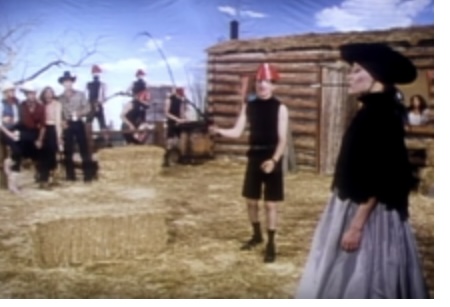
I was rather saddened but somewhat unsurprised by his recent announcement that he will no longer be performing ‘Oliver’s Army’, his anti-military song (the British Army traces its origins back to the Model Army created by Oliver Cromwell), due to the use of the sometimes racially inflammatory use of the n-word in it.

It is a very boppy song, and the context in which the n-word is used, implying that the poor white trash of the UK are the ones who end up on the front lines fighting for the Empire, is one where I think that the use of the n-word would not have caused offence, although it would probably have some significant shock value.

And it is both morally and musically a better use of that word than what Kanye West uses it for in his music (have you heard ‘Gold Digger’, the song which presumably was the bridal waltz at Kanye and Kim K’s wedding?).

As I indicated above, I was not surprised. Whilst I do not really follow his career closely, I did once watch the TV program ‘The Juliet Letters’ about some music he did just after the first Iraq War where he expressed some rather harsh views about some female fan in the military who had written to him from the war zone.

Which leads me to conclude that Elvis Costello has been what we now call ‘woke’ since prehistoric times.

But I don’t really care about that as he does have quite a lot of other fine songs I enjoy, such as ‘Veronica’, ‘Watching the Detectives’, and ‘Ship Building’ for example. He also does collaborations with various fantastic musicians, such as his current wife, the delectable Diana Krall, a jazz singer known for her fantastic interpretation of the American Songbook, and Burt Bacharach.

As a particular treat, he did a performance with Fiona Apple in 2006, where she did two of his songs, and he did two of her songs. Google their performance of ‘I want you’, a song where Fiona Apple sings with unbridled yearning of great intensity (I would have attached a link from YouTube but somehow that doesn’t work).

Morrissey Always Was The Jerk That Smiths Fans Deserve

My passing acquaintance with the music of 80s angst minstrels The Smiths is limited to what you would expect someone like me to have. Namely, their appearance on the Pretty In Pink soundtrack (a flawed movie given that the ending was changed at the last minute so that the rich handsome guy gets the girl instead – although Ducky getting Kirsty Swanson as consolation prize seems better to me than ending up with Molly Ringwald), and the theme song from Charmed (you definitely would expect me to watch a show about three beautiful women who happen to be witches).

In other words, The Smiths and their frontman Morrissey have had very little impact on my life.

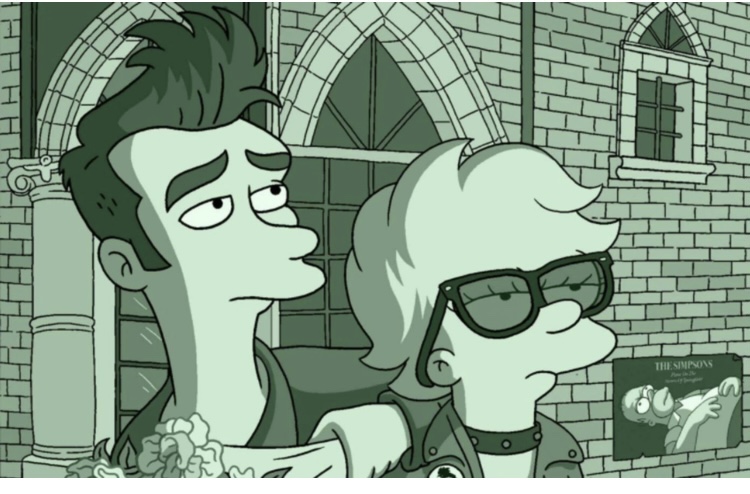
Today I got around to watching Panic on the Streets of Springfield, a recent episode of the Simpsons which parodies Morrissey. A similar character becomes Lisa’s imaginary friend until Lisa goes to see the real live version in concert. There, as the former vegan rock star shoots hot dogs into the audience, Lisa is disillusioned about her new found idol.

Morrissey in recent years has horrified his former fans. He has made many racist utterances, encouraged skinheads, and endorsed the extreme right wing For Britain party. His comments on the Me Too movement also are quite lacking in empathy, to say the least.

All sorts of fans and former collaborators, like the far-left rock icon Billy Bragg, are horrified by the views of Morrissey now, an angry and hateful late middle aged man.

They can no longer excuse his utterances as being ironic or provocative, in the way that a young Morrissey might have been.

But if Morrissey is a jerk now, what was he like in the 80s when he was in his heyday as lead singer of The Smiths and then on his solo career:

The kind people
have a wonderful dream
Margaret on the guillotine
because people like you

make me feel so tired
when will you die?
when will you die?
when will you die?
when will you die?
when will you die?
because people like you
make me feel so old inside
please die
and kind people
do not shelter this dream
make it real
make the dream real
make the dream real
make it real

Those are the lyrics of Margaret on the Guillotine, a song on his 1988 debut solo album Viva Hate. It is about the then UK Prime Minister Margaret Thatcher.

He similarly composed another nasty song, The Queen is Dead, which lacks any of the punk charm of the Sex Pistol’s God Save The Queen.

And it is only in the past few years that Smiths fans and such folk have finally woken up that Morrissey is a jerk? He always was a jerk. It was just that they loved and lapped up his hatred when it was aimed at people like Thatcher and the Queen. Now that they realise that he is definitely not woke and is quite hateful to a lot of people and causes they care about, they are suddenly horrified.

Morrissey strikes me as a joke, a hateful joke. But the joke is mostly on his former fans. That they want to ‘cancel’ him now, rather than in 1988 when he wished death on the Maggie Thatcher whom they hated shows their inherent hypocrisy.

They are similar to a Jacobin mob intent on murder and mayhem (quite apt when their anthem is about a guillotine). Morrissey was their Robespierre. And like Robespierre with his guillotine, when the mob grew weary of him, they turned on him.

Morrissey has shown up all those hypocritical people who were his fans for the hateful totalitarian-sympathising mob that they were and are. They richly deserve him.

The Real Thing

I could never really get into Midnight Oil. I have tended to find their many lefty protest songs rather whiny and annoying, although I suppose they had their place (right up until Peter Garrett tried to be a politician and showed he wasn’t much good at practising what he preached).

I always rhetorically would wonder out loud as to whether they ever did an actual love song?

That is not really Midnight Oil’s purpose though, and I am not going to go back through their back catalogue of albums to see if they did anything like that.

They did, however, do a cover version of The Real Thing at one point (their best ever song, really). And they were good enough musicians to do a decent job of it, even though The Real Thing did not ever need to be covered by anyone.

Not that The Real Thing is explicitly a love song, given that it is a simple but highly catchy tune in the first person about being the Real Thing (whatever that is) and inviting people to come and see it.

I was listening to The Real Thing the other night, and despite it being late and being most of the way through a bottle of shiraz, I paid close attention to it and then looked up the story of its creation, which is full of surprises.

The song was the 1969 debut by Australian singer Russell Morris. He’s mostly before my time, although I was vaguely aware of him in the early 1980s.

But the song itself was written by Johnny Young of all people (yes, the Johnny Young who hosted Young Talent Time for most of the 70s and 80s and who gifted Tina Arena and Dannii Minogue to the world).

Young’s vision for the song (I know that if you are familiar with him from your childhood, having the vision right now of Johnny Young as a really cool song writer rather than Uber-daggy family TV host is a struggle) was rather different from the final product.

Which is where Ian ‘Molly’ Meldrum came in. We know Molly Meldrum mostly as the host of Countdown in the 70s and 80s, and from his rock journo celebrity status after that.

BUT, Meldrum was the producer of The Real Thing. He transformed it from a slow ballad into the high energy psychedelic rock anthem that we know it as.

This leaves me wondering. Our parents were cool once, and we don’t like to think of that. In the same vein, Johnny Young was a great song writer, and Molly Meldrum was a record producer of genius. In an alternative reality, perhaps there would be no Young Talent Time and no Countdown, and instead, Young and Meldrum could have continued to write and produce amazing music together.

Just think of it. A lost opportunity for Australian music.

Whether you love or hate the MONA, at least its advertising is honest

Tasmanians get in free at the MONA

I was at the cinemas today for a bit of a treat, and one of the advertisements before the movie was a reel for the Museum of Old and New Art (aka the MONA) in Hobart.

It consisted of quoting the one star reviews which the MONA has received. One, featuring a tear rolling down the cheek of the purported reviewer, read “I paid to see a machine take a dump.”

The MONA is probably the biggest tourist attraction to hit Hobart since the Van Diemonians (I call them that in this context to draw attention to their convict legacy) opened Australia’s first casino at Wrest Point some 50 years ago.

The MONA enjoys great hype, which, to my mind, is a bit reminiscent of the fairytale about the Emperor’s New Clothes.

I visited the MONA three years ago, on my first proper holiday in Hobart in many years, and whilst I am not the sort of person who posts (or reads) reviews online, I would be more inclined to give it one star than five. I would say that the best thing about it is the ferry ride from Hobart down the Derwent River (the ferry ride back is more subdued because it is full of disappointed mug punters).

In terms of the art inside, I think that the only piece I enjoyed was one Sydney Nolan. Everything else was either obscure and boring, or avante-garde in a way which is not aesthetically pleasing.

But this advertising campaign is definitely in the spirt of the MONA. It is a Tassie-larikin practical joke on mainlanders and foreign tourists (Taswegians do not always distinguish between the two) who have to pay to get in (Taswegians get free admission). Or it is itself one giant conceptual artwork – one giant performance aimed at those of us who take itself too seriously.

So I can chuckle at the MONA’s cheeky and honest advertising campaign.

But I won’t be going back to the MONA. I won’t be fooled twice.

Putin rides a bear from which he dare not dismount

An uncomfortable ride

‘Dictators ride to and fro upon tigers from which they dare not dismount. Discuss’

From memory, 3 decades later, my Politics Honours General Paper (an exam prerequisite to pass to get my Honours degree but which did not cover a particular topic I had studied as an undergrad), was an open question very similar to the one I have listed above – the first sentence of which is a 1938 quote from a speech by Winston Churchill.

At that time, the Cold War being in the process of ending, the idea that Dictators were riding tigers was a very salient one. The one in Romania had faced a summary firing squad not too long before, and others were nervous about similar endings.

A tiger is not a domesticated animal. It is not bred to be trained to obey human commands, and, like all other species of cat, I doubt that it ever can. Does anyone ever think that it is safe to ride a tiger?

In the context of Churchill’s comments, tigers represent the untameable monster of political tyranny. It is both untameable and unaccountable. Whilst a tyrant can ride the beast for a while, if he is unsaddled, then someone else will ride it, or it will rage out of control. In either event, there is a strong chance that it will devour the former rider.

Right now, we have Putin, who has shaped post communist Russia into a dictatorship of his own making. Russia itself was never a domestic cat, or democracy. It always has been autocratic at the very least, as in the time of the czars. Perhaps like in the episode in War and Peace, where Pierre has a prank involving a bear cub, Russia has been the political equivalent of a bear cub, a creature which could grow into a monster, rather than a democracy tame to the will of the people.

Putin is riding the grown version of that bear cub. As dictator, he does not have the checks and balances of a functioning political system or rule of law to protect either his subjects from him, or him from his subjects (in the event that he gets overthrown).

This political rodeo is not a comfortable ride. He must be looking over his shoulder quite a lot.

But there is much that we cannot overlook. Russia has 5,500 nuclear warheads. This means that it cannot be dealt with like a non-nuclear power. It does not like the idea of a near neighbour which it used to rule recently joining alliances which are historically against it, such as NATO. It sees this as a major threat to its own security.

Whether or not you like the idea of Putin as a tyrant invading the Ukraine, Russians as a whole would be uneasy with its neighbour the Ukraine becoming a part of NATO, its adversary of the past 75 years. That would be as threatening to Russia as would the idea of Mexico or Canada becoming members of the Warsaw Pact.

The West needs to tread carefully here. Negotiating a withdrawal of Russia from the Ukraine would be in everyone’s best interests (the economic consequences alone are going to be very costly). Guaranteeing that the Ukraine does not ever join NATO or the EU is a small price to pay for this peace.

And what now is the purpose of NATO anyway? It was set up to counter the Soviet Union. Antagonising a non-communist Russia now, one which has inherited the nuclear arsenal of the USSR but not the ideological agenda, is fool hardy. Unless NATO was to expand in the way that was proposed in the Jack Ryan novels by Tom Clancy (ie to include Russia and face off against communist China), I see little point for it to do more than maintain its position in Western Europe.

The Return of History? Russia’s Invasion of the Ukraine

‘Do you think that the Faith has conquered the World

And that lions no longer need keepers?’

T.S. Eliot – Choruses From The Rock

It is a long time since I read any Fukuyama. His neo-Hegelian take on ‘The End of History’ was all in vogue in the early 1990s, when we in the free Western World breathed a sigh of relief as the Cold War ended with the fall of the Berlin Wall and the demise of the Soviet communist hegemony.

Fukuyama hoped that the types of ideologically driven struggles which Hegel and Marx saw as the engines of History had come to an end, and we were instead to enjoy the triumph of Liberal Democracy.

Well, how have the past 30 years worked out for you?

We are well used to American adventurism, which has existed since at least the 1840s, when the Americans seized half of the territory of their near neighbour, Mexico, and which has since seen the USA intervene in the affairs of many countries across Latin America at first, and then (particularly post-1945) increasingly elsewhere in the world.

Despite the pro-liberty rhetoric that the USA usually utilises to justify much of its adventurism, there are frequently cynical economic motives behind its actions, which show up an inherent hypocrisy in its claims to be making the world safe for democracy sharing close parallels to the Virginian slave owners writing and speaking about the rights and liberties of all men.

And it does make it hard for the USA and its western allies to then criticise the actions of truly despotic regimes acting aggressively against their weaker neighbours.

How much worse was the Soviet invasion of Afghanistan in 1979 than the US entanglement in Vietnam and the rest of Indochina? Many people (myself included) still think that Henry Kissinger probably has a case to answer for war crimes.

Post-Cold War, the first Gulf War and the US intervention to remove the Taliban Regime from Afghanistan were probably justifiable, although the latter activity has been proven by later events to have gone sadly awry.

But the US-led invasion of Iraq in 2003 has proven not only to be a very sad mistake, but very hard to justify in the eyes of global opinion. True, Saddam was a menace to his people, but so are a lot of other dictators, and it turns out that he was no longer a threat to his neighbours.

What it did do was to persuade a few other countries, such as Iran and North Korea, that the possession of solely conventional weapons was not going to be a guarantee against being invaded by a super power.

Which takes us to the Ukraine, which in 1994 voluntarily relinquished its share of the former Soviet Union’s nuclear arsenal, and who has now been invaded by its nuclear armed super power neighbour, post-communist Russia.

This is another message to those smaller nations that perhaps the nuclear disarmament and non-proliferation demands from the major powers should be balanced against their own security needs.

Whilst Russia has been aggressive to its former imperial vassal states since the end of the Soviet Union, the invasion of the Ukraine is the starkest and most extensive act of war that Russia has engaged in since it rolled its tanks into Afghanistan in 1979.

At that same time, Communist China attempted an invasion of Communist Vietnam.

Both events ended badly for the aggressors, particularly for the USSR as the Red Army carried so many thousands of its soldiers home in zinc coffins over the next decade.

But no one wins a war. Even superpowers lose strategically, even when they inflict a higher body count. I think we learned that from Robert McNamara’s mechanistic attempts to manage the Vietnam War with grisly Key Performance Indicators, let alone the failures of the Soviet Afghan conflict.

One of the problems with the USA’s strategic outlook is that it can never see how other powers feel about threats close to their own territory. Whilst Cuba was a dagger held to America’s throat in 1962, the USA has from time to time blundered into major conflicts failing to understand that other powers see their neighbours as buffer states or strategically vital to their own interests.

Take the tragedy of the Korean War. Whilst communist North Korea was clearly the aggressor, the USA and its allies refused to see that China saw the Korean peninsula as an invasion corridor into its territory, one which had been recently used as such by Japan. By continuing to pursue the communist North Koreans up to the Yalu River, the Americans blindly ensured that China would intervene in the war, prolonging it for another 3 years.

Take the Ukraine now. Russia has been subject to two major and traumatic invasions – that in the Napoleonic Wars, and that of the Second World War. It does not welcome the idea of having potential adversaries aligned with its neighbours. The motivation for Putin invading the Ukraine could have been significantly reduced if assurances had been given that NATO membership was off the table for the Ukraine.

It is great for the Western powers to express outrage. Russia is a nuclear armed superpower and the West cannot directly confront Russia within Russia’s perceived sphere of influence without risking nuclear war.

Rhetoric gives in to reality – the Ukraine needs to defend itself as best it can.

What happens next in the Ukraine is up to the people there. I do not pretend to be an expert on the countries and ethnicities of what was once the Russian Empire and then the USSR.

I just know that Finland, which had won its own independence from Russia as a result of the collapse of that Empire in the First World War, was invaded by the Soviet Union in 1940, and in the next few years fought and lost two wars against the USSR. They lost, and they suffered greatly, but the cost in casualties which they inflicted on the Soviet Union persuaded the USSR not to try and occupy Finland directly.

Similarly, the people of Afghanistan suffered greatly between 1979 and 1989 (and still do today, thanks to their tendency for waging Jihad on each other), but that steady northward flow of zinc coffins home to Moscow persuaded the USSR to withdraw.

If the Ukrainians put up sufficient of a fight, for long enough, they will suffer greatly. But they may inflict enough damage on the Russian forces that Russia will have to reevaluate whether it is worth the cost to try directly occupying a near neighbour.

The crisis could even catalyse the fall of Putin’s regime, much as the Afghan war contributed to the collapse of the USSR.

I do not hope for prolonged wars. I mentioned that this was the most aggressive act by Russia since 1979. I also mentioned that China tried some aggression coincidentally at the same time on the other side of the globe. China is far more belligerent in its rhetoric now than at any other time in the past 40 years, and it is eyeing Taiwan most provocatively. Both Russia and China are nuclear armed powers, and their targets are not. Escalation could be very frightening.