AstraZeneca Vs Astronauts – the perils of not taking risks….

Right now, I am watching season 2 of the Apple TV series For All Mankind, which is about an alternative reality where the Soviet Union won the moon race and how that causes the space race between the USA and USSR to continue. Giant moon bases and more powerful rockets are the result.

Risks get taken. Rockets blow up or fly out of control, planes crash, cosmonauts get shot.

But the original space race itself was an interesting story in itself, even though the reality of the Cold War and the 1973 economic crisis meant that funding did cause it to taper off after the Apollo missions.

Several brave men did die, some in horrible circumstances, in the course of the real space race. And the near disaster of Apollo 13 illustrated both the courage and the enterprise of the people who put men on the moon.

Courage is what is needed to reach the moon. You need to be brave to take such risks.

I am talking about the long lost era around the time when I was born, some 3 1/2 months before men first walked on the moon. Times have changed

Everyday life requires that people take risks. We choose to cross the road, or to walk outside in a storm, to eat that Big Mac or that extra slice of pizza, or to open a second bottle of not-so-fine red wine, or to date someone who we really know will not make us happy in the long run.

Or to take a flu shot….

Which is a good way of shifting from Astronauts to AstraZeneca. Due to a very small statistical incidence of blood clots (a single digit number per million), the Australian government and its medical experts have changed their recommendations on the AstraZeneca vaccine against Covid, and the subsequent knock on effect is going to cause a delay in the vaccination of hundreds of thousands of people. Similar decisions are being made in Europe.

I would wryly observe that perhaps the risk of getting a blood clot from this vaccine is significantly lower statistically then the risk of contracting a particularly unpleasant variation of Covid. And no, the vaccine is not going to make you autistic either.

But we have forgotten how to take risks – not just in the courageous things that mark the greater nobility of Mankind, like the moon landings, but in the banal everyday things we need to do to just continue to survive, like take vaccinations or to generally live our lives free of fear. And not only have we forgotten our courage as a society, but our elected leaders have totally lost theirs.

Does the passing of Prince Philip create a Global Leadership Vacuum?

As a fairly staunch supporter of the British Imperial Monarchy, I am saddened by the death of Prince Philip.

But some people might argue that this creates a global leadership vacuum.

Former soccer commentator and currently uber-eccentric conspiracy theorist David Icke claims that the world is secretly ruled by a race of reptilian aliens living in secret amongst us, and that the Royal family, all US presidents, many UK prime ministers, the Rockefeller and Rothschild families, and many other powerful people, are all reptilians.

People do read his books and pay to watch David Icke rant for many hours on stage about his theories, so I suppose there is a market out there for such quaint ideas.

Whilst I have not found anything online to say so in particular, I am pretty sure that I have read somewhere (I do read many strange things to amuse myself) that Prince Philip was the chief of the reptilians and therefore the secret ruler of the world.

If that is indeed so, then there is a power vacuum right now.

That some people believe such stuff just goes to show how awesome Prince Philip was. Not only is he worshipped by some Vanuatu tribesmen as a Cargo Cult God, but he is also considered by first world conspiracy theorist nutters to be the secret alien leader of the world. You cannot plan to become such a legend in your own lifetime.

What Happens When A Cargo Cult God Dies?

Prince Philip would have to be the coolest Royal. He even had his own cargo cult worshipping him – and not even within the boundaries of the British Empire:

— Read on www.independent.co.uk/news/uk/home-news/royal-wedding-vanuatu-duke-of-edinburgh-god-prince-philip-tanna-pacific-island-celebration-eat-many-pigs-a8362046.html

And much as I am a bit annoyed with the Sussex branch of the Royal family right now (ie Ginge and Whinge), I think it would be fitting for Harry to inherit Philip’s cargo cult divinity.

Honi Soit editors show a lack of courage

www.news.com.au/national/nsw-act/news/university-newspaper-capitulated-after-removing-article-critical-of-chinese-communist-party/news-story/49566f19ffc077525881ce7d84449bcd

Whilst not familiar with the current dynamics inside the student union at Sydney university, I think that calling Honi Soit a ‘renowned’ university newspaper is a rather long bow.

It’s the campus publication of the student union, with, unless things have changed in recent years, elected editors with close links to one side or another in the campus student politics.

But such papers used to have the courage to attack the status quo, unless there was some sort of challenge to their own ideological or long term political interests.

I suspect that these days, there would be a risk of the PRC consulate ordering the PRC citizen students enrolled at Sydney to engage in a mass protest or occupation of the Honi Soit office if the article was published….

Apocalypse Heights?

I consider Footscray as my home town, and when I eventually first got myself a passport, I insisted on including Footscray as my place of birth on it (I think I could have probably gone with the more generic Melbourne, but I was proud to insist on what is written on my birth certificate).

However, I have called Avondale Heights home for the past 18 years. This is not exactly a hardship – a first cousin lives a few streets away, one of her sons is just around the corner, and my godparents live (as they have for my whole life) not far from St Martin’s church (I was going to go there tonight for the Italian version of the Stations of the Cross, but piked).

A friend of mine recently wrote a review of Nick Gadd’s book ‘Melbourne Circle: Walking, Memory, and Loss’, which is about the author’s walks around the inner suburbs of Melbourne from Williamstown til Elwood, with his wife. The wife died just after the walks were completed, and the book is like a moving love letter to his late wife.

As long standing Yarraville residents, the Gadds walked around a lot of Yarraville, Footscray, and Braybrook. He writes of his wife’s sudden middle aged conversion to rabid Western Bulldogs fan circa 2014 and their watching, with 9000 other fans, the 2016 AFL Grand Final at the Whitten Oval (I was at the MCG that day with my brother cheering the Bulldogs on). He writes about the ETA factory in Ballarat Road (I do not remember there being a big Christmas display there in the 70s and 80s, but we only ever passed that way when we visited my aunts in St Albans and North Sunshine every few months and I always got a thrill at looking at the ambulance station). He goes into great detail about the White City greyhound track on Sunshine Road (I learned of this track about ten years ago, but just remember there being a train station there that the train did not stop at in the 1970s when we would go to St Albans – the station was removed in 1982).

And then Mr Gadd writes about Avondale Heights (or, as he titles the chapter, ‘Apocalypse Heights’):

‘Something happened in Avondale Heights.

A war, plague or tsunami. Or perhaps an explosion that killed the populace, but left the buildings standing. Or perhaps aliens took everyone to a remote planet.

Because some time between 2011, when the census was conducted, and today, 10,990 people were spirited away.

There must be some explanation. Because there’s no one here. No one visible anyway.’

A note at the end of that short chapter indicates:

‘One notable inhabitant of Avondale Heights, according to Wikipedia, was pilot Frederick Valentich, who really was abducted by aliens. Maybe.’

I do take exception to all that. Mildly. Although I am grateful of course that anyone will actually mention Avondale Heights in a book – it is a pretty obscure place with one bridge and main road, separated from the rest of the Western Suburbs on three sides by the Maribyrnong River.

Well, someone walking down Military Road who does not actually live here will not know that there is actual community. I know all my neighbours, like the elderly couple next door who have been here since 1972 and the young couple on the other side who are expecting their first child and who decided not to sell up after all. Or the several police officers living at various houses on the other side of the streets who occasionally offer me a lift to the tram terminus. Or the bogan two doors down with his family who makes some spare cash out of scrap metal foraging and who knows everything that is going on within a 1 km radius.

Or the bloke who built some town houses on the site of his former home and then moved off to some acreage, but then came back just before lockdown because he and his wife missed the suburb where they had grown up and all the people they know here.

Whenever I see people on the bus (like the bloke who has lived here since 1954 and is a treasure trove of living history about the area) or at the local Thai restaurant where I am a regular (like when I ran into my former neighbours there celebrating their son’s 16 birthday), or just walking down the street (especially in October 2016 where every familiar pedestrian face suddenly and unexpectedly was wearing their Bulldogs members’ scarves or hats), there is community. Elderly ladies I have never met before stop me and ask me how my mother is doing as they have not seen her in a while (FYI she has not visited my home since the plague started a year ago – I visit her!).

We do know each other, and it might take a while for people to get used to a 1960s brick veneer suburb which lacks a pub, but it is not a bad place to live. Nor are the streets really lifeless and empty.

Network – Still prescient after 45 years

I’m mad as hell and I’m not going to take it anymore :

The black comedy Network is probably one of the best scripted and acted movies in history. Peter Finch’s portrayal of demented news anchor Howard Beale is particularly compelling.

The poetic and insightful nature of his on air tirade is just as relevant now in a time of COVID, Trumpism, communist China and climate change as it was in the 1970s of recession, Watergate and Cold War.

We got through all that and we will get through all this.

But perhaps getting mad as hell might help.

I feel nostalgic about my first trip to Italy this morning….

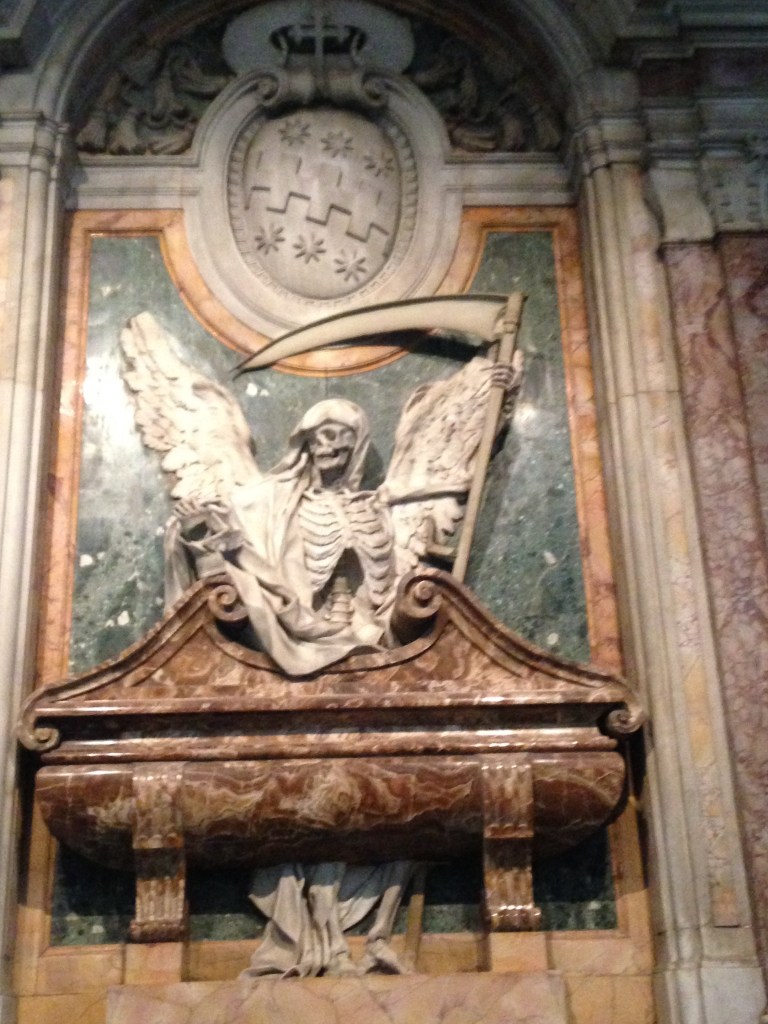
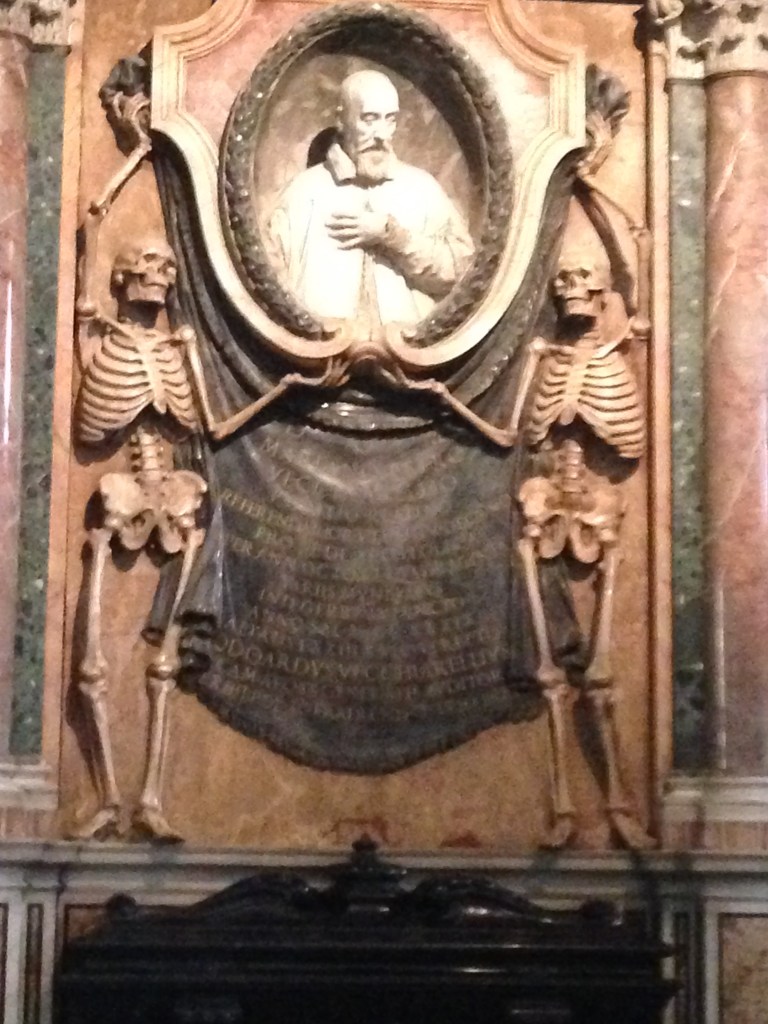
A cheerful reminder of mortality…

It’s now about 18 months since I returned from my most recent trip to Italy and about 4 1/2 years since my first trip there.

These happy snaps are from inside St Peter In Chains, one of the many amazing churches in Rome I visited in August 2016, each of which has works by the great Italian artists in abundance.

It does remind you that we’ve had plagues for as long as we’ve had civilisation.

I do wonder when travelling back to Italy will be possible again. I doubt it will be too soon.

Haha is still not making me laugh

Just over two months ago I wrote a post about Liberal Party donor Huifeng ‘Haha’ Liu, who is accused by ASIO of being a threat to national security:

Stop Laughing – This is Serious! Why ‘Haha’ is not funny.

At the time, the only news media I could find reporting on this topic were the ABC news website, and the darkly humorous Clown World blog.

This morning on waking (I have a day off and the luxury of a sleep in), I found the following new report on the ABC news website:

https://www.abc.net.au/news/2021-03-12/asio-assessment-revealed-in-haha-liu-court-application/13234740

There are no particularly new revelations in this news article – Haha’s appeal is simply continuing to make its way through the courts. But it is interesting that no one aside from the ABC in the mainstream news media seems interested in reporting on this story.

This is the sort of story which should be reported on the front page of all our major newspapers, and which should be widely discussed at the grassroots level of major political parties, particularly as people such as Haha are using their chequebooks to gain ready access to our political representatives.

On re-reading Machiavelli after 30 years

Time flies. It is now well over thirty years since, in History 101 (Medieval and Renaissance History), I first read Machiavelli. I not only read The Prince, but also an abridged version of The Discourses.

I then wrote an essay on the cyclical nature of history in The Discourses, which got me a distinction, and which, many years later (about 21 to be most exact), I discovered was totally wrong. I only made that discovery when I read Harvey C. Mansfield’s essay Machiavelli and the Idea of Progress, which challenges the idea the teenage version of me asserted that Machiavelli held a cyclical view of history as also held by the ancients, and that his views included, due to the intervention of Christianity and its eschatology, a sense of process towards an end goal.

I do wonder whether the very well regarded renaissance history lecturers at Monash in that period (which was doing world leading research into renaissance Italy at the time), were aware of that eschatological element, or whether it was just something which was not considered as suitable for a first year syllabus.

I also, at that time, read a few extra writings contained within my Penguin edition of The Portable Machiavelli. After all, it was a long commute home from Clayton, and in the age before smartphones, a book was a good way to while away the time on a bus or train. I remember in particular reading La Mandrangola, or, in English, The Mandrake Root, a play I now know to be inspired by ancient comedians such as Plautus. At the time, I found La Mandrangola to be almost laugh out loud funny in parts.

So, today being both a rainy day and a public holiday, I pulled out my slightly battered old volume of Machiavelli and re-read La Mandrangola. It is still is funny, and my Latin now is almost good enough that I tried to translate the few Latin passages for myself before looking to the footnotes, and hopefully it still seems only as cynical to me now at almost 52 as it did to me at 19 (a sign that I have not grown more cynical as I get older).

I could not help but chuckle to myself wryly at the passage where they ascertain that the priest they need for the scam is morally flexible, when they offer him money to persuade an abbess to administer a pregnant girl with something to cause a miscarriage (ie clergy actively involving themselves in abortion on demand) and he gives his reply:

Timoteo: So be it in God’s name. May everything you wish be done and all of it for God’s sake and for the sake of charity. Give me the convent’s address, the potion, and, if you want, the money so that it can start doing some good.

Ligurio: Now you are beginning to be the priest I thought you were. Take this portion of the money.

I think you get the general gist. Machiavelli was a man of the Renaissance and he was more skeptical about clergy and the church than many others of a generation earlier, or of a less educated class.

Incidentally, the photo of a statute of Machiavelli at the top of this post is one I took in Florence when I was there in August 2016. Time flies and I wonder when it will be practical to visit Italy again.