The Paul Roos Legacy

One of the things which fascinates me most about football is the anthropological aspect. That is, the culture of a football club. Being a lifelong supporter of a team which, until its current golden age, had a long history of underachievement, I am firmly of the belief that a club’s culture off-field will determine its success on-field.

A club needs to have a culture where winning is seen not only as possible, but as natural.

This can be quite hard to achieve, and sometimes to keep. Melbourne Football Club used to have it in spades, right up until they sacked reigning premiership coach Norm Smith in 1965, destroying their club’s mo-jo.

St Kilda did build a bit of such a culture in the mid 1960s, after decades of failure, but chose to waste it by choosing to become a club which partied and misbehaved after hours to excess – a party culture which it was indulging in as recently as at least 10 years ago.

Carlton lost it, and then regained it in the late 60s after it poached Ron Barassi from Melbourne, and hence enjoyed 8 premierships over 28 seasons before the salary cap scandal destroyed its winning culture.

Ron Barassi then went to VFL perennial cellar dwellers North Melbourne as his next challenge after Carlton, and passed on the spark which led to 5 consecutive seasons of grand final appearances and 2 flags.

Hawthorn, once it got started with its first flag in 1961, never stopped. It’s longest gap since then was the 17 years between 1991 and 2008.

A lot of this depends not only on the club’s history and the leadership of the club, but on the coach. An excellent coach, such as a Barassi or a Hafey or a Sheedy, can do wonders for turning around a club’s culture and making it believe that it can win.

Which leads me to Paul Roos. Roos has only coached one AFL Premiership, Sydney’s 2005 drought breaker. But his impact is far greater than that. Not only was he able to win a premiership with the Sydney Swans, but he was, because he was not really interested in making coaching his lifetime career, to develop a succession plan at Sydney which meant that his handpicked successor, John Longmire, coached Sydney to another flag in 2012 and to various other grand finals.

And then Paul Roos moved to Melbourne Football Club. He did this at the behest of the AFL, at a time when the oldest football club in Australia was a basket case. He made it clear that he was not there long term, that his goal was to rebuild the club and to select and mentor a successor who would build on his foundation.

As a result, his handpicked successor, Simon Goodwin, is today leading the Melbourne Football Club into their first grand final in 21 years, and with a chance of winning their first premiership in the AFL era, ending a 57 year drought.

Win or lose (and I hope they lose as I am a Bulldogs supporter!), the impact of Roos both on the Sydney Swans and on Melbourne as a transformer of the club culture is highly significant. This should never be underestimated.
John Elliott, We Hardly Knew You

Why don’t we see this anymore?

The closest I ever came to meeting John Elliott was about ten years ago. At the time, I used to go to the footy at Docklands every now and then with someone who had some business dealings with John Elliott. He once suggested that I join him sometime when he was going to the footy with Elliott. He did warn me that John Elliot could be rather full on.

It never happened, probably because I got distracted by a health scare and a busy time at work, which leaves me without any opportunity to form a personal impression of John Elliott, who died overnight just short of 80 years old.

For Western Bulldogs supporters like myself, I suppose the former Carlton president is best remembered for his comment about the Western Bulldogs’ ‘tragic history’, which, in the context of Carlton’s salary cap dodging on his watch and a general sense of fair play, still comes across as rather crass and unsportsmanlike.

I expect, for a lot of people, John Elliott’s public persona would have come across as crass and overbearing, lacking in humility. I suppose that he never got around to reading Dale Carnegie’s ‘How To Win Friends And Influence People’.

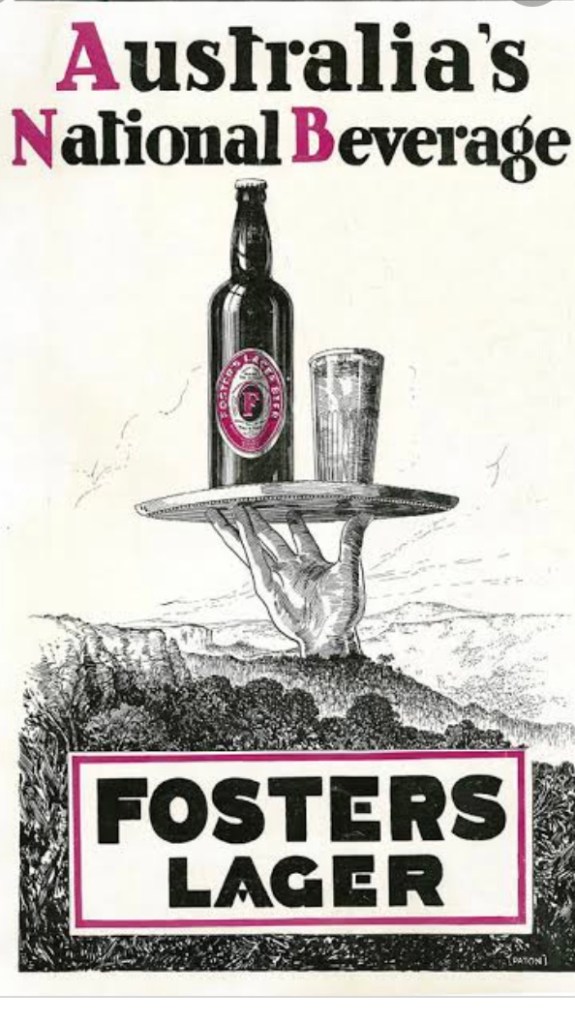
He did seem to be the archetypical cashed up bogan in the way he spoke and the things he said, except that I do not think cashed up bogans get their educations at Carey Grammar and Melbourne University, even if they do spend much of their business career running a brewery and plotting to ‘Fosterise’ the world.

But for many, this is the image which John Elliott presented, either intentionally or subconsciously, and I strongly suspect that there was a lot more to him than that.

My understanding is that he could be extremely generous to his close friends and to former business associates. The proof of this was when he was declared bankrupt several years ago. His friends ensured that he was looked after and continued to have a comfortable life. He had earned their loyalty, and their love, and that reflects someone who has more substance to them than mere material possessions.

But that boorish public persona did ensure that when fair weather ended, many others were prepared to bundle him out the door. When, after their maiden wooden spoon, Carlton Football Club’s supporters blamed him and ended his 19 year reign as club president, they went one step further and removed his name from the eponymous grand stand built during his presidency.

In the same vein, bankruptcy opened the opportunity for the Savage Club (the most quirky of the private clubs for the gentry in Melbourne) to end his membership. I do wonder why they would have done that, and how he might have behaved in the confines of their clubrooms.

Similarly, a lot of people who resent wealthy people could not help but gracelessly gloat at his bankruptcy. In the thinly veiled anger and class hatred that frequently litter the pages of street magazine The Big Issue, the editors of said magazine smugly suggested that he might get a job selling their rag on street corners.

Such reactions, perhaps, reflect more poorly on those people, than on the subject of their ire. But I suppose John Elliott did not think of sparing their feelings in advance, and nor did he probably care. Many supposed saints are second rate people, and many sinners are far more interesting.

But the irony of his passing, just on Grand Final Eve 2021, where the Western Bulldogs are about to square off against Melbourne Football Club, and Elliott’s beloved Carlton is in a 26 year premiership drought and about to start another reboot, is not lost on me. Tragic history indeed!

The Dan Andreas Fault – Today’s Melbourne Earthquake

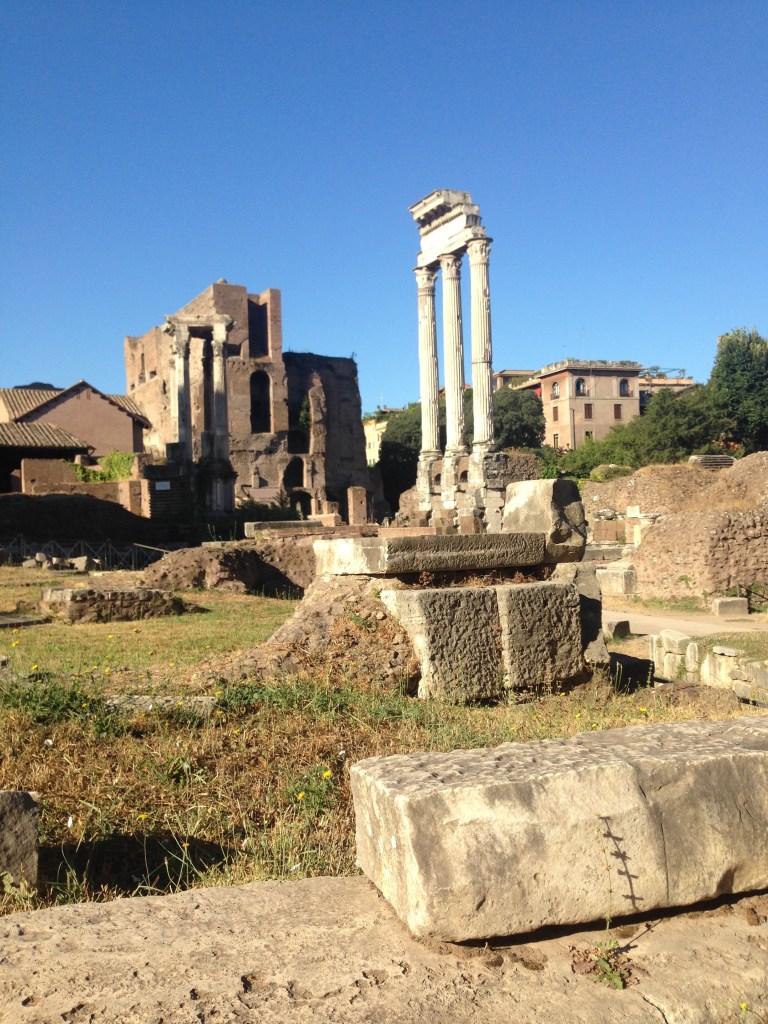
Rome in ruins – the day after the 2016 earthquake

The last time I experienced an earthquake was August 2016. I had arrived in Rome from Florence and was about halfway through my first trip to Italy ever. At around 3am I was woken by some shaking. My first thoughts were that this was not a dream. My second were that one bottle of red (a dry dolcetto I believe) over dinner the previous night was not going to be enough to cause the world to spin of its own accord.

Hence I deduced that it was probably an earthquake, something which I had experienced twice before.

Noting that Rome had stood for 2000 years, I decided to go back to sleep. [Lucky that I was not on the other side of the mountains in Umbria – 299 people lost their lives that night..]

The next day, as I walked around the ancient heart of the city, I was amused by the American tourists, complaining bitterly about the damage the earthquake had just caused to all the Roman buildings.

I am joking about this bit. But it is almost the kind of thing you would expect American tourists to say – they seem almost that naive.

So when the earthquake hit Melbourne this morning, I would not say that I was nonplussed, but I knew exactly what it was, although it seemed that a tiger was dancing around on my roof.

We are rather lucky in Melbourne. Aside from having Disaster Dan as our Premier (although the look of the current opposition front bench is so unappealing as to be almost repulsive unless you like lobsters with your Grange), we have little to complain about. The last earthquake was in 1982 and it was even milder than this one. Aside from some power outages and the collapse of a wall in a South Yarra burger bar, this one turned out to be fairly mild too.

We Will Live With A Yellowcake Submarine!

I used to think that the popular Chinese Communist phrase ‘running dogs’, manifest in Mao’s Little Red Book, had gone out of fashion. It was rather cute in its day:

People of the world, unite and defeat the US aggressors and all their running dogs! People of the world, be courageous, dare to fight, defy difficulties, and advance wave upon wave. Then the whole world will belong to the people. Monsters of all kinds shall be destroyed.’

However, it seems that the current style guide of the Chinese Communist mouthpiece The Global Times still contains it, and instructions for it to be regularly used.

Look at the following quote:

However, no matter how Australia arms itself, it is still a running dog of the US. We advise Canberra not to think that it has the capability to intimidate China if it acquires nuclear-powered submarines and offensive missiles. If Australia dares to provoke China more blatantly because of that, or even find fault militarily, China will certainly punish it with no mercy.

You could indeed say that the editors of The Global Times are rabid dogs (politically at least), given the characteristically belligerent language expressed in that paragraph, and in the rest of that angry article, such as the following:

Once the Australian army fights the People’s Liberation Army in the Taiwan Straits or the South China Sea, military targets in Australia will inevitably become targets of Chinese missiles. Since Australia has become an anti-China spearhead, the country should prepare for the worst.

Mind you, the opening sentence of that paragraph prefaces this threat with the comment that it would be a good idea for Australia to get an anti-missile system.

And the intentions which keep getting revealed in the article, and in the rest of the quality objective journalism on show in The Global Times makes me glad that we have signed up to this new AUKUS defence treaty. It means not only that we have now got renewed and strengthened formal defence ties to two of our historically closest and strongest allies, but that we are likely to be formally elevated as a US ally to a status second only to that of the UK (which, despite my Italian origins, I consider Australia’s motherland).

This AUKUS defence pact is important as it sends a strong message to our potential enemies (and only the naive would think that a country who talks about targeting us with missiles is not a potential enemy) that Australia not only is going to contribute solidly to its defence and regional security, but is supported by the US and the UK, each separately an ally very worth having, let alone collectively.

The agreement to share nuclear submarine technology with Australia is, in the context of a bellicose Communist China, more a relief than a necessary evil. China is developing a powerful blue water navy. This will enable it to threaten and tyrannise its neighbours for thousand of miles around. The best defence against a blue water navy is to have one of your own, particularly in the form of attack submarines.

Nuclear attack submarines are not offensive weapons as such. They do not carry nuclear missiles to bombard cities with. They are there to sink blue navy vessels, such as those that China wants to use to impose its will on the Indo-Pacific region.

To borrow from Mao’s Little Red Book, except to substitute PRC for US, the following message is relevant for The Global Times to consider:

‘Riding roughshod everywhere, PRC imperialism has made itself the enemy of the people of the world and has increasingly isolated itself. Thee who refuse to be enslaved will never be cowed by the atom bombs and hydrogen bombs in the hands of the PRC imperialists. The raging tide of the people of the world against the PRC aggressors is irresistible. Their struggle against PRC imperialism and its lackeys will assuredly win still greater victories.’

We might be ‘running dogs’, but it is the rabid dogs who are truly a threat to the safety of any community.

Reaching the AFL Grand Final in a Time of Plague

Memories of a miracle premiership

In this, 2021, the second year of Plague, my AFL team, Footscray (aka the Western Bulldogs) have made it into the Grand Final again, for the first time since our Premiership Miracle of 2016, and for only the fourth time in VFL/AFL history.

It will be very different to 2016, the COVID plague has seen to that. I will not be walking from Footscray Railway Station through Nicholson Street, Barkly Street, the Whitten Oval and Gordon Street til my mother’s home, in the days leading up to the Grand Final, admiring the shop fronts and houses festooned with red, white and blue streamers and balloons and WOOF WOOF signs.

I won’t have a chance to top up my fan gear with late additions to give me further options as to what to wear to the Grand Final. Nor will I be wearing my scarf to work for the section’s Grand Final afternoon tea, where I can proudly stand with the other (and there are surprisingly many of us) Bulldogs supporters.

There will not be banners at Highpoint West in Maribyrnong wishing support to our home town team. The shopping centre is a ghost town at the moment, thanks to the ongoing lockdown.

I will not have a Grand Final parade to attend in Jolimont on Grand Final Eve, where the two competing teams and the Premiership Cup are shown to their devoted fans.

Nor will I be marching with my brother and 20,000 other Footscray people from Flinders Street Station to the MCG on the afternoon of the Grand Final, proudly wearing our Bulldogs colours.

And if, as I fervently hope, we win, there will be no triumphant return to our home town of Footscray, where we will drink the pubs dry of beer by the following afternoon. To say nothing of not being able to celebrate at the Whitten Oval on the Sunday, where the Premiership Cup is shown to us and we have a chance to cheer our team.

It will be different, and the loss of the opportunity for communal celebration of this moment of success for our home town team will sting.

But we are resilient, we Footscray supporters. Even here in Avondale Heights, this northern bridgehead on the other side of the Maribyrnong, the Ultima Thule of Footscray, there are many of us, and we outnumber other supporters in this, our heartland.

This morning, people are digging out their member’s caps, their scarves, their beanies, and starting to wear them, to remind their neighbours and fellow villagers that we are proud of our home town. Member 2021 bumper stickers are appearing on cars, and Bulldog flags are starting to fly from the front of houses. Scarves in the club colours are getting tied to porch posts.

It will not be the same as if this was not a year of plague, but we will enjoy the next 14 days as we await the Grand Final on the far side of the country.

And if we lose, what then? Melbourne has waited 67 years for the chance to square the ledger with us for 1954, and their 57 year premiership drought is something with which we can well empathise. Who would be so churlish as to begrudge another club its own premiership fairytale, when 2016 brought us so much joy? Not I.

Continued Lockdown Causes A Crisis In Legitimacy Of Technocratic State Authority

Perhaps Dan can model his future statue in the Premiers’ Row on this earlier technocrat

The announcement of 450 new Covid cases in Victoria this morning, some 5 weeks and 2 days after the current lockdown was announced by our technocratic state leader Dan Andrews has caused me some cause for reflection.

The escalating numbers over the past few days, where we have been seeing triple figure announcements each day, are not only illustrating the infectiousness of the Delta variant, but that lockdowns no longer work.

For governments to rule, it is more than having a simple majority that consents to their rule. Rule requires that the overwhelming majority abides by the rules and behaves accordingly. Where a large enough minority stops believing in the authority of government, or starts to defy it or undermine it, a crisis of legitimacy ensues.

This is what we are seeing in Victoria now. The Covid is spreading because a large number of people in the community are actively choosing, despite the risks from the disease, to ignore Premier Andrews and his authoritarian dictates and to violate the restrictions. The result is that there are certain suburbs in the south western and outer northern suburbs, where people are from demographic groups likely to already have a very well founded historical suspicion of the general benevolence of governments and the police, where the virus is spreading at a frightening rate.

Before this plague infested our country, the Victorian government is perceived (whether or not this is just Grange inspired rhetoric from the once and future opposition leader) to have believed in relatively soft policing, arguably not being tough enough on crime.

Since then, the full coercive apparatus of Victoria Police has been brought to bear in circumstances where criminalisation of ordinary citizens and suppression of dissent have routinely applied.

I have been appalled by the dawn raid and arrest of a pregnant bogan for suggesting on Facebook that people gather to protest, or the suppression by police of a vehicle driving around Melbourne adorned with anti-Andrews slogans on the spurious grounds of roadworthiness (the sort of measure reminiscent of US TV shows where a broken tail light is suddenly created and discovered by a patrolman).

The implementation of a curfew last year was a significant and troubling overreach, done not to control the spread of the disease (this was an innovation of the premier himself rather than at the advice of police or health authorities) but to exercise further control over the population.

I have been extremely disturbed by the police recently shooting projectiles (I am reluctant to call them rubber bullets) at crowds of protesters in Flinders Street. This is unprecedented.

The rhetoric of Daniel Andrews as premier has increasingly alienated people. His favourite turn of phrase – the infamous ‘ring of steel’ that he placed around Melbourne last year – is what you would expect not from a premier in a democratic nation, but rather what you would expect in the decision making of someone with tanks at their command, like the brutal despots in Communist China who suppressed the Tiananmen Square uprising in 1989.

It is not surprising that many people are not listening anymore. Rather than actively protest or express dissent, they are just silently and discreetly ignoring the dictates of our failed technocratic ruler, and getting on with those aspects of their private and social lives that they can.

This is reflected in the surge of cases in recent days regardless of the prolonged lockdown. People are weary of being ruled by a technocrat who curtails their freedoms arbitrarily and with limited if any oversight. Civil society, in the form of private business, voluntary associations, religions, and sporting groups, has virtually closed down, a soft approximation of what one sees in totalitarian regimes.

This is a significant crisis in legitimacy. When enough people stop believing that the rules work (which I do not really need to remind my reader did not exist before 18 months ago in living memory)or that they should obey them, then the system starts to fall apart.

Little known side effect of the Sinovac COVID vaccine

There is little to laugh about regarding this plague currently making our lives difficult.

However one of my friends just wryly commented that Astra Zeneca is much better than Sinovac because at least it works and doesn’t make you think that Tibet is a part of China.

When all this is over and we can start to bear international rules based pressure on the communist regime, the issue of a free Tibet might need to be reignited. Until then, some black humour might help us get through to the other side of the crisis.

Up Where Cazaly?

Given that I have reluctantly accepted that God Save The Queen is unlikely to return as our National Anthem, I feel that we really should give serious consideration to adopting Up There Cazaly as our new National Anthem.

There are several good reasons for this. One is that the Second AIF, when going into battle in North Africa during the Second World War, would shout this as their battle cry. Another is that this song is about Australian Rules Football, which is of course very important to most of us. And the third is that this is a generally awesome and stirring song which was a hugely popular unofficial anthem (in Melbourne at least) when it was first released in 1979.

Sadly, I have never seen it performed properly. I have seen Mike Brady perform as a curtain raiser act twice, at a boxing match in Flemington a few years ago, and at the 2016 AFL Grand Final (ie the greatest day in Australian sporting history as the Bulldogs won). Sadly, whilst Mike Brady has a great set of pipes, he is more than willing to butcher the lyrics as seems fit at the time.

So at the boxing, instead of using the c-word (ie Cazaly), he sang ‘Up There The Boxing‘, which was rather corny and disappointing for football tragics like I suspect I am. And at the 2016 Grand Final, he decided to sing, instead of Up There Cazaly, his other classic football anthem, One Day In September. Except that as it was 1st October, he changed the main lyrics to go: ‘One Day in October, Footy’s almost over.’

That was a very minor disappointment for the day. After all, the Western Bulldogs winning an AFL Premiership is reminiscent of a certain Talking Heads song.

The announcement this week that, due to the plague currently running rampant around Victoria, the AFL Grand Final will be played interstate for the second year in a row was something I mostly welcomed. Much as Western Australians go all Barcelona about the rest of the nation on many things, we cannot deny that the Sandgropers do love their Australian Rules Football.

Perth Stadium also would be the best non-Victorian sports stadium, although I do think that they made a sad mistake building it with a 60,000 seat capacity instead of the 80,000 befitting a city of such size and sporting fervour.

It is important for the nation that one of those most unifying aspects of our national culture, Australian Rules Football, is accessible at its highest levels to all Australians, especially those who otherwise express separatist rhetoric so frequently as our Western Australian compatriots.

An unintended but excellent collateral bonus to the decision to have Perth host the AFL Grand Final is that the highly annoying former Collingwood president, Eddie Maguire, has been prohibited from travelling to Western Australia to watch the game. Sadly, that means that he is stuck here in Melbourne with me.

Much as I feel that the MCG is and shall remain the home of Australian Rules Football, and that the AFL Grand Final should be played there most of the time, I do feel that from time to time, there should be some degree of rotation to other places in Australia, provided that they, like Perth, have worthy stadia to host it. I believe that one out of every five AFL Grand Finals should be played interstate, particularly if the following criteria are met:

. the host city has a stadium of at least 60,000 capacity currently (increasing to 70,000 in 20 years’ time)

. a team from the host city has played in an AFL Grand Final at least once in the past 5 years

. Collingwood looks like making it into the Grand Final (OK – I am joking about this one, but imagine all those Collingwood supporters suffering because they have to choose between going to the expense of travelling out of Victoria or paying for their much needed dental work).

The Market is Melting Upward!

I once read that Economics can be summed up in the concept of ‘Supply and Demand’. The details are in either understanding how those two terms interact with each other, or in how to manipulate them.

Much as I like to believe in the idea of Free Market Capitalism, it is probably a non-existent ideal, much like a unicorn with pegasus wings. It really hurts to admit that.

Murray Rothbard and the Friedmans might be great in theory (although my impression is that they justify their arguments through utility rather than morality), but they are to economics what Anne McCaffrey’s cover artists are to science fiction / fantasy.

We’ve had huge bailouts and manipulations of the stock market and the economy ever since the GFC 13 years ago. Bankers and captains of industry do not care. They get their massive bonuses regardless of whether they come from their customers or the taxpayer.

Thanks to all this distortion, share markets and other aspects of the capitalist system do not seem to behave in a way which fits in with what one would expect when we have lockdowns and shortages, and a large number of people forcibly prevented from working.

You would expect, if it were not for money printing of various forms by reserve banks and governments, for interest rates to go up and for asset prices to go down. You also might expect that inflation on commodities to go up.

At the very least, you would expect a bear market on the share market. I know that I did!

Counter-intuitively, at least as far as I am concerned, we have the share market hitting record highs at the moment. It is melting upward, rather than melting down the way it did in March last year.

I am not an economist, I am just a mug punter. I think that the immediate impact of all the money printing has been to stave off what I consider to be inevitable (ie crash!!!!) – to force money into shares and property to chase yield, whilst at the same time placating people at the lower end of the wealth spectrum with enough to help them keep body and soul together.

How long this lasts is another thing. Home ownership is receding further out of reach for many people – artificially low interest rates push up property prices for those who are already property owners, and force those who want to become such to go much further into debt than would normally be sustainable.

And if you are a share market investor, then August has been an awesome month for you.

As an aside – last year I said that I would put my money back into the share market when I ran out of toilet paper. I actually changed my mind and emptied my bank accounts over the past 10 months. I am glad that I did, as I otherwise would have missed out on this huge upswing.

It’s time for Pieman!

We need a hero

When I was seven, I saw a news report on the TV with all sorts of dirty long haired hippy looking people demonstrating. They wanted to ban something called Uranium from being mined. My instinctive reaction to those protesters was that we should mine more Uranium.

So you can surmise that I am not really enthused or in agreement with most protests and demonstrations. I am way too conservative to be comfortable with protest marches or the causes that are usually represented by them.

However, I do believe in the right to protest, and consider that for us to maintain a healthy democracy, people do need to find ways to protest against injustice and the issues which they feel strongly about.

You just won’t see me at an anti-Uranium mining march, and I doubt that anyone is going to organise a Let’s Mine More Uranium protest for me to attend.

Therefore, reports this week that the weekend anti-lockdown protesters in Melbourne were shot at by police with solid pepper pellets are concerning. Whilst some of the protesters are crossing the line in terms of legitimate protest by using various projectiles, this is a major and disturbing escalation in the capacity and behaviour of the police in suppressing protests.

What will happen after lockdown is over, and people resume protesting about matters they care about without risking spreading plague all over the city? Will our peace marchers, university student free education campaigners and environmental activists get shot at and forced to disperse? I sure hope not.

Whilst we have the Covid plague around us, protesting in public places en masse is both foolhardy and irresponsible. Covid is real and quite dangerous, and major public gatherings are events which could easily spread it widely.

But that is not to say that there are no other avenues to protest.

The internet exists, and there are a myriad websites which you can use to express your opinion. You can set up a group on your social media page (I personally despise Facebook but I am in the minority) or a petition on Change.org or you can try to crowdfund money to run a campaign at the next election to unseat your least favourite state government MP (please do this).

Or you can put a sign or a symbol outside your home (like my boots out on the verandah last year as a ‘Give Dan The Boot’ message).

Alternatively, you can take the example of Homer Simpson as Pieman, who in one episode disguises himself and starts putting pies in the faces of all sorts of appalling denizens of Springfield.

Pieing as a form of political protest is real. Back in my uni days, I vaguely knew some bloke who would normally wear a suit and carry a briefcase around campus. But Monash was world renowned years earlier for its hippies, and a few years later I saw him transformed into some sort of long haired hippy activist in shorts and sandals. Perhaps spending too long at our beloved Clayton campus changed him.

He made quite a reputation in the late 1990s as what the media like to call a ‘serial pest’. His signature activity was to pie various prominent politicians.

Pie in the face is harmless, funny, and attention grabbing as a form of political protest. Compare that to other less fortunate countries where they assassinate their political leaders. We should be lucky to live in a country where we pie our politicians.

And there should be more of it, especially now when the politicians are being overbearing and technocratic. Some harmless levity in the form of pie in the face as a protest would allow the public to let off some steam in a Covid-safe manner.

Pieman where are you? We need you now.