Should the AFL expand to 20 teams, and if so, where?

As a child, I think that the first ‘chapter books’ I read were Ruth Park’s Muddle Headed Wombat series. She was quite prolific and there were over a dozen of them in my primary school library. Close to a decade later, I also read her rather tragic adult novel, The Harp in the South, which seemed very far removed from the adventures of an anthropomorphic Wombat and his friends.

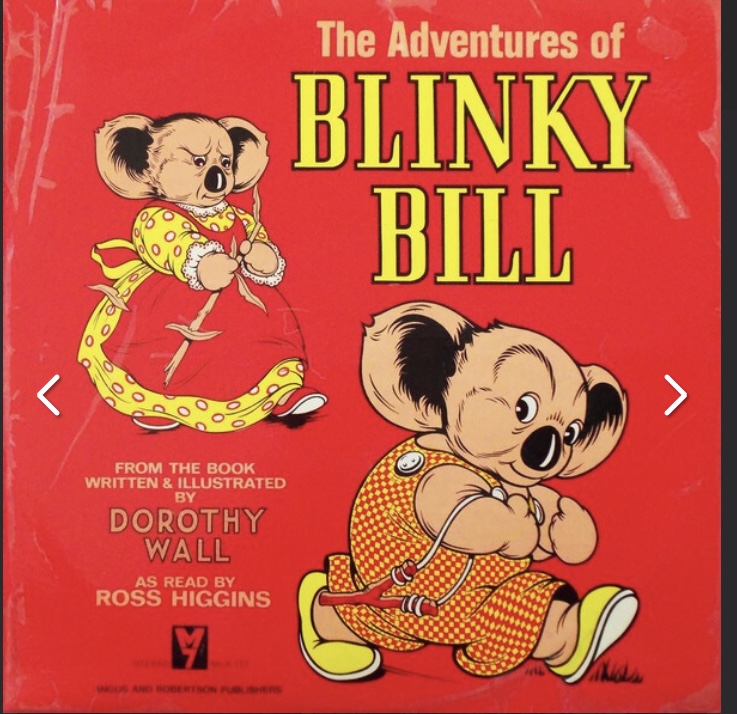
But for all the reading proficiency I gained from reading about the Muddle Headed Wombat, I had far more affection for Blinky Bill, the mischievous koala, even though his author, Dorothy Wall, was far less prolific.

After all, we all love koalas, don’t we?

The original Brisbane team, introduced in 1987 along with the first Perth team (the West Coast Eagles), was, despite being called the Brisbane Bears, more inclined to use the image of a koala bear who rather resembled our childhood friend Blinky Bill as their mascot.

Below are the relevant koalas for your perusal.

Of course, the Brisbane mascot seemed a little closer to a Drop Bear than to our loveable friend Blinky Bill.

The long march to a national football competition started in 1982 when the South Melbourne Football Club was persuaded to move north and become the Sydney Swans. It was then followed by the introduction of Brisbane and West Coast in 1987.

The VFL renamed itself the AFL for the start of the 1990 season, after having first tried unsuccessfully to force a merger between Footscray and Fitzroy Football Clubs, which was blocked by a grassroots revolt by Footscray supporters, led by Peter Gordon.

The competition became more legitimately a national one in 1991, when the AFL was able to use somewhat sneaky negotiations with Port Adelaide to leverage the SANFL, who had been holdouts, into entering an Adelaide team into the competition.

1991 also saw West Coast make the Grand Final for the first time, with them taking the premiership in 1992 and 1994.

1994 also saw Fremantle join as the second WA team

The current Brisbane Lions were formed from a merger with Fitzroy at the end of 1996 which saw that foundation VFL club effectively die. This opened the way for Port Adelaide to finally join as the second SA club.

There then followed a golden decade or so for interstate clubs, consolidating the AFL as a genuinely national football competition. This started with Sydney making the grand final in 1996, followed by Adelaide winning back to back premierships in 1997-98, and Brisbane Lions then winning three in a row in 2001-02-03.

2004 saw the first time in history when there was no Victorian team in the AFL grand final, when Port Adelaide defeated Brisbane. This was followed by Sydney defeating West Coast in 2005 and West Coast doing likewise to Sydney in 2006.

2011 saw the inclusion of the ill starred Gold Coast Suns, followed by the Greater Western Sydney Giants in 2012.

These two teams have not been very successful. After the 2019 grand final, a meme did the rounds that Tom Boyd (Western Bulldogs hero and former GWS recruit) and GWS had both kicked three goals in a grand final.

I consider the Pandemic to have been very good for the AFL. It lifeboated the competition to Brisbane in 2020, playing the AFL grand final at the Gabba, and proving that it could survive outside the Australian Rules Football cradle of Victoria. It then followed that up in 2021 with many games in Tasmania, and a grand final in Perth.

And now we are waiting for the newly announced Tasmanian 19th team to join the completion in 2028.

So, where do we go from here? Each state will have at least one AFL team? NSW, QLD, WA and SA each have two, and Victoria has ten (nine in Melbourne). The asymmetry of having 19 teams screams out for a 20th team to enter the competition, but from where?

Let’s eliminate some unlikely contenders first.

Canberra is not big enough to add to the TV market. Most people there are expats from other cities, and have their allegiance to their original football codes and teams. The best they can hope for, at least for the next decade or two, is that GWS plays more games there (and that GWS actually starts winning games generally).

One big sentimental favourite idea for me is to have a team based north of the Tropic of Capricorn, taking in the WA town of Broome, the NT capital Darwin, and the FNQ cities of Cairns, Townsville, Mackay and Rockhampton. It could be called The Northern Terror, with a crocodile as the emblem, and focus predominantly on recruiting and developing the local indigenous talent.

Sadly, much as I love that idea, I do not think that it is viable at all just yet, even if (something I do not support), a lot of taxpayer money from the federal, territory and QLD state government went into subsidising it.

So let’s look back around the population centres which might support a team.

Queensland is still mostly a rugby zone (both league and union), and the Gold Coast Suns are going the way of most professional sporting teams of any code (ie they are sinking rather than swimming). The AFL will persevere there, as it does see much potential growth in the TV market in Queensland.

Similarly, we have NSW. The Sydney Swans have been very successful on field, and very successful off it in attracting sponsors and a middle class supporter base. GWS is the key to attracting a very different demographic of supporters, and so far this has not worked out. But the TV market there is potentially extremely lucrative, and so the GWS experiment will continue.

And this leaves the two most populous cities outside of Melbourne where Australian Rules is the dominant football code: Adelaide and Perth.

I am firmly of the view we need to have a 20th AFL team, and that it should be a 3rd team from either Perth or Adelaide.

There are pros and cons to both.

Let’s look at Perth first. A big pro is that there is a larger population (2.1 million as compared to the 1.4 million of Adelaide). It also has a very good stadium, which holds 60,000. And let us not forget the mineral wealth which makes the potential sponsorship of a third team very lucrative.

But, and this is a big BUT, I do not think that there is any particularly strong club in the state competition which would stand out as to draw support away from West Coast as to command an independent presence.

Then there is Adelaide. The population is smaller, and the state is not as wealthy as WA. Nor does it have a stadium quite as good.

But it does have two things going for it which are quite important. Approximately 8.7 % of the population currently are members of one of their two AFL teams (as compared to 7.7% of the population of Perth, and 13.6% of the population of Melbourne). This is indicative of a slightly more intense sporting culture in Adelaide, which is more likely to commit to another team. The recent success of the inaugural ‘Gather Round’, which will see this hosted by Adelaide for the next three years, is indicative of this.

And the other thing that it has is a much stronger local competition, the SANFL, than in Western Australia. Norwood, in particular, is a long standing and extremely successful club which has a strong supporter base, second only to Port Adelaide, which was able to successfully move into the AFL.

My personal view is that the AFL should start to look at transitioning Norwood into being the 20th AFL club.

But the other thing that the AFL does need to do in the meantime as we await the debut of Tasmania in 2028 is to look at building the supporter base north of the Barassi line. GWS should play most of its games, including away games, either at home or in Canberra, or in other cities like Newcastle and Wollongong. Similarly, Gold Coast should play most of its away games in Darwin or FNQ.

And when the time comes for another Gather Round city to be selected, it should be Sydney, so as to rebuild interest in the competition there.

Do Tasmanians Really Have Twice As Many Mouths To Feed? (And Other Reflections On AFL Expansion)

Given the title of this post, I had better address the Thylacine in the room first up. We do have many unkind jokes about Tasmanians, the nicest being that the small population results in limited genetic diversity and therefore leads to them all being two headed and red haired.

That is now out of the way (spoiler alert: it is not out of the way and I will make witty digs about our southern cousins all through this posting), and I can start to get more serious about the recent announcement of a new Tasmanian AFL team, which will bring the total to 19 teams.

I have always been skeptical about the need for an AFL team in Tasmania. I have three reasons for that. The first is that I do not think, one or two headed (yes I still cannot resist), that the population of Tasmania (approx half a million according to the Census) is large enough to sustain one team. The second is that the AFL is, these days, all about growing the TV audience. As Tasmania is already hopelessly devoted to Australian Rules Football, I do not see that it is going to grow the TV market by any noticeable amount.

And the third reason is that there is a serious and somewhat toxic rivalry between the north and south parts of the Island, such that I have my doubts that they will all unite behind a state based team.

This latter reason has already manifested itself, with the resignation of two northern Tasmanian state MPs from the Liberal Party in protest at the announcement of the construction of a very expensive new stadium in Hobart (in the south of Tassie, for those of you unfamiliar with the geography).

I am not going to cite exact figures, but the Tasmanian government is funding about two thirds of the cost of this new stadium, and the Federal government is chipping in the other third. Many Tasmaniacs (I could not resist), particularly of the Greens and State Labor (not Federal mind you) persuasion, are quite concerned that the money could be better spent on relieving poverty and homelessness.

Having been to Hobart four times, and Launceston for one day of work meetings (it rained constantly), I do not envy those who would find themselves homeless down there. It is very cold and wet. I do not think regular displays of the Aurora Australis at night will compensate for the cold.

But this is all about Sport as a nation building tool. I love my Australian Rules Football, and my AFL team, very much. But as I would have written in this blog at various times, I am very skeptical about Sport being used in Australia for nationalistic purposes. We do this more here than anywhere in the world other than totalitarian regimes (places who really need something to distract from the constant spying, human rights abuses and shortages of the bare necessities of life).

Because Sport is seen as such a necessary nation building tool by our politicians, federal governments are quite happy to write large cheques to subsidise sporting competitions and large stadia, in exchange for a degree of control unhealthy for civil society. That an outlier to the Federation like Tasmania, which does feel very much like a poor half sister to the secessionistic and wealthy Western Australia, does not have an AFL team, is to nationalists an affront, regardless of the economic and demographic realities (ie that Tasmania cannot sustain a viable AFL team).

It also is a causus bellum for state politicians. Parochialism is always alive and well in sport – indeed it is the foundation of the supporter base for most clubs (just look at my own allegiance to the Western Bulldogs). And the Tasmanian government was quite happy to gamble on the popularity of forcing the creation of an AFL team, even if it costs the state a lot of money, instead of something boring like spending the money on public housing.

The AFL was quite happy to ignore the economic and demographic realities of sustaining a Tasmanian team for a very simple reason. It is not going to cost the AFL anything. All the cost is going to be borne by the state and federal governments. And the AFL knew that if it did not cooperate, it would suffer the downstream and implacable hostility from the Tasmanian government, and also lose the bipartisan goodwill it enjoys in Canberra. So it was all win-win for the AFL in making this choice, as opposed to lose-lose if it did not cooperate.

After all, the AFL has been successfully surfing the nationalist sentiment (and related political interest) behind the ideology of Sport As Nation Builder better than anyone other than the Olympic movement for the past 30 years. It does not want to fall off the board.

So let’s all enjoy our new AFL team. Hopefully it is able to do better than GWS and the Gold Coast have since our last big expansion.

Broo’s Unhappy Anniversary

Give or take a day or two, it is now one year since ASX listed craft brewer Broo (ASX Code BEE) entered a trading suspension on the Australian Securities Exchange.

I don’t think that I can say ‘Happy Anniversary’ on this momentous occasion.

I have kept a close eye on Broo in that time, or as close as the holder of 120 shares worth less than my current pocket change can be motivated to keep. I have noticed that various directors have come and gone since Groges the founder was ousted in a shareholder putsch last March or April, and that most of those who have been interested enough in the company to have pushed him out or to have sought to participate in the running of the business since then seem to have lost interest.

In terms of assets, the company has divested itself of its Ballarat land, its brew pub in Mildura, and its various other physical assets. I do not think it now exists outside of its suspended listing, its bank accounts, and its intellectual property.

I now am very confident in saying that I do not think that Broo is going to trade again on the ASX in its current form. The most likely outcome is that its listing is used as a vehicle for some other company to list on the ASX sans IPO.

Now, more than ever, I am glad that as a pre-existing shareholder, I did not participate in the IPO in 2016, where I could have bought many more shares at 20 cents each. I had a feeling then that this was a huge premium to the actual value of the business, and events since then have proved me right.

Not In My Backyard – The Australian Dream Is Fast Becoming A Nightmare

20 years ago, when I moved into my home in Avondale Heights, I was surrounded by other homes on house blocks approximately 535sqm in size.

My first week, I planted several citrus trees in my backyard, and a gum tree sapling 3m from the back fence. The orange trees are all about to fruit again, and whilst the gum tree is still very spindly, it is quite tall.

After a few years, the investor who owned the house behind me sold up, and it was demolished, replaced with two townhouses which went up much closer to my back fence. I did not object to this development proposal because I mostly mind my own business.

One day, the new back fence neighbour, an elderly chap named Mick who had downsized from a full sized house, popped his head over the fence and helpfully suggested that I get rid of my gum tree, as it was one day going to get huge. I thanked him for his helpful ideas and ignored him.

Where is Mick now? Dead. The gum tree on the other hand is still there and contributing to taking carbon out of the atmosphere and keeping our suburb a little more liveable. Having my own fruit trees and shrubs and a gum tree out back is about more than my own selfish desires – it is about preserving an island of nature in suburbia.

Let’s face it, living in an apartment is not great. I did it for almost 7 years. The positives were that it was extremely affordable as an entry level first home, that it was close to a tram line (and Highpoint Shopping Centre) and that there was a nice faux rural view from the study and kitchen windows towards the green field buffer zone around the Maribyrnong Explosives Factory over the road. Sheep grazed in that field. The negatives included late night noise from the occasional inconsiderate drunken tenant in the same block, having my garbage bin refilled to the brim mere hours after I had collected it, lack of access to the master tap controlling water to my flat, and the footsteps on the walkway past my flat.

Even worse, for someone who grew up in a family home with generous sized backyard, was not having any land to attempt gardening on.

After I got a promotion at work, during which time I had saved enough for a deposit for a house, I sold up and moved 3km down the road to Avondale Heights. The extra travel time to work and taxi fares from late nights out are easily offset by the joy I get from having an actual house with large front garden and reasonably sized backyard to live in.

In this, I am lucky, compared to most people somewhat younger than me. I am a homeowner and my home is an actual house with land.

Melbourne, depending on how you measure it, is now approximately 5 million people in size. We have a rental availability crisis, and an ongoing house affordability crisis.

No matter what happens, in terms of reserve bank or government policy, many people are going to be unhappy.

In recent weeks, I have been reading many articles critical of the Not In My Backyard (NIMBY) attitude of people like myself, who are big believers in the benefits of backyards and lower density housing. It is argued that we need to subdivide further and do considerable infill in housing developments in established suburbs in order to make the best use of the infrastructure which already exists, rather than growing the Australian capital cities further and further outward at greater infrastructure cost.

I’ve also read articles about the cladding of many recently built apartment towers, which make them both a potential death trap to occupants, as well as a money pit for their hapless and frequently naive owners. Other apartments, built when building codes were more lax, are so small and poorly ventilated, as to be extremely miserable places to call home.

When Dandenong is described in The Age as a ‘middle suburb’, you need to get a little worried. It is after all, 30km from the GPO. I guess that my lair in Avondale Heights, 11km from the GPO in the opposite direction, is an inner suburb now – with the vegan cafe to prove it!

There are many issues which are going to need to be considered in the many moving parts to try and restore home ownership affordability and easy rental access to Australians. I do not think that government subsidies for home ownership, nor artificially low interest rates, do anything other than exacerbate the problem.

As you would surmise from my attitude to my erstwhile neighbour Mick’s suggestion about my gum tree which existed before his townhouse, the one issue which I am most interested in is the quality of life which we will face in our cities going forward. We are all increasingly alienated from nature with each passing generation. Our cities are ribbons of black bitumen amid islands of concrete, with more and more of us living in towers of glass and steel. This is not a healthy environment to live in.

The absence of backyards, or front gardens, and trees, is going to have an impact on us, a severely adverse one.

Firstly, have you thought about what the declining tree canopy in the suburbs is going to do to temperatures when we replace our backyards with dual occupancies? The lack of shade to absorb sunlight is going to make our suburbs much hotter in summer. Trees also not only absorb carbon dioxide, but a lot of other omissions from cars, cleaning our air.

Trees, and back yards in general, also attract nature. I have regularly seen fruit bats in my garden, and that gum tree offensive to some has hosted owls and kookaburras and possums. Geckos can be found in my garden, and I once saw a larger lizard hiding in the wood pile (I do like a good BBQ). Cockatoos and corellas love eating the apricots and peaches on the branches I cannot reach on my fruit trees.

As a home owner who has a reasonable amount of land surrounding his house, I see it as my civic duty to have trees on my land. Not only does that make my own home a little more pleasant, especially in summer, but it contributes that little bit more to making living in a large metropolis that much better for my neighbours. I can hardly wait for when the avocado trees I have grown from pips tower over my back yard, encasing everything in shade.

If this makes me a NIMBY, then so be it. I am not going back to living in a flat, even if mowing the lawn is a huge nuisance.

Are Disruptive Innovative FinTechs Today’s Equivalent of Video Rental Libraries?

Hipster girl band Camp Cope did a ballad entitled ‘Footscray Station’ a few years ago. Part love song, part protest anthem, it sums up what hipster types and Millennials see in Footscray, mostly from an angle different to my own, it being my childhood home town.

For most of my adult life, first as a uni student and then as an office worker, I have spent much time commuting through Footscray Station at least a few times each week for over three and a half decades.

So with hipsters like Camp Cope and their ballad in mind, it perhaps was apt that my first encounter with one of those disruptive FinTech companies was at Footscray Station in November 2019. People were handing out those perforated promotion offer cards, although rather than being for some sort of tech based food delivery service like Uber Eats or Marley Spoon, it was for Rate Setter, a peer to peer lending platform based in the UK.

The offer was for $50 credit if I were to open an account and deposit $100 in it.

Given that I was curious, and the interest rates were much higher than what was being offered by the bank, I opened an account and over the next three years gradually deposited $1000 into it. I also invested in it like a Millennial might, into green energy loans.

Along the way, during the early days of the Plague, such companies risked getting into trouble, as I learned from reading the Financial Review, and Rate Setter’s Australian branch soon spun off into its own ASX listed business named Plenti (ASX code PLT).

I added PLT to my watch list, and even genuinely pondered buying some shares in it at some stage. Starting in late 2020 at around $1.20, it topped $1.50 in mid 2021, before starting a steady downward sloping gradient to where it now stands, almost 2 years later, at $0.37.

I think that PLT’s performance on the ASX has probably matched my enthusiasm for the underpinning business model. Back in 2019 with higher interest rates on offer than the banks, and with an ability to instantaneously deposit funds in via OSCO, I got immediate gratification out of using it as a small auxiliary savings account.

Since then, the deposit function has changed to one run by BPay, where the funds do not immediately transfer over. Nor, maddening, do my attempts to lend my money to borrowers match as quickly. Interest rates also dropped, and now, with bank interest on a rapid rise, the margin in Plenti does not seem as tempting.

So for the past year or so, I have been gradually withdrawing my funds from Plenti as they get repaid, rather than reinvesting them into other loans.

And this is the rub (as Shakespeare put it in one of the alternative versions of Hamlet’s soliloquy). The banks and existing financial institutions are still able to offer investors something more reliable and appealing as an overall package than what this disruptive and innovative peer to peer lending platform can, and at the earliest sign of real trouble, it could end up no longer viable.

Buy Now Pay Later is another new trend which has been welcomed with open arms and open legs by consumers, particularly those who do not have good credit ratings, responsible spending behaviours, or ready cash in the bank. The collapse of the Australian start up in the BNPL field, Open Pay, two months ago, is a salient point for investors. It started in early 2020 at about $1 and soared above $4 by mid 2021, before gradually declining down to $0.195 at the time it suspended its operations in February.

I believe that one of the stock tipping newsletters to which I sometimes subscribe (although not the one which talks about Astrology as a way of predicting real estate prices) did mention Open Pay (ASX Code OPY) as a company to punt on a few years ago. I am glad I did not invest in it then. I have made enough dog investments in my time.

BNPL is still mostly unregulated, which carries all sorts of risks. One is that it does not run automatic credit checks and therefore both becomes a lender of first resort to many people who are not too familiar with consumer credit and who could develop irresponsible spending habits, and of last resort to those who already have reached the end of the line in terms of their financial tether. That risk is one of major defaults by customers, who, if they have no other protections left to them, can always resort to bankruptcy. The other risk is that of regulation – BNPL is currently mostly unregulated, but with consumer advocates arguing that this needs to change, and this will eliminate the competitive edge BNPL start ups have over the Banks.

At the same time, we have the major banks launching their own BNPL type products, as are the major tech companies. When these two parts of the business establishment catch up, the existing BNPLs will either go the way of Open Pay, or get bought out.

Open Pay was not the only company recommended to me by that stock tipping newsletter. Another was RAIZ (ASX code RZI). According to the Apple App Store entry for RAIZ, which is headed ‘Invest The Spare Change’:

“Raiz helps you easily save and invest your money. Get started in minutes with as little as $5, invest your spare change into a diversified portfolio with automatic round-ups, and give your money a chance to grow in the background of life.

I think RAIZ is similar to another disruptive app based investment FinTech, Spaceship. A great idea, and one which will possibly appeal to novice investors, probably the same sort of people who have been using BNPL services but hopefully have gotten that under control and now want to start building their financial health.

HOWEVER, the major banks and financial institutions are not going to stand still if they see such possible corners of the investor market slipping through their fingers to disrupters. Commsec, for example, launched a beginner’s stock investing app in late 2021, called Commsec Pocket. It allows you to start investing in a range of Exchange Traded Funds from with as little as $50, and with an initial fee of $2 (rising to 0.2% of the value if over $1000).

Commsec Pocket piqued my interest on a sleepy afternoon a year ago, so I did download it and play with it for a while, til I got bored because I am many years beyond the time when I would want to start investing with less than $1000, let alone ‘as little as $50’.

And this is the problem which RAIZ and Spaceship will face – I doubt that most of their investors are going to be putting in sufficient to give them the fees to make it worthwhile, and that after a while, they will either give up on the app or upgrade to a fuller service like Commsec Pocket. Meanwhile, new investors may simply just go with offerings like Commsec Pocket or something similar from an established financial player.

As for RZI as an investment, I still have it on one of my Commsec watch lists. Starting at around $1.20 in 2018, it struggled for a while til rising to $2 in mid 2021. Since the start of 2022, it has been on a steady slide down to under $0.40 at present.

Aren’t I glad that the only money I lose on those stock tipping newsletters is what I pay for the subscription?

I think that the problem with a lot of those FinTechs is that whilst they have a great idea, to be successful they need to grow big enough and disruptive enough that they shift the entire paradigm of the market they are entering, the way that Uber has done for the taxi industry, Amazon for retail, and Netflix for video rental. Otherwise they fail.

The Netflix quip is most salient. They once approached Blockbuster Video to buy them out, and were laughed out of the office. When did you last see a video store? I think that a lot of those disruptive and clever FinTech innovators are going to last as long as video stores – they will not be able to supplant the existing major players who will simply imitate their good ideas and implement them in a better way.

Treasury Wine and the many apparently defunct brands

A few weeks ago I discovered and then posted about the disappearance of some formerly highly popular brands owned by Treasury Wine Estate – namely Rosemount, Ingoldby, and Jamison’s Run.

Since, then, I have retrospectively been doing my due diligence as an investor (I do, after all, own 1,000 shares in the company) to see what is going on with those brands.

Normally my due diligence as a shareholder in wine companies involves buying and drinking a lot of wine bottles. This time, instead, I went back through all the annual reports since Treasury separated from Foster’s Group to get a handle on what has been going on in the company.

A quick look at all the brands listed over a decade ago indicates that there were over 80 brands owned by Treasury. Now, they only list about 20 on their website. Some appear to have been retired, and some have been divested (eg Bailey’s of Glenrowan).

Sadly, there does not appear to be any real discussion of this strategy in the annual reports.

As someone who has bought and drank many different brands of Treasury wines over the years, this does bug me a fair bit.

But I will get over it.

Personal Finance and The Micawber Principle

I happen to like reading books about personal finance, although I doubt, at age 54 and with my roof, retirement, and share portfolio all long since sorted out, that I really need to do much more than plan out how to live long enough to spend what I have saved and what I will passively earn from now on. [Really, I should focus my reading pleasure on the 100 book backlog piled on my mantelpiece and coffee table rather than remind myself of what I already know.]

Hence I just finished reading Ramit Sethi’s book ‘I will teach you to be rich’, which is perhaps best described as an American version of ‘The Barefoot Investor’ (a book which not only have I read, but of which I have bought multiple copies of and handed out to friends and family alike in recent years).

At the end of the day, I get the feeling that these books are much of a muchness, and their message can be summed up as a more sophisticated version of the Micawber Principle, which I will repeat here:

“Annual income twenty pounds, annual expenditure nineteen nineteen and six, result happiness. Annual income twenty pounds, annual expenditure twenty pounds nought and six, result misery.”

This is taken from Chapter 12 of the Charles Dickens novel ‘David Copperfield’. Dickens himself was always preoccupied with money, probably because his father had been imprisoned for debt, and improvident spongers like Micawber and Skimpole from ‘Bleak House’ are amongst my favourite of his caricatures.

Most of Dickens’ novels are, to my mind, almost unreadable due to his preoccupation with money. This is because he was paid by the word, so his books frequently became far more verbose than they needed to be for the storyline to proceed, given he would pad them out for the extra cash.

But this all does get me thinking about the modern culture of self help books – of which I have probably read far more than my fair share – and which are for the most part an American inter-war development.

Self help books divide into two categories. One is the Personal Success category, and the other is the Get Rich category. The two archetypes in each respective field are Dale Carnegie’s ‘How to win friends and influence people’, and Napoleon Hill’s ‘Think and grow rich.’

The Personal Success genre is mostly about changing personal behaviour and mindsets in a way which make you able to better deal with other people, so as to improve your success in your personal and professional lives.

Carnegie’s work can be summarised as saying please and thank you, remembering names, and shaking hands firmly. Getting along with people is important if you are to get ahead in life, after all.

Mind you, one of the more recent books in this genre, ‘The Game’ by Neill Strauss (although perhaps not so much the sequel), seems to be more an inside expose of the subculture of pick up artists and how they implode emotionally, rather than a proper guide on improving one’s success with women.

Napoleon Hill, on the other hand, was all about how to change your mindset at a very inherent and innate level, so as to become rich. It involves challenging your own values, attitude to risk, and ability to interact. It demands a lot more of you.

Having read Hill, I think he was a decent guy, but I don’t see that the secrets to wealth he sets out in his book work that well, and he left the way clear for a large number of later writers who are not as decent as him. For example, when I read Kiyosaki’s ‘Rich Dad Poor Dad’ 20 years ago, I found the general tone and apparent amorality of the author to be quite repulsive. Yet he advised the reader that it is easy to change and become just like him.

But that is not so easy for people. I suspect that following the formulas in ‘Rich Dad Poor Dad’ involve a similar level of behavioural and attitudinal change as in ‘The Game’ – not everyone is going to want to behave the way that either the fragile womaniser ‘Mystery’ does (Strauss’ book is hilarious in describing his implosion), nor the avaricious Kiyosaki to attain success in Love or Money.

And that perhaps is why books like ‘I will teach you to be rich’ and ‘The barefoot investor’ are so popular. They do not expect people to change who they are or how they think or what they believe or their values, only that they go and apply the Micawber principle to their financial life.