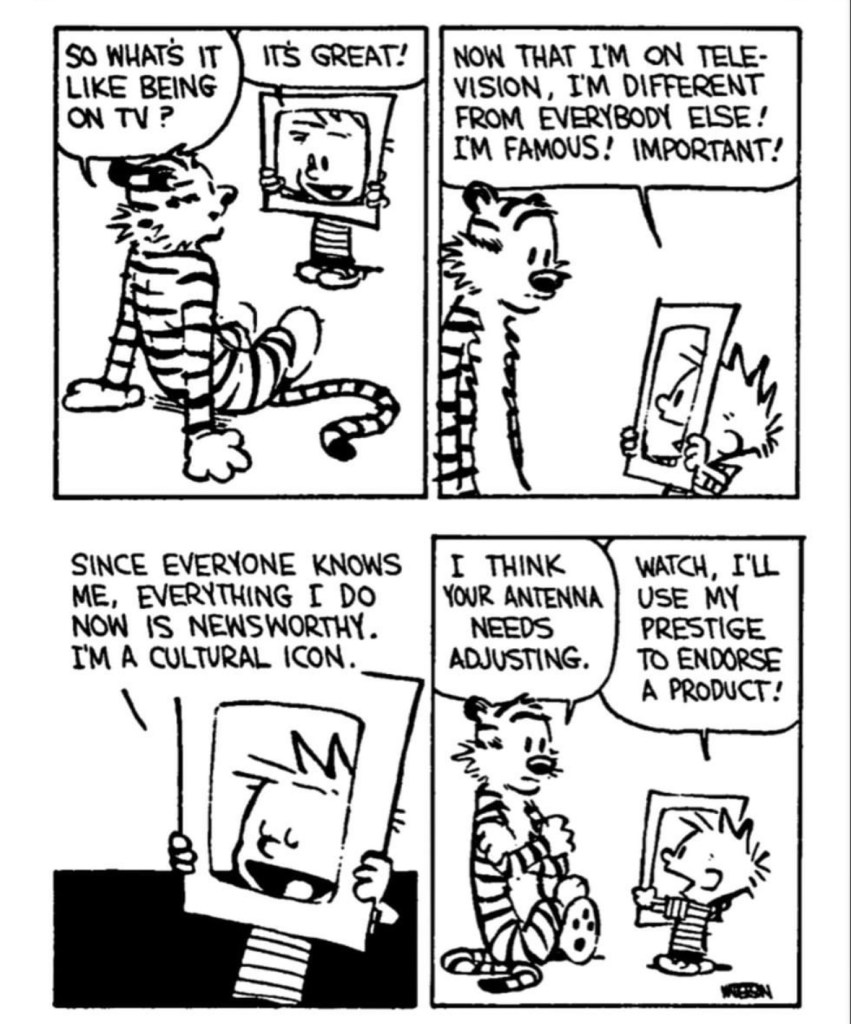
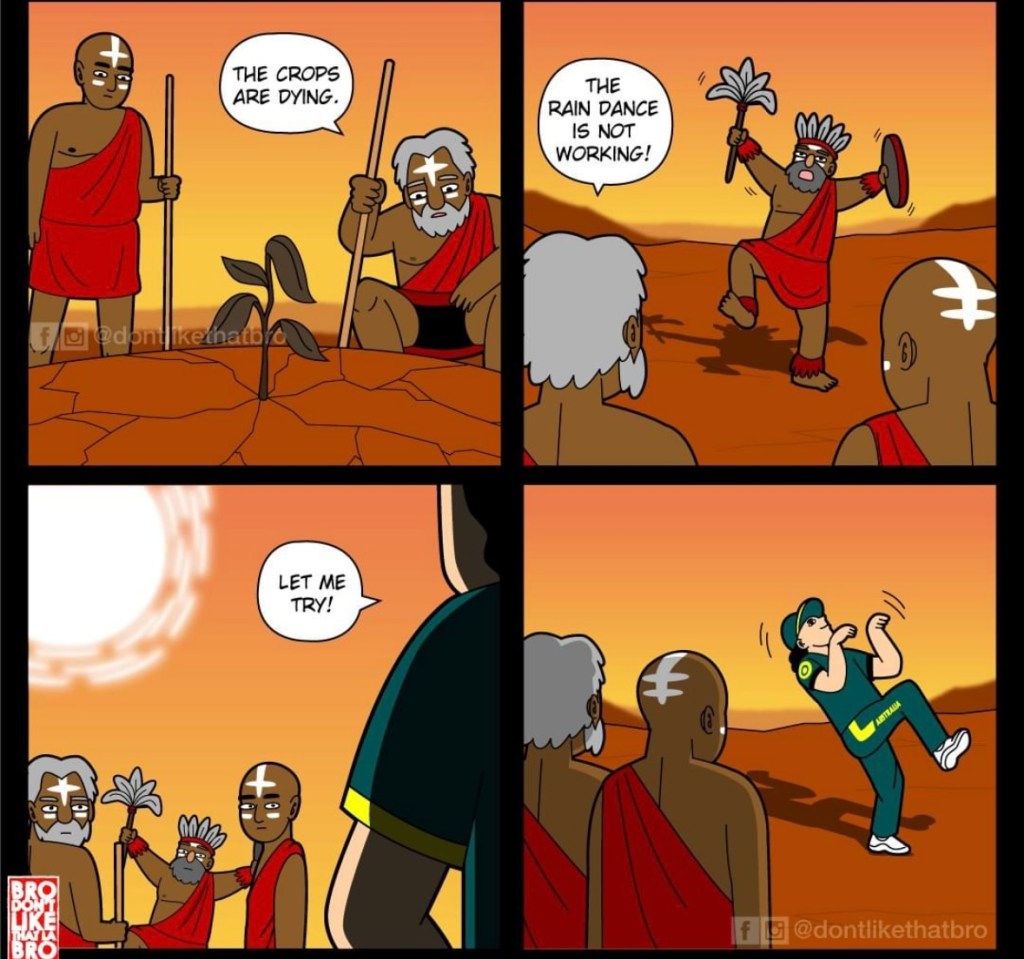
Oops….

search.app/PSRHc9fQR33M557d8

It’s interesting to see political incompetence in action so poetically.

Insiders know that Richard Shields is the brother of former Victorian liberal party state director Julian Sheezel.

Cain is not expected to be the keeper of Abel, but obviously one is much more capable than the other.

I think that the people who stopped Shields becoming a Senator last year did the Australian people a solid.

The Australian Olympic Team – Where Too Much Ain’t Enough

The Olympics are over, and I hope that we as a nation-state have sated our gluttony for gold medals for a few months at least.

After all, we did win 18 of those at these Olympics, the most we have ever won in history, coming fourth in the tally behind the USA, China, and Japan – nations which are far larger and more powerful than us in terms of population, wealth, and economic influence.

I tend to agree with the extremely cynical guerrilla rock band TISM, who have surfaced at various times over the past 40 years to amuse and entertain Melburnians with their unique satirical version of rock music.

Their savage Olympic focused song ‘Give up for Australia!’ wearily chants:
“Five metres! Four, three, two, one!
Gold to Australia! Gold to Australia!
Gold to Australia! Gold to Australia!”
Gold! Gold!

[Verse 1]
May all our young Aussie swimmers
Be resigned to failure

May our nation state
Be always second rate

[Sample]
“Five metres! Four, three, two, one!
Gold, gold, gold! Gold, gold, gold!”

[Verse 2]
May Timorese fishermen
Evade the Aussie sailor

May we do as history teaches
Die on Middle Eastern beaches

[Chorus]
Give up, give up, give up, give up
Give up for Australia

The ‘gold for Australia’ bits are samples from some actual sports commentator as one or other swimmer approaches the finishing line.

I have regularly and wearily commented over the years, both inside this blog and in person, about how unhealthy it is for Australia to obsess over the Olympic medal tally to the extent it does. This is the sort of attitude more suited to the propaganda motives of tyrannies and totalitarian regimes rather than that of a prosperous liberal democracy.

Let’s look at the top ten medal tallies from a few significant moments in time.

Berlin 1936

RankNationGoldSilverBronzeTotal
1 Germany*383132101
2 United States24211257
3 Hungary101516
4 Italy913527
5 Finland85619
6 France76619
7 Sweden651021
8 Japan641020
9 Netherlands64717
10 Austria57517

Melbourne 1956

RankNationGoldSilverBronzeTotal
1 Soviet Union37293298
2 United States32251774
3 Australia*1381435
4 Hungary910726
5 Italy88925
6 Sweden*85619
7 United Team of Germany613726
8 Great Britain671124
9 Romania53513
10 Japan410519

Montreal 1976

RankNOCGoldSilverBronzeTotal
1 Soviet Union494135125
2 East Germany40252590
3 United States34352594
4 West Germany10121739
5 Japan961025
6 Poland761326
7 Bulgaria69722
8 Cuba64313
9 Romania491427
10 Hungary451322

Seoul 1988

RankNationGoldSilverBronzeTotal
1 Soviet Union553146132
2 East Germany373530102
3 United States36312794
4 South Korea*12101133
5 West Germany11141540
6 Hungary116623
7 Bulgaria10121335
8 Romania711624
9 France64616
10 Italy64414

Paris 2024

RankNOCGoldSilverBronzeTotal
1 United States404442126
2 China40272491
3 Japan20121345
4 Australia18191653
5 France*16262264
6 Netherlands1571234
7 Great Britain14222965
8 South Korea1391032
9 Italy12131540
10 Germany1213833

I have chosen 1936 because it was the last Olympic Games before the Cold War, where the host nation, Nazi Germany, clearly won the medal tally as part of their ideologically driven push to show their national superiority. I note that their allies Fascist Italy and Militarist Japan also did fairly well.

Next is 1956, both because it was hosted in Australia, and because the Cold War was in full swing by then. The Soviet Union, not a contender pre-war, topped the tallies, with other Warsaw Pact nations also making a decent showing.

Montreal 1976 is significant because it was the last Olympics for 12 years not to be marred by boycotts by either the Western Bloc or the Eastern Bloc. Both the Soviet Union and its ally East Germany did extremely well, and the top 10 was well represented by other communist regimes, including unlikely Cuba.

Seoul 1988 was the last Olympics before the Velvet Revolution and the end of the Cold War. Again, the Soviet Union and East Germany topped the medal table, with other Warsaw Pact allies showing much success.

And of course we can now compare those results to Paris 2024, where Russia is under a blanket ban from competing due to the discovery of what probably is a half century plus of drug cheating, but where Communist China is the new tyrant on the Bloc (sic), able to stand shoulder to shoulder in sport against the Western Democracies.

The moral of the story is that even if you are not rich enough, you can still spend a lot of money and similarly buy success at the Olympics. Fascist regimes did that in 1936, and Communist regimes did that for the entirety of the Cold War. It was simply a matter of redirecting resources away from the people and (temporarily) away from armament programs.

The propaganda value of doing that is high, which is why dictators have always placed such an emphasis on it, not all that far removed from the extravagant funding of gladiatorial games by the Roman Emperors.

And where does that leave Australia? Ever since the nasty shock of failing to Gold in 1976 (although to be honest, that probably has something to do with East German drug cheats who have not been retrospectively discovered and disqualified), we have placed a growing and unhealthy emphasis on funding elite sports, so that we can compete on the international stage.

A wealthy nation does not need to excessively fund sport – the amount of leisure time and aggregate public health standards means that our people are going to be more competitive without needing to pump the dollars in. And with a healthy democracy, we do not need to promote the propaganda value of sport as a nation building myth.

But we do and will continue to do so, and it is about to get much worse.

During the Olympics, London gold medallist Sally Pearson has been using the soap box of the Murdoch Press to argue for even greater funding. With the 2032 Brisbane Olympics looming closer and closer, she argues emotively for greater funding for sports stadia in Brisbane to replace the current ones, so that the nation will not be embarrassed. She also argues for greater direct funding to elite athletes, including in sports where Australia is not historically competitive, so as to offset the great personal sacrifices those aspirational Olympians make to achieve their dreams.

[I do not think Break Dancing figures in the sports she wishes to get greater funding. I did not find Sally Pearson’s comments on Break Dancing to be particularly coherent as far as any messaging went.]

I say that enough is enough. Our national gluttony for sports gold at virtually any cost is unbecoming to us as a nation, both as being unsporting, and reflective of values better suited to a tyranny than to a democracy.

Pass The Dutchie?

Back in 1982, a band of teenaged British Jamaicans had a world wide hit with a soft reggae song titled ‘Pass The Dutchie’. It was quite a silly song (I quite like reggae usually, particularly ‘Is this love?’ and ‘No Woman No Cry’) and did not really deserve much notice or to be a number one hit.

I did however go back and revisit the lyrics a few years ago and discovered somewhat to my bemusement that a ‘Dutchie’ is some sort of slang term for the sort of pipe people use to smoke pot.

Of course this is not something I would know much about. I lead a relatively sheltered life and do not approve of pot smoking or harder drugs. Nor, thankfully (at least as far as I know), are any of my family or friends the sort of people who indulge in such vices.

Footscray, mind you, has for most of the past forty years had more than a minor drug problem, which has frequently scared ordinary folk away from it. The 1990s were a time where the heroin program was pretty visible, even to naive people like me – after all, syringes made for a serious and highly visible littering problem, not only around the main shopping district but on the footpaths of just about every residential street.

I did think that the year 2000 was more or less rock bottom, and that Footscray has been recovering since then.

But I fear that the problem of hard drugs has returned. There are several people permanently camped at the south end of the Nicholson Street mall at the moment, and it is more than plausible that the cause of their misfortune is drug addiction, although mental illness or family violence could also be responsible.

Thankfully the problem of a syringe based litter problem has not returned, but that is because heroin is no longer the prevalent problem it was 30 years ago.

Last Sunday, I went for a long walk through Footscray, as I was going to meet a friend for a steak lunch at the Station Hotel and I had time to spare.

As I was walking down Paisley Street, I saw some fellow crossing the street to greet some friends. He was the sort of person who obviously, even to me, has some issues – excessively lean, weathered looking skin, tracksuit, and dragging a wheeled suitcase which contained what I assume are his worldly belongings. He was speaking in that unfiltered, manic, slightly too loud and enthusiastic manner of people who probably have been guests of His Majesty’s, and whose preferred vice is not premium red wine.

I turned to look at his friends who were sitting on the pavement in a disused doorway. I noticed that amongst them, one was holding what appears to be a white glass pipe. I assume that is what people call a crack pipe or an ice pipe.

So what can I say? Pass the Dutchie?

I try to be as non-judgemental as possible about the choices of other people, but it does sadden me that my home town is going backwards once more.

The Great American Nightmare? The Ongoing Relevance of Sinclair Lewis

The American Dream is a phrase which was first articulated in that form in 1931, at the heart of the Great Depression. I suppose that there are some parallels between that time and now.

James Truslow Adams, the populariser of the phrase, defined the American Dream as ‘a land in which life should be better and richer and fuller for everyone, with opportunity for each according to ability or achievement.’ He clarified that it was not about material possessions and wealth, but ‘a dream of a social order in which each man or woman shall be able to attain to the fullest stature of which they are innately capable, and be recognised by others for that they are, regardless of the fortuitous circumstances of birth or position’.

In the past few decades, as corporate America has increasingly turned its back on the working class and lower middle class in favour of higher profits through the management practices pioneered by ‘Neutron’ Jack Welch at General Electric in the 1980s, the American Dream has been placed at greater peril than before. Student debt, healthcare costs, and the disappearance of high paying and secure jobs for a large proportion of workers has caused the middle class to shrink, and the average American to become poorer and more vulnerable, more susceptible than at any time since the 1930s to the possible popularist manipulations of a demagogue.

The American novelist Sinclair Lewis was one of those writers who saw what we consider the American Dream to be more of a nightmare. In novels such as Babbitt, Mainstreet and Arrowsmith, he raised a mirror to narrow minded, small town, Middle America, implying that it was a culture hostile to the individual, imposing a stifling conformity through the social order. [Perhaps Lewis saw, as an intellectual who had been raised a socialist, with a serious alcohol abuse problem, that he would always be an outsider in that society.]

He did go further in some more disturbing novels. In Elmer Gantry, he mocked the hypocrisy of a lecherous and avaricious tent preacher, pursuing a career as a professional evangelist whilst leading a hypocritical double life as a womaniser, always avoiding the consequences of his conduct. He was almost prophetic, writing some 60 years before the sex scandals of various televangelists in the late 1980s.

Another of his novels, It Can’t Happen Here, was suddenly rediscovered by Americans in late 2016, causing it to become a best seller. Written in 1935, it covers the rise and fall of a populist demagogue (probably based on Huey Long) who, once elected President, dismantles American Democracy and rules as a dictator.

When you look at the recent misadventures of Donald Trump, it is not hard to see what Sinclair Lewis would make of the situation, nor how Lewis would interpret the social forces which have propelled him to power, and which may reinstall him in the White House next January.

When Trump was first elected in 2016, I did not have a problem with it. Being a conservative person, I would, if I were an American citizen, most likely vote Republican. I saw him as being different from the mainstream consensus of modern American politics in that he was both a nativist (as in the anti-immigrant ‘Know Nothing’ party of the 1850s) and isolationist (a long held American position where they did not interfere outside of the American continent and its immediate surroundings, but which was finally abandoned by its former adherents in the late 1940s).

His unfiltered tactlessness and gracelessness seemed refreshing at the time. After all, why should the dispossessed and disenfranchised former denizens of the American lower middle class find a voice against the bipartisan will of political elites who offered them nothing but continued decline into poverty and economic insecurity? Where was their American Dream anymore?

It was only in the period after his failure to get reelected in November 2020, where he urged officials in various states to overturn election results and then stood by as his angry supporters ultimately stormed the Capitol building to force the Congress to do the bidding of the mob rather than their actual sworn duty that I saw that there was a serious problem.

Since then, I have tended to see Trump as a combination of a buffoon, a paradox and a potential existentialist threat to the whole idea of America.

The last century of the Roman Republic saw a growing crisis as the former small land holders who had made up the bulk of that society came to be dispossessed of their stake in the nation, making them into an unstable urbanised poor, able to be played by rival factions of the rich, in escalating episodes of discontent and violence, culminating in the autocracy imposed by the Caesars.

Trump did not create the ‘deplorables’ who not only vote for him and cheer him on, but who may storm the Capitol in his cause. Social and economic conditions in the past half century have done that – most particularly the emergence of ‘Welchism’ as the predominant corporate management philosophy which has impoverished them and left them with little to lose.

Trump is simply a populist demagogue who is best able to harness the anger and fear of that growing subclass of people who have been ejected from Middle America in recent decades. He has nothing in common with them – he is rich and powerful and cloaked in privilege. This is clearly apparent to all. But he is able to make them believe that he is their friend, and that he is pursuing policies which will reverse all the disadvantage that has been imposed on them in that time – he will give them back the secure well paying factory jobs that have been taken away (by his ‘friend’ Neutron Jack) and restore to them their lost access to the American Dream.

The reality of course is much different. Policies from his first term mostly benefited the super-rich elites, and the ‘deplorable’ remain as badly off as ever.

At the same time as he is appealing, much as the presidential candidate in Lewis’ 1935 novel, to the impoverished masses, Trump also is fanatically supported by the Evangelical Christian Right. Just like the fictional Elmer Gantry and the not so fictional Jim Bakker, Trump is a serial womaniser. Unlike those aforementioned Christian characters, the thrice married Trump does not hide this. It is visible and in plain sight. Yet despite his personal failure to live up to the moral standards of the Evangelicals, they support him. This in itself in a major paradox, but possibly best explained by the estrangement between the educated liberal elites and the more conservative Christian undercurrent of Middle America.

As an outsider looking in, I sometimes do need to remind myself that whilst the USA speaks the same language as the UK and Australia, Americans think in a very different way, particularly about religion. [After all, even Homer Simpson goes to church every Sunday. Think about that!] And that difference is both hard to comprehend and disturbing in its very nature.

So where does that leave us? The failure of the Democrat party to find a non-comatose presidential candidate until this past week has put Trump in the catbird seat to resume the presidency. With the statements which he and his closest advisers have made on both domestic and foreign policy in the time since his defeat in November 2020 growing increasingly eccentric, sinister and outright irresponsible, a second Trump presidency is going to be far less innocuous than the first.

If this was Argentina, a nation which has since the 1930s been prone to populist autocrats and military dictators, we could relax and chuckle. But this is America, the greatest economy in the world, and the bulwark for democracy against totalitarian regimes. Nor is this a time when, with the wolf warrior aggressiveness of Communist China and the armed irredentism of Putin’s Russia, we can say the world is at peace.

There is a lot to worry about and Trump, if elected president as seems quite likely, could truly catalyse a descent into global chaos.

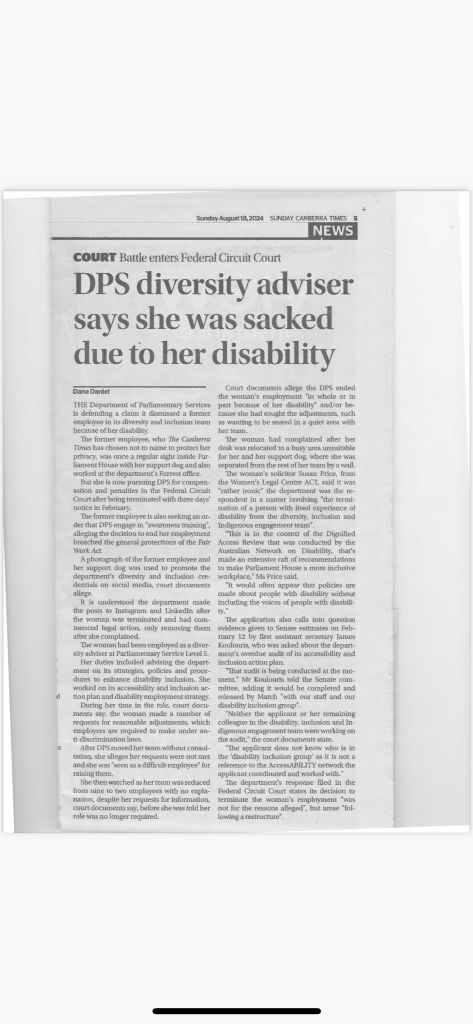
Secularism, Sectarianism, and Australian Democracy

The decision last week by Western Australian first term Senator Fatima Payman to resign from the Labor Party two years into her six year term and sit (for now) on the cross benches as a result of her stance on the Palestinian state issue has caused a problem for the Labor Party and an ironic triumph for the Greens.

It was not an issue I was planning to write about, but I have changed my mind, as the matter has considerable relevance for our national conversations in relation to both how we view our democracy going forward, and in casting a closer lens over our political history.

Let’s start with getting my own particular (peculiar) views and values out of the way. I am unashamedly a ‘narrow minded Italian Catholic conservative peasant from Footscray’.

Unpacking some of that, I have a lot of conservative Italian peasant values in my baggage. I am also pro-British monarchy and was a member of Australians for Constitutional Monarchy back when it was relevant in the 1990s, and self-identify as British to some degree (well, all Australian citizens were also British subjects til 1985).

I am not particularly church going and am quite skeptical about religion, if not outright sacrilegious in my outlook. However, I have regularly wandered off the plantation and given my primary vote to the DLP in the upper house in both state and federal elections in the past. This is not really because of my Catholic hard wiring, but rather because of my nostalgic sympathy for their hard line anti-communism.

In terms of polarising issues like abortion and the Palestine-Israel question, I am ‘middle of the road’, which means that I will not make friends on either side of the divide. On abortion, I am reluctantly pro-choice, which means that I will not be befriended by people who are serious about abortion on demand, and will be regarded as evil by the right-to-life mob. On Palestine-Israel, I believe that Israel has a right to exist, but so too do the Palestinians. The IDF needs to stop bombing the bejesus out of the Gaza Strip, and Bibi Netanyahu needs to be thrown out of office and prosecuted for corruption and possible war crimes. On the other hand, it is impossible to countenance the recognition of a sovereign Palestinian state whilst thugs like Hamas have an autocratic stranglehold on the political apparatus.

My positions, as someone whose vote is not influenced by either of these polarising issues, and who definitely is not about to join a protest rally on either side for either topic, are what I consider moderate. I do not really have a dog in those fights.

Senator Payman however, sees differently on the issue of Palestine, to the point where she felt it a matter of conscience to break Labor party caucus solidarity and both cross the floor of Parliament to vote against her party’s policy position, and to do so with public lack of repentance.

Her statements to her colleagues that she was praying for guidance as to what she should do were met with derision and leaked to the media. The modern Labor Party is quite secular, particularly when you compare it to previous generations, and the thought of someone earnestly praying seems alien to many senior Labor people.

She now has left the Labor Party, and is in talks with a number of Islamic groups who are disillusioned with Labor. Labor’s position on the current situation in the Gaza Strip is one which horrifies many Muslims, particularly those who have whole heartedly supported Labor for many years.

It appalls me as well, and I do not support Labor. That the Coalition, whom I usually support, albeit with a very healthy dose of skepticism, is attacking Labor for not being pro-Israel enough, disgusts me. Conversations with like-minded people suggests to me that our political leaders on either side of politics are being cowardly and dishonest on the whole difficult Palestine-Israel matter.

I was saying at this start of this post that the Greens have scored an ironic triumph with their tactics which have caused Senator Payman to leave the Labor Party. I say that this is ironic because the Greens are as secular as they come, and they have often come close to expressing intolerance of religion (particularly Christianity) in their public statements and behaviours (eg Senator Hanson-Young with her ‘Keep your rosaries off my ovaries’ t-shirt).

And whilst the Greens are secular, they may now have unbottled the sectarian genie yet again into Australian politics.

The informal alliance whom Senator Payman is holding talks with call themselves The Islamic Vote. She is also taking advice from mathematical maven Glenn Druery, the ‘Preference Whisperer’, who has spent much of the past 25 years manipulating the proportional representation system in Australia’s upper houses to get the members of minor and micro parties elected.

Some people might argue that this is solely a Labor problem as the disillusionment in the Islamic vote is exclusively going to affect the Labor vote and in safe Labor held seats, as the demographic in question tends to live mostly in Labor seats and vote consistently for Labor candidates.

Take that Albo! Haha.

But this is a bigger problem than that. It is a problem about how we as a nation have spent the past 120 years failing to have a serious conversation about the role of religion in politics.

As a general rule, Australians are quite secular and skeptical of both authority and religion. It is something that probably stems from the convict era, where a large part of the population were either convicts or descended from convicts, where the authorities were seen as oppressors and the clergy were often agents of the authorities (such as the ‘flogging parson’, the Reverend Samuel Marsden).

But despite that, many people do, at least nominally, still adhere to a religion. I for one still tick the Roman Catholic box on the religion question at the Census, even though it is rare you will see me inside a church outside of a wedding or funeral.

The sectarian genie has run amok through Australian politics at least twice since Federation.

The first time was during the First World War, when the Labor Party split mostly between Irish Catholics on one hand and Protestants on the other, on the issue of conscription for service on the Western Front. It took a decade for it to recover from that split, only in time for the Great Depression to annihilate the Scullin government.

The next time was in the 1950s, where the Catholic dominated Victorian branch of the ALP was effectively forced out by the Opposition Leader, Dr Evatt, and formed the nucleus of what was to become known as the Democratic Labor Party. The DLP was very successful in keeping Labor out of government federally until 1972, in Victoria until 1982, and in Queensland til 1989.

Much as I consider myself as anti-Labor, it is not healthy for a democracy to have consistently one sided election results for decades. Most governments do not deserve to be in power for more than three consecutive terms at most.

Nor is this a uniquely Labor problem, even though it has manifested itself most visibly inside the Labor Party. In recent years, congregations of various Christian evangelical churches and post Christian religions like the Mormons have joined the Liberal Party in considerable numbers. Their values, whilst conservative, probably belie the nominal Liberal values of individual liberty which are meant to be the driving force behind the Liberal party.

Previously, such people could find voice for their vote through the Family First Party or the Reverend Fred Nile’s Call To Australia – parties which cater almost exclusively to a sectarian Christian conservative social base.

And of course, whilst we like to talk about the separation of Church and State, as set out in Christ’s Give Unto Caesar commentary, the historical reality is that pre-enlightenment, the Church had an integral role to play in politics in the Western State. Christianity first came to prominence with the Emperor Constantine, who took a very active hand in determining doctrinal disputes and shaping it from an underground movement into an institution capable of assisting the Roman state to control civil society.

So where does that leave us? I did not vote DLP as my upper house protest vote at the last state election, but that was mostly because (as I have written previously in this blog) the DLP chose to act without integrity in their choice of candidates.

Parties like the DLP and Family First do appeal to people who have mainstream liberal-conservative values, but who may not have any particularly strong religious convictions. But their purpose is primarily faith driven.

If Senator Payman is successful in becoming the front woman for an Islamic based political party, it will simply be the latest twist in over a century of sectarian based disputes in the Australian political system.

It will not be a good development, as it will both destabilise the Labor Party as previous sectarian disputes have done, and also possibly become a political force which represents religious interests rather than those of the broader community.

Neither would be good for Australian democracy as a whole. We are better served by broad based popular parties with a greater degree of engagement in the community as a whole.

To that end, the conversation we need to have as both a nation and a community is one where we all (including people like me with my sly tendency to wander to the DLP box on the ballot paper) start to think about whether it is healthy for us to indulge religious interests at all in our political parties.

That also includes our politicians showing genuine respect for people who actually adhere to some faith, and to listen to the concerns of the community on significant polarising issues, rather than to be cowardly and prevaricating.

Otherwise, the Greens are going to enjoy their ironic current triumph as a pyrrhic victory indeed.

Will Artificial Intelligence Eliminate Wine Critics First?

This Shiraz has a bouquet of pepper, blackcurrant, and gun powder.

I never have quite binged on Evelyn Waugh’s novels, which is probably a good thing. I was 15 when I first read Decline and Fall, which I loved, but then was disappointed by his second novel, Vile Bodies. I suppose that 15 year olds do not quite get the irony and the self-deprecating social commentary about the mores of that era.

That did not stop me reading Put Out More Flags soon afterwards, and Brideshead Revisited at age 16. I was at university when I read the Sword of Honour trilogy, and read A Handful of Dust just after graduating.

By the time I read the latter, I had assimilated a good basic understanding of the underlining themes of repentance and redemption that drive Roman Catholicism, and which make up a large part of the subconscious hard wiring of myself and many other Westerners, even those of us who are only nominally Catholic.

And hence I finally ‘got’ Brideshead Revisited, a mere five years after reading it.

I have not reread it since 1985, although I think that I really ought to, and my copy of it is sitting on the desk next to me as I type, for reasons which are soon to become self evident.

Thumbing through it last night, I found the episode in Chapter Four of Book One in Brideshead where the narrator, Charles Ryder, along with his friend Lord Sebastian Flyte, decide to taste a large number of the wines from the castle cellar, aided and abetted by the family butler, Wilcox, and a book on wine tasting to guide their adventure.

Here, for your literary edification, is the passage in question:

“We would sit, he and I, in the Painted Parlour with three bottles open on the table and three glasses before each of us; Sebastian had found a book on wine-tasting, and we followed its instructions in detail. We warmed the glass slightly at a candle, filled it a third high, swirled the wine round, nursed it in our hands, held it to the light, breathed it, sipped it, filled our mouths with it, and rolled it over the tongue, ringing it on the palate like a coin on a counter, tilted our heads back and let it trickle down the throat. Then we talked of it and nibbled Bath Oliver biscuits, and passed on to another wine; then back to the first, then on to another, until all three were in circulation and the order of glasses got confused, and we fell out over which was which, and we passed the glasses to and fro between us until there were six glasses, some of them with mixed wines in them which we had filled from the wrong bottle, till we were obliged to start again with three clean glasses each, and the bottles were empty and our praise of them wilder and more exotic. 

‘…It is a little shy wine like a gazelle.’ 
‘Like a leprechaun.’ 
‘Dappled, in a tapestry meadow.’ 
‘Like flute by still water.’ 
‘…And this is a wise old wine.’ 
‘A prophet in a cave.’ 
‘…And this is a necklace of pearls on a white neck.’ 
‘Like a swan.’ 
‘Like the last unicorn.’ 

And we would leave the golden candlelight of the dining-room for the starlight outside and sit on the edge of the fountain, cooling our hands in the water and listening drunkenly to its splash and gurgle over the rocks.”

It is rather funny, looking at those elegant yet crass words which were published some eighty years ago.

I was thinking of the wine tasting scene specifically because I just got back from a road trip to Rutherglen with my best friend and his 18 year old son, who happens to be my godson. Rutherglen happens to be my favourite wine region, with its fantastic big dry Shirazes and Durifs, destined to last for very many years, and its magnificent fortified wines.

I came back with five standard bottles of various dry reds, a magnum of a back vintage of Calliope (my favourite wine), and a bottle of fine fortified wine.

[Plus the inevitable hole in my bank account.]

I did look at a few tasting notes on my travail through the vineyards and cellar doors. I will share the brief description of various wines from one of the various cellar door newsletters I regularly receive from the region:

. Juicy mid palate with subtle tannin and savoury finish

. Ripe berry fruit and robust tannin

. A pristine core of black fruit, deep tannin, touches of clove and black pepper

. Succulent cherry structure and fruit, velvety tannins

. Joyous combination of red fruits, blueberries and spice on the nose. Blackberry, mocha and elegant tannins.

Similar descriptors was applied to tasting notes for wines at just about every cellar door we visited.

It does get me thinking about who writes those tasting notes, and how accurate they might be.

Last Friday, I was at the Kelvin Club (one of the private clubs in the city, and the only one to which I currently belong) for the monthly luncheon of the Bottle Club. Since retiring, I have decided to get more involved in the social life of my Club, and hence have started attending the Bottle Club from time to time.

The members tend to be about two decades older than I, far better travelled, wealthier (or at least better situated in their residential suburbs), and with far more experience and knowledge of wine (although in my usual circle of friends, I am one of the more knowledgeable wine buffs).

Someone at that lunch said something which got me thinking. Apparently where there is a blind tasting of wine, where you cannot see the colour (a flask with a straw), most people cannot tell the difference between white and red. Similarly, if you feed people strawberry flavoured ice cream which is coloured brown, people think that they are eating chocolate ice cream.

This was interesting, and combined with my trip to Rutherglen and pondering about the common sorts of descriptors on tasting notes, it has really got me thinking.

Could some sort of Artificial Intelligence program, such as Chat GPT, successfully take over the writing of wine tasting notes, or even of entire wine guide books? Would Chat GPT be more accurate?

Would anyone even notice?

Or care?

Of course, I am being a little spiteful. Wine critics and commentators get paid to both drink wine and then write about it. Wine consumers pay to drink wine, and then might, as in my case, occasionally blog about it for free. This does cause wine consumers to feel a certain degree of resentment about wine critics.

Hence, whilst I am usually reluctant to support the introduction of Artificial Intelligence into areas where humans should have an exclusive preserve, I think, possibly out of spite, that an experiment in getting Chat GPT to write wine tasting notes would be very interesting.

The Disney Star Wars: When Fan Fiction Gets Out Of Control

Ever since my Grade 4 teacher read The Hobbit to my class back in 1978, I have been a fan of Tolkien. I have lost track of the number of times I have read both The Hobbit and The Lord Of The Rings, and I have read The Silmarillion three times (most recently after many years in preparation for the Amazon Prime series).

For the most part, I have not bothered with the published volumes of rough drafts, nor the more recent rehashing (eg Hurin’s Children) of stories from The Silmarillion, although I did read Unfinished Tales once about 25 years ago.

So I can confidently talk about what is ‘canon’ in the Tolkien universe and what is not, although I would say about those people online who spend a lot of their time explaining why something is or is not so in the various movies to go and get a life.

Obviously I did watch the Amazon Prime series, and was disappointed by the anaemic story line. True, it was hampered in that Amazon only holds the TV rights to The Lord Of The Rings, and that it has not yet been able to acquire the rights to The Silmarillion (and the included story Akalabeth), which actually covers The Fall of Numenor in great detail. Amazon has had to rely on what it does own, which includes the detailed information as backstory in the various appendices to The Lord Of The Rings, as a guide for its series.

All the same, I am quite dismissive of it, particularly in the depictions of Elendil, Isildur, Galadriel, and Elrond, and in the concocted origins of the metal Mithril, to consider The Rings Of Power as mere fan fiction, rather than as even a halfway accurate retelling of Tolkien’s story.

We do get to wonder as whether fan fiction has a valid place in interpreting the work of popular Sci Fi/Fantasy authors and filmmakers.

When it comes to Star Wars, things get a little more complicated, given that in the 48 years since the original movie and the follow up Star Wars Christmas Special came out, comic books and novelisations of related stories in that Galaxy Far Far Away have been ubiquitous since the very start, some of which have long been endorsed and accepted as ‘canon’ by the original creator, George Lucas.

With Disney now owning the intellectual property of Star Wars, the potential for fan fiction to run amok is much greater (an example which does make me grateful that the Tolkien Estate is grimly holding fast to the rights to The Silmarillion).

Star Wars and Disney are a great fit for two major reasons. One is that, like the classic Disney stories, Star Wars does not have any sex in it, and very little if any romance. The closest we get is Princess Leia in a metal bikini in what we now call Episode VI. The other is that, just like Disney, Star Wars makes for great toys and related merchandise. You can grow from wearing a Donald Duck t-shirt to a Darth Vader t-shirt (Donald and Darth do share many similarities when you think about it, which is why I like both characters so much).

So it is not surprising to find Star Wars on Disney+. [It is a better fit than the Kardashians or documentaries about the Jonestown massacre for example.]

The recent Disney driven sequel trilogy had very little of originality to it, and indeed they discarded any of George Lucas’s suggestions in favour of a totally derivative and somewhat woke storyline which focuses on more potent super weapons which need to be blown up in the first and third sequels, along with a desperate escape in the second. Sounds just like the first trilogy really, except for the wokeness and some very loose superfluous storylines.

Now we have various Star Wars series, of varying quality, on offer through streaming. Some, like The Mandalorian, are quite clever and adept at harnessing ‘canonical’ back stories to create the sort of space western which could have come from the fertile imagination of George Lucas. Others, like Ashoka, not so much (although I am as always a big fan of anything featuring Rosario Dawson).

Last night, aside from watching the latest episode of The Acolyte (a prequel stand alone series which does not impress me), I watched a few short cartoon episodes from the other new offering, Tales From The Empire. Very underwhelming.

There were no space witches in the original Star Wars, nor in any of the prequel or sequel movies. Nor was there this sinister blue faced Admiral Thrawn. Using fan fiction to create such new storylines with such supposedly important new villains risks not just confusing the fan base about the ‘canonical’ narrative, but also contaminating the potential for making a decent fourth trilogy in future – something that I strongly suspect Disney and its shareholders would dearly love to attempt.

$180 Million Flop? Funding Film to Promote Art and Culture….

As I wrote a few days ago, I quite enjoyed Furiosa, the Mad Max spin off film.

Sadly, it appears to have been a flop, which is quite sad as I have always loved Mad Max, and the Roadrunner cartoons (which are the perfect manifestation of this genre).

News reports have emerged that the Australian and NSW taxpayer have been responsible for funding the bulk of this film, with estimates being that the Federal Government has stumped up $150 million and that the NSW Government has put up $33 million.

That is quite a lot of money to put into funding one movie.

The supposed benefits to Australia from funding such a film are two fold. The first is that having such a film made in Australia may provide employment benefits, particularly in the local film industry. The other is that films can contribute to the local arts scene and to Australian culture.

The first argument is a rather Keynesian one, and I am skeptical about it. Pouring a lot of taxpayer money into one film is unlikely to unlock a lot of economic benefits. Keynesian activities, such as subsidised film making, or Kevin Rudd’s various recession avoidance initiatives in the time of the GFC, or other expressions of government largesse, rarely end well.

The willy-nilly use of taxpayer funds with limited accountability does not result in outcomes of great benefit to the community, even though you might argue that the chancers who profit from the loopholes, as in the various GFC era schemes, might trickle their new found riches back into the economy when they increase their luxury spending.

And a lot of the really bad films made in Australia Cinema history are the Ozploitation films from the 1970s and early 1980s, when government policy allowed for extremely generous tax deductions for investment in film making. Like, have you ever seen the 1981 film Starstruck? The only good thing about it is the soundtrack.

The second argument is the somewhat elitist cultural one, that government needs to fund the arts. Our art galleries, operas, ballets, theatre companies, symphony orchestras etc possibly need to have government funding. Similarly our local artist and literary scenes.

This doesn’t always work well either. Some subsidised literary magazines appear to have a censorship agenda where they blacklist writers whose political views do not align with the editors. Quite a lot of the political myth making on television is tax payer subsided, such as some of the distorted views of political history espoused in such ABC miniseries as the 1988 classic ‘True Believers’.

In terms of my own artistic tastes, I am reminded of Dostoyevsky when he wanted to be good. He really wanted to be good and pious and god fearing. However he liked women, vodka and roulette too much.

In a similar vein, I would like to be the sort of person who goes to the Opera, the Symphony, the Ballet, and to gallery openings and exhibitions, whilst sipping a glass of wooded chardonnay in the intermission whilst my ABC bumper sticker wearing Tesla sits in the Arts Centre garage.

But I am not really that sort of person. I am from a working class background in Footscray, with mostly peasant origins (despite being 1/16 of a Count in ancestry). I have some rather bogan tastes, and would prefer to watch an action movie in the cinema and share a bottle of shiraz afterwards.

So, much as I deplore the use of over $180 million of taxpayer money for making a Mad Max film, I prefer to see the money spent on that than on other cultural subsidies like Opera and Ballet.

Because at least there is a very very good chance that I will watch the film.

Reddit – The Rebirth of Greek Tragedy as a Social Media Trainwreck

It took me quite a while to ‘get’ King Lear. Whilst familiar with Macbeth from high school English class, Romeo and Juliet and The Tempest from having read them independently in my teenage years [my initial copy of the Complete Works – I now own four (all unsurprisingly gifted to me) plus separate paperbacks of each play – starts with The Tempest], Henry V from seeing the Branagh production at age 20, and The Taming of the Shrew from going with some friends some time in the late 1990s at the Botanic Gardens for an evening performance, I did not really get into Shakespeare til age 28.

At that time, working for a few months in Box Hill, I had abundant extra time on the train to do some reading. So I packed a paperback of one of the plays each morning as my commute reading. I must say that I found most of them quite enjoyable, and particularly enjoyed the metaphysical nature of Hamlet [a play which is better to read than to see performed in my humble opinion].

But I did not at that time really get why critics generally rate King Lear as one of the four great tragedies. Back then, I saw the great tragedies as having some sort of dualistic moral dilemma: Hamlet has knowledge and innocence, as in the Fall from Grace; Macbeth has guilt and innocence; and Othello has love and jealousy. In my mind, Lear lacked such a dualism. Julius Caesar, with the dilemma of love and duty, more deserved to be considered one of the great plays than Lear.

As you might guess, I had not read any Greek tragedies at that stage, even though quite a few of them were sitting unread in my bookcases. The Clouds, one of the more irreverent comedies by Aristophanes, was the only Greek play with which I had any familiarity.

My opinion of King Lear changed when I first saw it performed live in 2005, which left me quite impressed. A good production of Lear, ending with him grieving Cordelia, can project quite a lot of tragic pathos. This did set me off on a binge of watching live productions of the plays whenever I could, and by now I have seen about two thirds of them performed.

I did get around to reading the Greek tragedies in my late 30s or early 40s, and that did cause me to finally ‘get’ how great King Lear really is.

Lear is the closest that Shakespeare has come to a Greek tragedy in all his works. The themes of vicious betrayal of and by your closest blood relatives is what we most commonly see in the Ancient Greek plays. The most vicious of those are the ones which follow the generations deep curse of the Atreides, seeing this royal lineage constantly caught in a god-ordered cycle of murder, sacrifice, vengeance and exile.

Medea, one of the plays written by Euripides, perhaps is even harsher. Spurned by her lover Jason, the embittered Medea murders their children in a fit of vengeance, then to be born off by the gods in a chariot pulled by dragons.

It perhaps is an understatement when, in the introductory voiceover at the start of each episode of Xena Warrior Princess, we are reminded that the ancient gods were petty and cruel, and plagued mankind with suffering. (Not that Xena, even with the Greek myths and histories to guide the script writers, ever bothered with verisimilitude.)

In recent months, I have become fascinated, like a kangaroo in the spotlight, with the sorts of stories republished in Facebook, and which originate in another social media platform, Reddit. These stories are, to put it nicely, quite horrible, and the most popular ones which my algorithm feeds me are about parents abandoning their children, siblings stealing each other’s spouses or significant others, and dysfunctional step families.

Many of the most popular ones are where, like King Lear (or Agamemnon, if you want to look back at the cursed Atreides of ancient Athens) a parent singles out one of their children for inexplicably vicious treatment whilst the others are given preference. Such mistreatment rarely goes further than neglect or abuse, unlike the actual infanticides (and parricides and matricides) of the Ancient Greek writers, but the general gist of the behaviour is similar: those who are closest to us, who we should most love and trust, are the ones who can hurt us the most.

Twenty years ago, we would have gone to Judge Judy to view the ersatz modern equivalents of Greek tragedy, but now we do not need to reach so far. Social media, in the form of Reddit (and its allies Youtube, TikTok, and Facebook), makes it possible for people to post their stories to a widespread audience in the hope that ‘random internet strangers’ will give their unbiased advice and wisdom.

Perhaps, we, just like the audiences in 5th Century BC Athens, have a similar need to watch these stories, and to be horrified and gratified at the same time by these narrators of these domestic tragedies.

But I do wish that perhaps, we would have greater opportunity to actually see some of those original great Greek tragedies performed live than we currently do.

Where Will We Be in 11 Years? Thoughts On The Uncanny X-Men Revival And Whether Life Really Hurts

It’s nearly time we were leavin’
We’ll have one more for the road
It don’t mean nothin’

So we gather ’round the table
Raise our champagne in the air
It don’t mean nothin’

‘Cause we’ve got
This night together, we’ll have
Here now forever
Ah, don’t tell me now, you can
Write me a letter
Where will we be in 50 years?
In 50 years?

Uncanny X-Men – May, 1985

I was walking past the Croxton Park Hotel in Thornbury the other day and saw on the upcoming gig guide that Radio Birdman were going to do a 50 year anniversary gig.

I had never listened to any Radio Birdman before, but I do have a friend who is a fan of them, and owns the vinyl of their album Radios Appear, which is how I know the name. My walk inspired me to listen Radios Appear on my Apple Music account the other night, whilst sipping some red wine.

I must admit that it was not really what I expected – it is a bit more punk than what I thought the name promised.

But they are just one of many of the classic Australian bands of my childhood and teenage years who are making a milestone anniversary or farewell tour. Just like TISM, who recently did a lot of guerrilla reunion gigs and released new music.

I guess that in their early senior years (all of these musicians would now qualify for the seniors card, as they are older than me and I am happily retired), a lot of those bands are trying to top up their superannuation balances by tapping into their ageing fan bases. After all, not everyone has been diligently paying 10 per cent into their defined benefit superannuation funds to max out their retirement benefits like yours truly.

One thing that grabbed my attention from the Apple Music algorithmic playlist when I was listening to a lot of music the other night was the addition of two new Uncanny X-Men songs. Given that I do occasionally play ‘Cos Life Hurts, the debut album from this archetypical bogan Melbourne band from the mid 1980s, it is unsurprising that the Apple algorithm would alert me to new music from that band.

And so, I listened to the online EP that Uncanny X-Men just offered the music world. It consists of two songs – It’s A Shame, and We Love It.

It doesn’t really do too much for me, though I suspect that Brian Mannix is doing a sly dig at the weaponisation of gender pronouns in We Love it, which appears to be a commentary on the contemporary world.

After all, the X-Men’s best work was almost 40 years – the bogan anthem Work (which is about not wanting to work, which is apt for a bunch of lads from Braybrook) and the poignant power ballad 50 Years, which was released just over 39 years ago.

39 years…. It is quite sobering to look and see how much time has passed since that ballad was released. I was a teenager in my penultimate year of high school and now I am nearing the end of a year of pre-retirement leave and about five and half weeks from officially starting my retirement. An ocean of water has passed under the bridge in my life since that time.

When, in May 1985, Brian Mannix asked us ‘where would we be in 50 years?’, we all felt almost immortal. I know that I did. Yet most of that time has already elapsed and I myself see myself increasingly confronted by my growing mortality. Only eleven years are left until that question is answered.

Brian Mannix has himself offered a tentative answer to that question in his 2018 solo release, Tomorrow:

I don’t have to do a thing tomorrow

Tomorrow might not come at all.

I suppose, as the title of their debut album 39 years ago reminded us, Life does hurt. But it is still well worth living and grasping to the last breath.