What Happens When A Cargo Cult God Dies?

Prince Philip would have to be the coolest Royal. He even had his own cargo cult worshipping him – and not even within the boundaries of the British Empire:

— Read on www.independent.co.uk/news/uk/home-news/royal-wedding-vanuatu-duke-of-edinburgh-god-prince-philip-tanna-pacific-island-celebration-eat-many-pigs-a8362046.html

And much as I am a bit annoyed with the Sussex branch of the Royal family right now (ie Ginge and Whinge), I think it would be fitting for Harry to inherit Philip’s cargo cult divinity.

Honi Soit editors show a lack of courage

www.news.com.au/national/nsw-act/news/university-newspaper-capitulated-after-removing-article-critical-of-chinese-communist-party/news-story/49566f19ffc077525881ce7d84449bcd

Whilst not familiar with the current dynamics inside the student union at Sydney university, I think that calling Honi Soit a ‘renowned’ university newspaper is a rather long bow.

It’s the campus publication of the student union, with, unless things have changed in recent years, elected editors with close links to one side or another in the campus student politics.

But such papers used to have the courage to attack the status quo, unless there was some sort of challenge to their own ideological or long term political interests.

I suspect that these days, there would be a risk of the PRC consulate ordering the PRC citizen students enrolled at Sydney to engage in a mass protest or occupation of the Honi Soit office if the article was published….

Apocalypse Heights?

I consider Footscray as my home town, and when I eventually first got myself a passport, I insisted on including Footscray as my place of birth on it (I think I could have probably gone with the more generic Melbourne, but I was proud to insist on what is written on my birth certificate).

However, I have called Avondale Heights home for the past 18 years. This is not exactly a hardship – a first cousin lives a few streets away, one of her sons is just around the corner, and my godparents live (as they have for my whole life) not far from St Martin’s church (I was going to go there tonight for the Italian version of the Stations of the Cross, but piked).

A friend of mine recently wrote a review of Nick Gadd’s book ‘Melbourne Circle: Walking, Memory, and Loss’, which is about the author’s walks around the inner suburbs of Melbourne from Williamstown til Elwood, with his wife. The wife died just after the walks were completed, and the book is like a moving love letter to his late wife.

As long standing Yarraville residents, the Gadds walked around a lot of Yarraville, Footscray, and Braybrook. He writes of his wife’s sudden middle aged conversion to rabid Western Bulldogs fan circa 2014 and their watching, with 9000 other fans, the 2016 AFL Grand Final at the Whitten Oval (I was at the MCG that day with my brother cheering the Bulldogs on). He writes about the ETA factory in Ballarat Road (I do not remember there being a big Christmas display there in the 70s and 80s, but we only ever passed that way when we visited my aunts in St Albans and North Sunshine every few months and I always got a thrill at looking at the ambulance station). He goes into great detail about the White City greyhound track on Sunshine Road (I learned of this track about ten years ago, but just remember there being a train station there that the train did not stop at in the 1970s when we would go to St Albans – the station was removed in 1982).

And then Mr Gadd writes about Avondale Heights (or, as he titles the chapter, ‘Apocalypse Heights’):

‘Something happened in Avondale Heights.

A war, plague or tsunami. Or perhaps an explosion that killed the populace, but left the buildings standing. Or perhaps aliens took everyone to a remote planet.

Because some time between 2011, when the census was conducted, and today, 10,990 people were spirited away.

There must be some explanation. Because there’s no one here. No one visible anyway.’

A note at the end of that short chapter indicates:

‘One notable inhabitant of Avondale Heights, according to Wikipedia, was pilot Frederick Valentich, who really was abducted by aliens. Maybe.’

I do take exception to all that. Mildly. Although I am grateful of course that anyone will actually mention Avondale Heights in a book – it is a pretty obscure place with one bridge and main road, separated from the rest of the Western Suburbs on three sides by the Maribyrnong River.

Well, someone walking down Military Road who does not actually live here will not know that there is actual community. I know all my neighbours, like the elderly couple next door who have been here since 1972 and the young couple on the other side who are expecting their first child and who decided not to sell up after all. Or the several police officers living at various houses on the other side of the streets who occasionally offer me a lift to the tram terminus. Or the bogan two doors down with his family who makes some spare cash out of scrap metal foraging and who knows everything that is going on within a 1 km radius.

Or the bloke who built some town houses on the site of his former home and then moved off to some acreage, but then came back just before lockdown because he and his wife missed the suburb where they had grown up and all the people they know here.

Whenever I see people on the bus (like the bloke who has lived here since 1954 and is a treasure trove of living history about the area) or at the local Thai restaurant where I am a regular (like when I ran into my former neighbours there celebrating their son’s 16 birthday), or just walking down the street (especially in October 2016 where every familiar pedestrian face suddenly and unexpectedly was wearing their Bulldogs members’ scarves or hats), there is community. Elderly ladies I have never met before stop me and ask me how my mother is doing as they have not seen her in a while (FYI she has not visited my home since the plague started a year ago – I visit her!).

We do know each other, and it might take a while for people to get used to a 1960s brick veneer suburb which lacks a pub, but it is not a bad place to live. Nor are the streets really lifeless and empty.

Network – Still prescient after 45 years

I’m mad as hell and I’m not going to take it anymore :

The black comedy Network is probably one of the best scripted and acted movies in history. Peter Finch’s portrayal of demented news anchor Howard Beale is particularly compelling.

The poetic and insightful nature of his on air tirade is just as relevant now in a time of COVID, Trumpism, communist China and climate change as it was in the 1970s of recession, Watergate and Cold War.

We got through all that and we will get through all this.

But perhaps getting mad as hell might help.

I feel nostalgic about my first trip to Italy this morning….

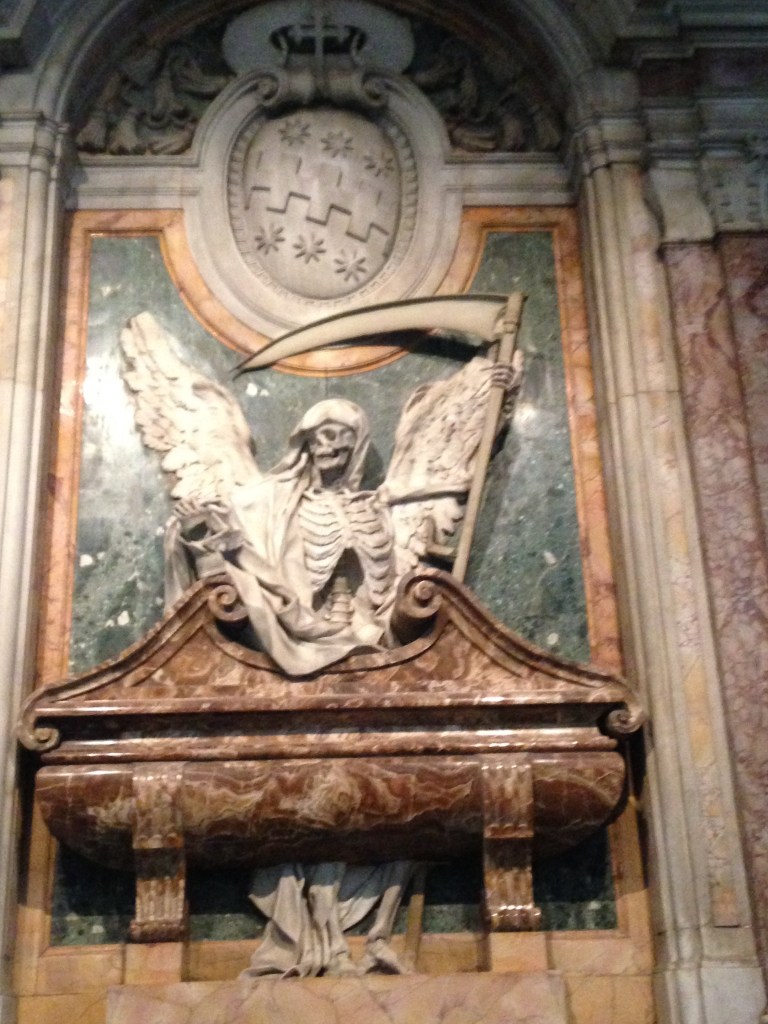
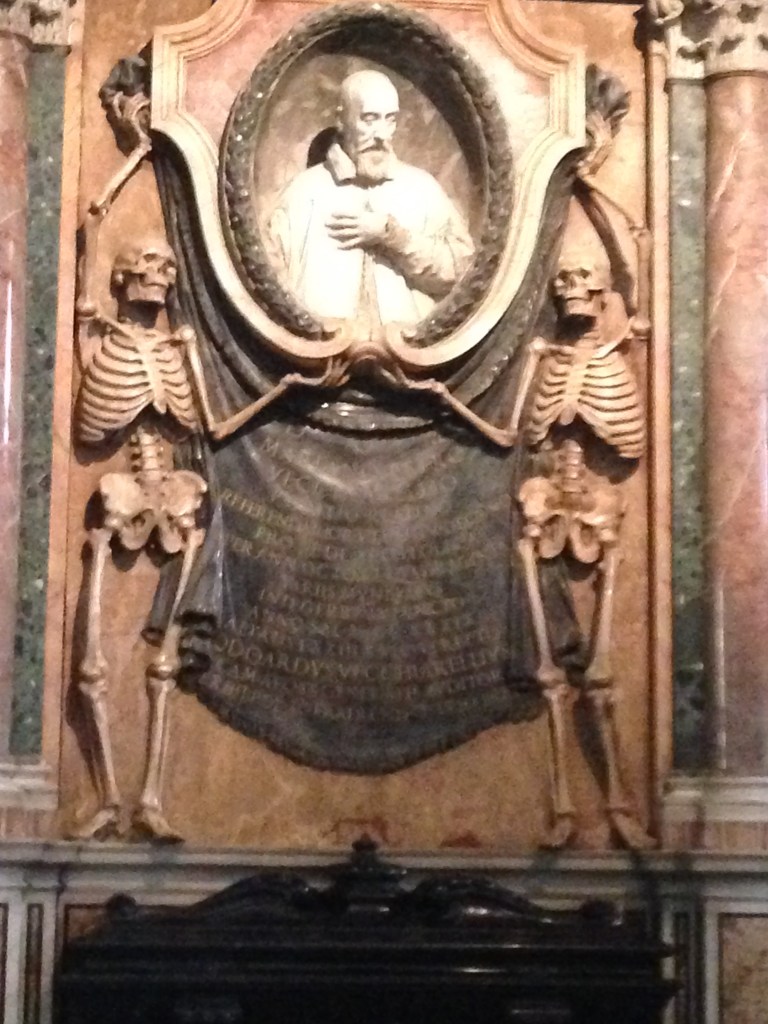
A cheerful reminder of mortality…

It’s now about 18 months since I returned from my most recent trip to Italy and about 4 1/2 years since my first trip there.

These happy snaps are from inside St Peter In Chains, one of the many amazing churches in Rome I visited in August 2016, each of which has works by the great Italian artists in abundance.

It does remind you that we’ve had plagues for as long as we’ve had civilisation.

I do wonder when travelling back to Italy will be possible again. I doubt it will be too soon.

Haha is still not making me laugh

Just over two months ago I wrote a post about Liberal Party donor Huifeng ‘Haha’ Liu, who is accused by ASIO of being a threat to national security:

Stop Laughing – This is Serious! Why ‘Haha’ is not funny.

At the time, the only news media I could find reporting on this topic were the ABC news website, and the darkly humorous Clown World blog.

This morning on waking (I have a day off and the luxury of a sleep in), I found the following new report on the ABC news website:

https://www.abc.net.au/news/2021-03-12/asio-assessment-revealed-in-haha-liu-court-application/13234740

There are no particularly new revelations in this news article – Haha’s appeal is simply continuing to make its way through the courts. But it is interesting that no one aside from the ABC in the mainstream news media seems interested in reporting on this story.

This is the sort of story which should be reported on the front page of all our major newspapers, and which should be widely discussed at the grassroots level of major political parties, particularly as people such as Haha are using their chequebooks to gain ready access to our political representatives.

On re-reading Machiavelli after 30 years

Time flies. It is now well over thirty years since, in History 101 (Medieval and Renaissance History), I first read Machiavelli. I not only read The Prince, but also an abridged version of The Discourses.

I then wrote an essay on the cyclical nature of history in The Discourses, which got me a distinction, and which, many years later (about 21 to be most exact), I discovered was totally wrong. I only made that discovery when I read Harvey C. Mansfield’s essay Machiavelli and the Idea of Progress, which challenges the idea the teenage version of me asserted that Machiavelli held a cyclical view of history as also held by the ancients, and that his views included, due to the intervention of Christianity and its eschatology, a sense of process towards an end goal.

I do wonder whether the very well regarded renaissance history lecturers at Monash in that period (which was doing world leading research into renaissance Italy at the time), were aware of that eschatological element, or whether it was just something which was not considered as suitable for a first year syllabus.

I also, at that time, read a few extra writings contained within my Penguin edition of The Portable Machiavelli. After all, it was a long commute home from Clayton, and in the age before smartphones, a book was a good way to while away the time on a bus or train. I remember in particular reading La Mandrangola, or, in English, The Mandrake Root, a play I now know to be inspired by ancient comedians such as Plautus. At the time, I found La Mandrangola to be almost laugh out loud funny in parts.

So, today being both a rainy day and a public holiday, I pulled out my slightly battered old volume of Machiavelli and re-read La Mandrangola. It is still is funny, and my Latin now is almost good enough that I tried to translate the few Latin passages for myself before looking to the footnotes, and hopefully it still seems only as cynical to me now at almost 52 as it did to me at 19 (a sign that I have not grown more cynical as I get older).

I could not help but chuckle to myself wryly at the passage where they ascertain that the priest they need for the scam is morally flexible, when they offer him money to persuade an abbess to administer a pregnant girl with something to cause a miscarriage (ie clergy actively involving themselves in abortion on demand) and he gives his reply:

Timoteo: So be it in God’s name. May everything you wish be done and all of it for God’s sake and for the sake of charity. Give me the convent’s address, the potion, and, if you want, the money so that it can start doing some good.

Ligurio: Now you are beginning to be the priest I thought you were. Take this portion of the money.

I think you get the general gist. Machiavelli was a man of the Renaissance and he was more skeptical about clergy and the church than many others of a generation earlier, or of a less educated class.

Incidentally, the photo of a statute of Machiavelli at the top of this post is one I took in Florence when I was there in August 2016. Time flies and I wonder when it will be practical to visit Italy again.

Flow My Tears, The Crocodile Said

I am not usually inclined to watch the press conferences of politicians. I tend to regard politicians as a necessary evil – democracy being a better system than any of the alternatives, but still laden with insincerity and demagoguery. So why validate the individuals any more with attention than they already get?

I did make an exception yesterday, to watch the federal Attorney General The Hon. Christian Porter MP make a press conference to disclose the worst kept secret of recent days, that he is the Cabinet Minister accused in various documents of being a rapist in 1988 of a woman who recently killed herself.

He was very tearful during the press conference, and expressed sorrow for the bereaved parents of that woman. He also denied any wrong doing.

We have a legal system which has a strong commitment to the presumption of innocence and due process of the law. I was disappointed that he, as Attorney General, did not make that point as clearly as he should have. He should have said: “In our legal system, we are all protected by the principle that we are presumed innocent until proven guilty.”

That, at least, would remind people of how the criminal justice system operates, without having to refer to reruns of Law & Order.

He did also express dismay that no one (ie journalists, I suppose) had put the allegations to him in a way in which he could have replied to them.

I do consider that a self serving observation on his part. How does he feel that allegations should have been put to him? In a request for comment in an interview or in a letter? Or in a formal record of interview under caution against self-incrimination?

A considerable amount of the previous public record about his character, including observations by former prime minister Turnbull, does not present a particularly flattering picture of this chap.

But I think the measure of the man is not so much in this incident, but in his former role as Social Services Minister.

Let’s look at some of the public record on Robodebt:

https://www.abc.net.au/news/2020-05-31/robodebt-federal-government-christian-porter-no-apology/12304672

https://www.notmydebt.com.au/porter

Many of the most vulnerable Australian citizens were served with notices of debts to the Commonwealth issued by an automated system which relied on a spurious methodology, and with limited right of appeal. Essentially, in an administrative (rather than criminal) sense, they were considered guilty until proven innocent. And Mr Porter was a major player in this, with very limited sympathy for those people.

Whether or not Mr Porter did what he is alleged to have done in February 1988, he will be measured by the court of public opinion against his entire conduct and character and his ability to display genuine empathy, including not only the nature of his denial yesterday but also his denial of wrong doing in the Robodebt tragedy.

Despite my usual voting sympathies, I do not see a place for him in public life in this nation. He should go.

Bitcoin is the new Tulip Mania

In the golden age of exploration, when Dutch ships came home to Europe laden with spices from the Far East, the Netherlands became a place of great and somewhat unexpected wealth. A large middle class, keen to enjoy its newfound riches, emerged.

The recently introduced tulip, a beautiful and fascinating flower (I personally am more fascinated by begonias) became a status symbol, and quickly became a luxury item amongst the nouveau rich.

This led to a futures market where prices for tulip bulbs grew at exponential speed. I say futures because a lot of the tulip bulbs had not been grown yet, and that, as I learned in childhood, it can take between 7 and 12 years for a tulip bulb to grow from seed.

Of course, along the way, speculators got into the action. If the price is constantly rising for something, then Fear Of Missing Out kicks in and people start pushing the price upward in the hope of making a packet before the price collapses.

As happened in 1637.

And now we have Bitcoin.

I have always been skeptical about cryptocurrency. It is backed by nothing, except a community of computer nerds. Bitcoin started out as next to worthless, and rose to about $2000 a year or two ago at what seemed like an all time high.

And now, recently, it has gotten to about $50,000, as various more respectable investors and financial institutions have gotten onboard.

I do not think this is going to end well, particularly for those who are now piling their cash into Bitcoin or other cryptocurrencies at these prices. Bitcoin will crash eventually, just like tulip futures in 1637, or junk bonds in 1987, or Dotcom stocks in 2000, or all those supposedly premium bonds in the GFC. The thing with this is that unlike junk bonds or the GFC bundles, there is no sleight of hand or duplicity by bond traders or other financial brainiacs – Bitcoin is obviously as worthless as magic beans.